
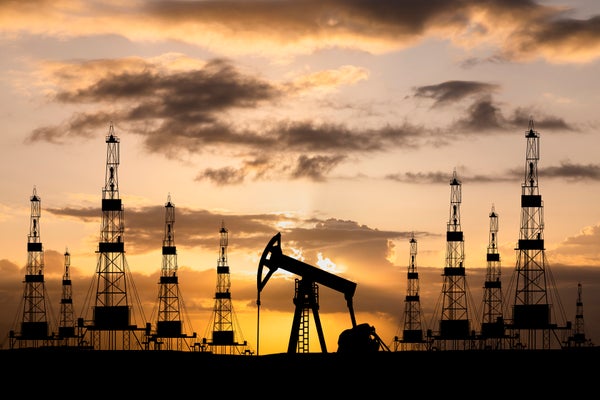
CLIMATEWIRE | The oil company founded by Energy Secretary Chris Wright reported falling profits Thursday, warning investors that the oil industry faces "storm clouds on the horizon" amid President Donald Trump's tariff blitz.
Liberty Energy is a barometer of the health of America's oil patch. The Denver-based company provides fracking services to oil and gas companies, and it is of growing importance today — as the company was founded by Wright and is one of the first oil firms to report its first quarter earnings amid the president's push to impose tariffs on a broad-range of imported goods.
"As we look forward, of course, there are some storm clouds on the horizon," Liberty CEO Ron Gusek told financial analysts. "We don't know if that storm is going to roll in here or not."
On supporting science journalism
If you're enjoying this article, consider supporting our award-winning journalism by subscribing. By purchasing a subscription you are helping to ensure the future of impactful stories about the discoveries and ideas shaping our world today.
Liberty executives sought to put a good face on the moment. They noted the oil and gas industry is a cyclical business and that drillers are in better shape to withstand a downturn than in previous years. They predicted drilling activity would pick up in the second quarter, as winter turned to spring. And they expressed hope that Trump's decision to pause a wide range of tariffs had relieved pressure on the global economy.
But the tone was a far cry from the "golden era of American energy dominance" that Wright promised shortly after becoming Energy secretary earlier this year.
Liberty's quarterly profit of $165 million represented its worst quarter since the first three months of 2022 and was down from almost $239 million in the same quarter last year. Liberty's stock has fallen around 40 percent since the start of year.
Company executives conceded a slowdown in the oil patch could occur if oil prices continued to slide. West Texas Intermediate, the benchmark for American crude, has lost more than 20 percent from its high of around $80 a barrel in early January.
The company will be closely watching its capital expenditures and share buyback as market conditions evolved, Gusek said, adding, "We will be keenly focused on a fortress like balance sheet that will enable us to navigate whatever is coming our way."
The Department of Energy did not respond to a request for comment.
Company executives said the gas market represented a potential bright spot, with liquefied natural gas exports supporting demand. Falling associated gas production from wells that are primarily drilled for oil could support pure-play natural gas operations, they said.
The oil and gas industry threw its weight behind Trump's reelection campaign last year and many in the industry were thrilled when the president selected Wright to lead DOE. In his first secretarial order, Wright promised to unleash a "golden age" for energy development, rolling back regulations, boosting LNG exports, focusing on research and development and refilling the Strategic Petroleum Reserve.
Discontent with Trump has been rising in the oil patch. In a quarterly survey conducted by the Federal Reserve Bank of Dallas, oil and gas executives expressed dismay with the president's tariff onslaught, saying it threatened to raise costs while putting a damper on economic growth needed to support oil demand.
This story also appears in Energywire.
Reprinted from E&E News with permission from POLITICO, LLC. Copyright 2025. E&E News provides essential news for energy and environment professionals.