
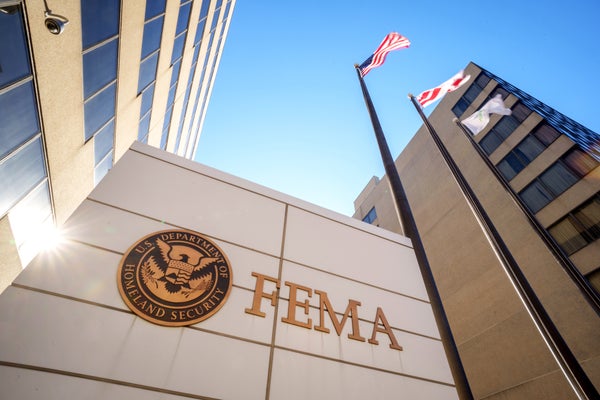
CLIMATEWIRE | The Federal Emergency Management Agency must show in one week whether it is complying with a judge’s ruling Thursday that blocks the Trump administration from withholding grants and loans.
In a broad ruling on presidential powers, Chief Judge John McConnell of the Rhode Island District Court cited the withholding of FEMA disaster aid as an example of “acute harm” caused by a federal funding freeze.
“With floods and fires wreaking havoc across the country, federal funding for emergency management and preparedness would be impacted” by freezing FEMA grants, McConnell wrote in a 45-page ruling.
On supporting science journalism
If you're enjoying this article, consider supporting our award-winning journalism by subscribing. By purchasing a subscription you are helping to ensure the future of impactful stories about the discoveries and ideas shaping our world today.
McConnell, an appointee of former President Barack Obama, was the second federal judge in the past two weeks to rebuke the Trump administration for trying to withhold grants and loans.
McConnell made his ruling in a lawsuit by 22 Democratic-led states and the District of Columbia seeking to block the funding freeze.
The second case was brought by nonprofit groups challenging the freeze.
McConnell cited a filing by Oregon’s emergency management director that said a funding freeze would jeopardize $1.1 billion in FEMA aid to help the state recover from a series of disasters over the past few years. The absence of aid could lead to more deaths, injuries and property damage and slower emergency response times, the Oregon director, Erin McMahon, wrote in language that McConnell quoted in his ruling.
In a statement Thursday after the ruling, New York state Attorney General Letitia James said that tens of millions of dollars in federal grants to "support disaster preparedness and recovery programs have been frozen." James is one of the 23 attorneys general who sued over the freeze.
In approving the plaintiffs’ request for a preliminary injunction, McConnell imposed five conditions, including a requirement that FEMA file a status report by March 14 describing its “compliance with this order.” The other conditions require the Trump administration to release money that has been withheld and notify all federal departments and agencies of the order.
Reprinted from E&E News with permission from POLITICO, LLC. Copyright 2025. E&E News provides essential news for energy and environment professionals.