
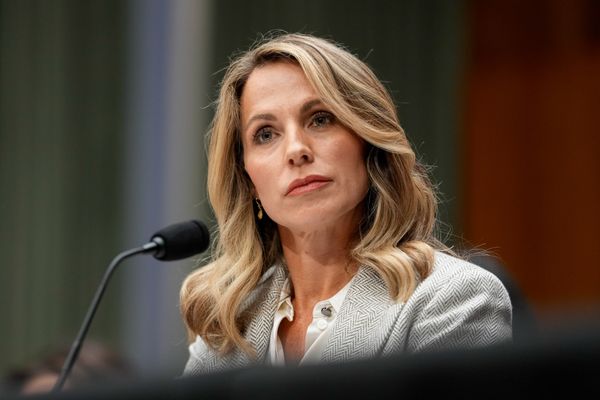
On Wednesday President Donald Trump’s latest nominee for surgeon general took steps to distance herself from the president’s false statements on vaccinations by telling a Senate confirmation hearing that the shots are not the cause of autism.
Trump announced the nomination of Nicole Saphier, a radiologist and Fox News personality, for the country’s top public health position in April—she is the third nominee for the role since the second Trump administration began. Saphier replaced wellness influencer Casey Means, who had drawn fire from a bipartisan group of lawmakers for her stances toward vaccines and alternative medicine.
During her testimony on Wednesday, Saphier tried to create distance between herself and positions taken by both Trump and U.S. Health and Human Services (HHS) Secretary Robert Kennedy, Jr. Saphier told lawmakers that she does not know what causes autism, and she has “not seen reputable evidence that would suggest that vaccines cause autism.”
On supporting science journalism
If you're enjoying this article, consider supporting our award-winning journalism by subscribing. By purchasing a subscription you are helping to ensure the future of impactful stories about the discoveries and ideas shaping our world today.
When questioned about Trump's recent claim that the mumps, measles and rubella vaccine may be “lethal,” Saphier responded by describing the shot as “our greatest tool for combating measles.”
Almost 3,300 cases of measles have been confirmed in the U.S. this year as of September 11, according to the Centers for Disease Control and Prevention—an increase of more than 1,000 compared with the cases reported for all of 2025. Four deaths have been linked to the current outbreak, the most since 1992.
When asked for comment, White House spokesperson Kush Desai called Saphier an “accomplished physician who has practiced radiology at Memorial Sloan Kettering and has been an outspoken voice on breast cancer prevention, intrusive COVID-19 mandates, the politicization of science and the federal government’s role in America’s chronic disease epidemic. She has been a powerful asset for President Trump and works tirelessly to deliver on every facet of his MAHA agenda.”
Saphier also expressed support for universal hepatitis B vaccination at birth—a long-standing CDC recommendation that Kennedy and other top Trump health officials have taken steps to eliminate.
“The hepatitis B vaccines are one of the most tangible ways we have to prevent cancer, and that is something that I absolutely am always excited about because it is so hard to prevent cancer in so many patients,” she said, referring to the hepatitis B vaccine’s protective effect against hepatitis-related liver cancers.
Saphier’s nomination has been criticized by several public health advocacy groups. In a statement issued on Wednesday, Defend Public Health coordinating committee member Julie Scofield said Saphier is “exactly the wrong person to be Surgeon General.”
“She has no background in public health, and it shows,” Scofield said. “Saphier has argued that ‘personal responsibility’ is key to improving Americans’ overall health—an idea that contradicts the basic tenets of public health, which recognize that our health is affected by many factors an individual simply can’t control.”
At today’s hearing, Saphier stressed the importance of Americans personally taking steps to reduce their chances of becoming ill and added that providing more information to the public on prevention will be a priority if she’s confirmed.
“There are small, tangible lifestyle modifications that people can do,” Saphier said. “That doesn’t mean that you have to become a nutrition expert or a someone who’s at the gym every single day. But there are small modifications that people can do that will drastically reduce their risk of illness.”
Wednesday’s confirmation hearing also featured testimony from two other nominees. Chris Klomp, former chief executive of patient data technology company Collective Medical and former director of the Center for Medicare, has been nominated for deputy secretary of the Department of Health and Human Services, while Timothy Westlake, an emergency medicine physician, has been tapped to lead the Substance Abuse and Mental Health Services Administration.