

The following essay is reprinted with permission from The Conversation, an online publication covering the latest research.
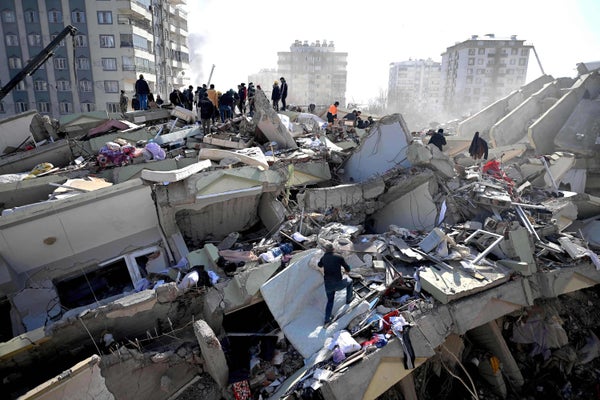
Twitter was blocked in Turkey on Feb. 8, 2023, according to internet monitoring service NetBlocks. The outage came amid the massive rescue operation and humanitarian crisis in the aftermath of the earthquakes in southern Turkey and northern Syria two days earlier. Access to Twitter appeared to be restored about 12 hours after it was first blocked.
On supporting science journalism
If you're enjoying this article, consider supporting our award-winning journalism by subscribing. By purchasing a subscription you are helping to ensure the future of impactful stories about the discoveries and ideas shaping our world today.
Twitter is a microblogging platform that offers users a way to share short chunks of text, audio and video as well as the ability to post threaded conversations. Almost as soon as the main quake hit, thousands of eyewitnesses posted videos and photos on social media, particularly on Twitter. Such first eyewitness accounts are invaluable in helping emergency relief personnel and researchers assess the extent of damage and match aid to what’s needed on the ground.
The Twitter blackout, which was likely the result of governmental action, appeared to have impeded rescue and relief efforts. NetBlocks noted that internet service providers had been blocking traffic to Twitter, and that people could circumvent the blocking by using a virtual private network, or VPN.
Officials in numerous countries periodically block social media and internet access in attempts to limit the flow of information. Turkey is among the countries with a long history of internet censorship.
Twitter’s role in disaster relief
Twitter has been used widely in previous natural disasters. A U.S. Department of Homeland Security briefing from 2013 reported that social media has played an important role during disasters. Twitter in particular has been an important source of crowdsourced and real-time eyewitness data that enables relief personnel to interact with affected communities.
A recent study looked at all 375 million tweets on Twitter in a single day (Sept. 21, 2022) and found that the service allowed governments to communicate crisis information to citizens and citizens to seek help and information. This type of communication and coordination of response efforts has been useful in many situations, from a water contamination crisis in West Virginia to a hurricane evacuation in Florida.
Humanitarian aid and disaster relief require real-time monitoring, almost immediately after a disaster occurs. Combining Twitter feeds with geolocation data and mapping the extracted information makes it possible to visualize an unfolding crisis. Responders can track the locations of damage, casualties and resources to determine how best to target relief efforts.
This kind of data also helps researchers in fields such as transportation get insights about the dynamics of evacuations. A time-based analysis of tweets during Hurricane Sandy in October 2012 shows that researchers can use crowdsourced data from Twitter to quantify the intensity of a hurricane in real time. Such analyses of images of damage and flooding shared through social media help emergency managers identify storm damage and plan relief efforts.
Losing access to Twitter, whether from government blocking, financial barriers to Twitter’s application programming interface or Twitter outages like yesterday’s global glitch, will severely restricts up-to-date information about disaster response as events unfold. It also hinders the ability to learn from the past and prepare for future emergencies.
This article was originally published on The Conversation. Read the original article.