
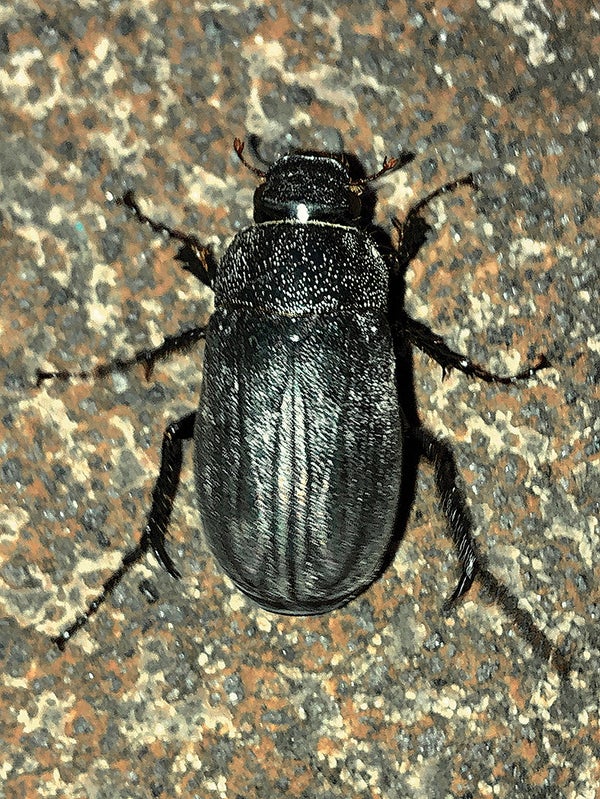
Nearly all animals follow 24-hour activity cycles based on their genetically built-in circadian clocks. But one beetle species operates in 48-hour time chunks instead—apparently driven by a strict schedule for sex. A study in Current Biology shows that a particular gene somehow activates with a two-day pattern to contribute to this cycle.
Both male and female black chafer beetles hide underground during the day and emerge every second night to search for food and a mate. Once aboveground, the females climb plant stalks while secreting sexy-smelling pheromone trails to lead males to them.
Walter Leal, a chemical ecologist at the University of California, Davis, had long wondered whether males of this species sense the females’ pheromones on a 48-hour cycle as well. In the new study, he and his colleagues used a recently released “transcriptome”—a catalog of these insects’ RNA—to finally dig into this schedule’s genetic basis. They identified genes likely to produce odor receptors—and found that only one made a receptor fitting the female’s pheromone. Their experiments confirmed that disrupting this gene’s activity halted males’ attraction.
On supporting science journalism
If you're enjoying this article, consider supporting our award-winning journalism by subscribing. By purchasing a subscription you are helping to ensure the future of impactful stories about the discoveries and ideas shaping our world today.
Next the team monitored how much of this receptor the male beetles produced over time, to determine when they’d be best at tracking the pheromone. Receptor production spiked at night every 48 hours around the time female pheromone production peaked, then hit a low the next night. “We found a 48-hour [receptor-producing] cycle, which is synchronized with the females,” Leal says. “It’s a beautiful story.” The findings show the 48-hour cycle is present in both sexes and engrained on the molecular level.
Biological rhythms typically rely on environmental cues such as day and night; there are no known 48-hour cues in nature. Future work will untangle what drives this cycle in black chafer beetles and how the genes regulate their timing. Jennifer Hurley, a biologist at Rensselaer Polytechnic Institute, says research is revealing how environmental signals can affect biological rhythms. With studies like this, she says, “the field is recognizing that the number of rhythms in biology is enormous.”