
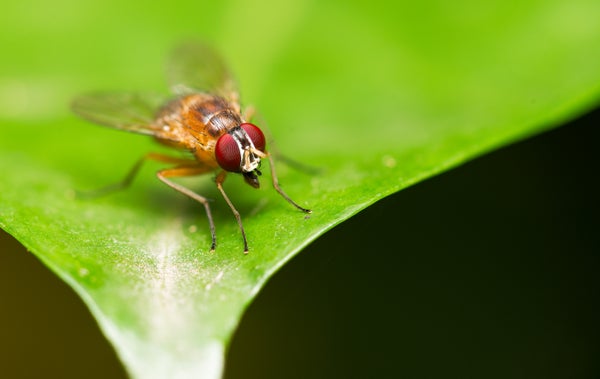
For the first time, scientists have used genetic engineering to trigger ‘virgin birth’ in female animals that normally need a male partner to reproduce.
Previously, scientists have generated young mice and frogs with no genetic input from a male parent. But those offspring were made by tinkering with egg cells in laboratory dishes rather than by giving female animals the capacity for virgin birth, also known as parthenogenesis.
Earlier research identified candidate genes for parthenogenesis, says study co-author Alexis Sperling, a developmental biologist at the University of Cambridge, UK. But her team, she says, not only pinpointed such genes but also confirmed their function by activating them in another species.
On supporting science journalism
If you're enjoying this article, consider supporting our award-winning journalism by subscribing. By purchasing a subscription you are helping to ensure the future of impactful stories about the discoveries and ideas shaping our world today.
No male needed
In mammals, offspring are produced when males’ sperm fertilizes females’ eggs. But many species of insect and lizard, as well as other animals, have also evolved parthenogenesis, which requires no genetic contribution from a male, as an alternative to sex.
To identify the genes that underlie parthenogenesis, Sperling and her colleagues sequenced the genomes of two strains of the fly Drosophila mercatorum: one that reproduces sexually and another that reproduces through parthenogenesis. The researchers then compared gene activity in eggs from flies capable of parthenogenesis with that in eggs from flies capable of only sexual reproduction to identify the genes at work during one process but not the other.
The comparison allowed the authors to identify 44 genes that were potentially involved in parthenogenesis. The researchers altered the equivalent genes in the fruit fly Drosophila melanogaster, which usually cannot reproduce asexually.
After altering various combinations of genes, the scientists hit on a combination that induced parthenogenesis in roughly 11% of female fruit flies. Some of the offspring of these genetically engineered flies were also capable of parthenogenesis.
Although the parthenogenetic flies received genes only from their mothers, they weren’t always clones of their parent. Some had three sets of chromosomes, whereas eggs laid by mothers reproducing through parthenogenesis usually have only two.
Less complicated than sex
“Parthenogenesis is the most effective way to reproduce. In animals, doing sex is very complicated,” says Tanja Schwander, an evolutionary biologist at the University of Lausanne in Switzerland, who has studied parthenogenesis in stick insects. Studying parthenogenesis, she says, helps biologists to understand the benefits and trade-offs associated with sexual reproduction.
The new work could also help biologists to understand the evolution of parthenogenesis itself, says Chau-Ti Ting, an evolutionary biologist at the National Taiwan University in Taipei. She hopes to determine whether other species of fly have genes for parthenogenesis similar to those in D. mercatorum; this could help her to piece together how the behaviour evolved.
Sperling notes that some agricultural pests use parthenogenesis to multiply quickly, amplifying their power to damage crops. In the United Kingdom, for example, a species of moth turned to parthenogenesis because of widespread use of pesticides that disrupt the male moths’ reproduction. Now the moths have become a major pest, Sperling says. She hopes to study which policies and pest-management strategies could trigger pests to rely on parthenogenesis — knowledge that could help to keep pests in check.
This article is reproduced with permission and was first published on July 28, 2023.