New Issue: Orbital Catastrophe Ahead? Read Now

Watch Octopuses Throw Things at Each Other

Cephalopods living unusually close together have been filmed throwing shells, algae and silt—sometimes at another octopus

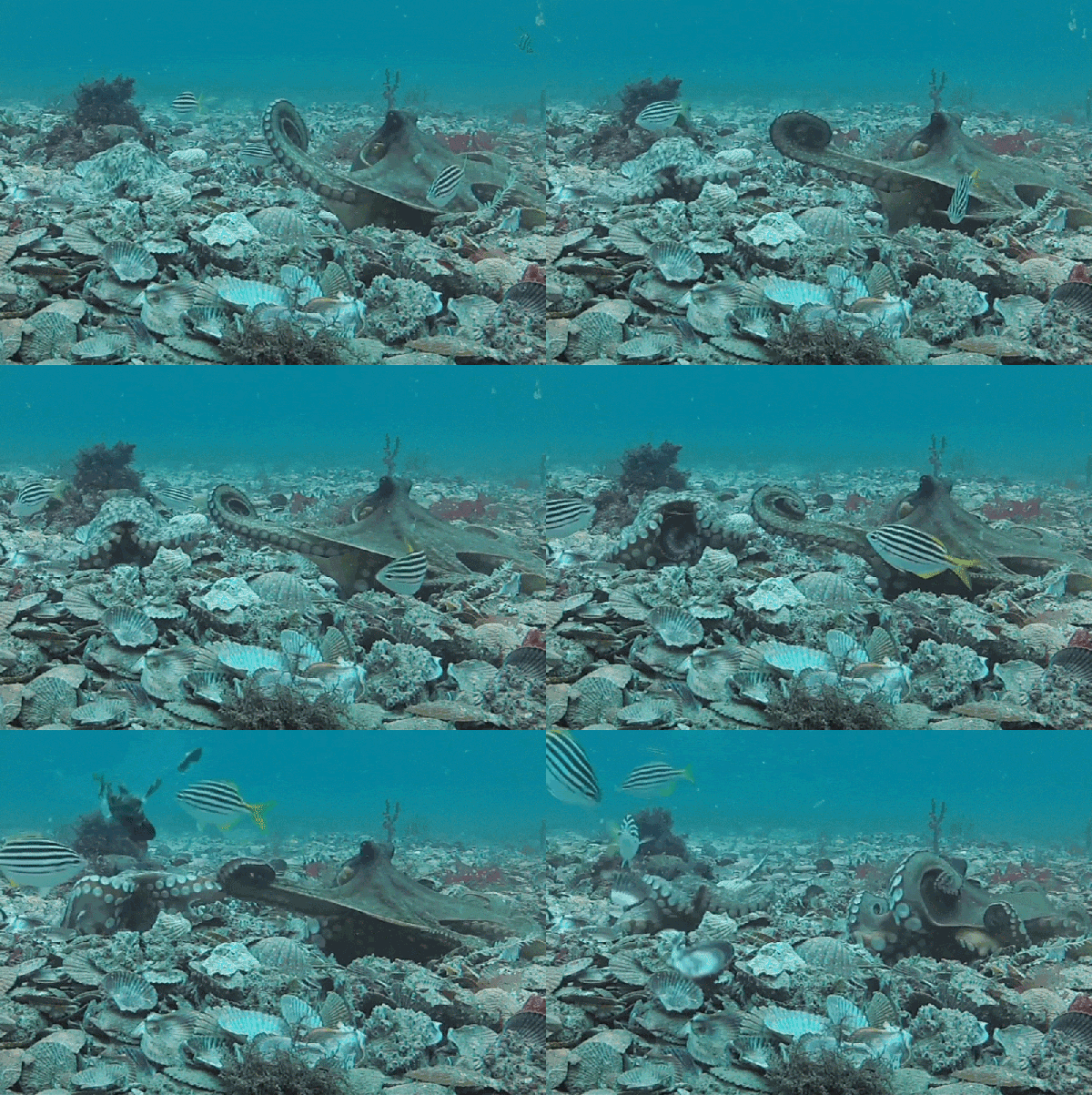
A female gloomy octopus tosses away empty shells.

After eating, a female gloomy octopus (left) tosses away empty shells. This requires an unusual position of the tube-shaped structure called the siphon, suggesting that the throw is deliberate.

Join Our Community of Science Lovers!

For the first time, octopuses have been spotted throwing things — at each other.

Octopuses are known for their solitary nature, but in Jervis Bay, Australia, the gloomy octopus (Octopus tetricus) lives at very high densities. A team of cephalopod researchers decided to film the creatures with underwater cameras to see whether — and how — they interact.

Once the researchers pulled the cameras out of the water, they sat down to watch more than 20 hours of footage. “I call it octopus TV,” laughs co-author David Scheel, a behavioural ecologist at Alaska Pacific University in Anchorage. One behaviour stood out: instances in which the eight-limbed creatures gathered shells, silt or algae with their arms — and then hurled them away, propelling them with water jetted from their siphon. And although some of the time it seemed that they were just throwing away debris or food leftovers, it did sometimes appear that they were throwing things at each other.


On supporting science journalism

If you're enjoying this article, consider supporting our award-winning journalism by subscribing. By purchasing a subscription you are helping to ensure the future of impactful stories about the discoveries and ideas shaping our world today.


The team found clues that the octopuses were deliberately targeting one another. Throws that made contact with another octopus were relatively strong and often occurred when the thrower was displaying a uniform dark or medium body colour. Another clue: sometimes the octopuses on the receiving end ducked. Throws that made octo-contact were also more likely to be accomplished with a specific set of arms, and the projectile was more likely to be silt.

“We weren’t able to try and assess what the reasons might be,” Scheel cautions. But throwing, he says, “might help these animals deal with the fact that there are so many octopuses around”. In other words, it is probably social.

Tamar Gutnick, an octopus neurobiologist at the University of Naples Federico II in Italy, says the work opens a new door for inquiries into the social lives of these famously clever animals. “The environment for these specific octopuses is such that they have this interaction between individuals,” she says. “It’s communication, in a way.”

This article is reproduced with permission and was first published on November 9 2022.

Emma Marris is an environmental writer who lives in Oregon.

More by Emma Marris

First published in 1869, Nature is the world's leading multidisciplinary science journal. Nature publishes the finest peer-reviewed research that drives ground-breaking discovery, and is read by thought-leaders and decision-makers around the world.

More by Nature magazine

Subscribe to Support Independent Journalism

Great science journalism requires human expertise, time, effort and creativity. And it costs money. That’s why I and the journalists here at Scientific American hope you’ll join our community.

When you subscribe, you are supporting staff and freelance journalists who are passionate about telling science stories that are true, important and compelling. Our editors and reporters are often experts in their fields, which means they understand the nuances of big discoveries and can untangle the breakthroughs from the hype. With a subscription, you are also supporting rigorous fact-checking to ensure the words we publish are precise and accurate. And you’re supporting original illustrations, graphics and photos that bring you closer to an advanced laboratory, an ice sheet in Antarctica or a space mission in orbit. You’re helping us craft other types of high-quality journalism as well: Our newsletters are carefully written, edited and curated by staffers you have or will come to know and love. Our Science Quickly podcast is based on original reporting, collaboration with editors and scientists and exacting production.

Subscriptions keep this engine running so we can continue to deliver thoughtful, rigorous and independent science journalism to you. In an era of viral misinformation, this work is crucial. If you value what we do, I hope you’ll consider joining us as a subscriber

Thank you,

Jeanna Bryner, Editor in Chief, Scientific American

Subscribe