
The following essay is reprinted with permission from The Conversation, an online publication covering the latest research.
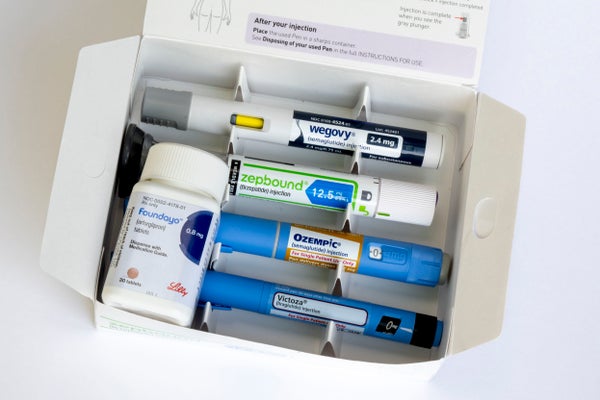
Weight-loss jabs are the latest craze for shedding a few pounds. Their effect has been dramatic with drugs such as Ozempic and Wegovy (semaglutide) causing users to lose up to 15 percent of their body fat on average.
Semaglutide, which is a glucagon-like peptide 1 (GLP-1 receptor agonist drug), mimics the action of a natural gut hormone which is released after we eat.
On supporting science journalism
If you're enjoying this article, consider supporting our award-winning journalism by subscribing. By purchasing a subscription you are helping to ensure the future of impactful stories about the discoveries and ideas shaping our world today.
This gut hormone triggers multiple physiological responses that play a role in regulating body weight, such as releasing insulin to help control blood sugar levels, slowing stomach emptying (so we feel fuller for longer) and even telling the brain’s hunger centres to suppress appetite.
But as effective as GLP-1 drugs are, not everyone who uses them will lose a significant amount of weight. So-called “non-responders” are people who lose less than 5 percent of their body weight after roughly six months of treatment on the highest tolerated dose. Research suggests that between 10 percent and 30 percent of patients fit into this group.
Many people labelled as non-responders to GLP-1 receptor agonists such as semaglutide do not take the medication correctly or discontinue treatment before adequate therapeutic effect can be achieved. Studies show up to 20-60 percent of people stop treatment within the first year, and widespread use of the drug in doses below the recommended amounts.
Certain metabolic issues such as insulin resistance, where the body’s cells stop responding properly to insulin, may also block semaglutide’s actions. Sleep disruption could inhibit the drug’s actions as well, as poor sleep is shown to delay the release of the body’s natural GLP-1 hormone.
People taking other medications, such as corticosteroids and psychotropic drugs (such as antidepressants) which can cause weight gain, may also find GLP-1 drugs don’t work very well for them.
But these aren’t the only reasons a person may be labelled a non-responder.
Interestingly, sex may play a role in how a person responds to these drugs, with research showing women taking semaglutide consistently lose more weight compared to men.
A review of 47 randomised controlled trials involving over 23,000 patients found that the greatest weight-loss effect from GLP-1 drugs was shown in participants who were young, female and not diagnosed with diabetes (so they therefore had better insulin sensitivity).
One reason why women react better could be their higher oestrogen levels. This hormone improves insulin sensitivity and stimulates GLP-1 secretion.
Another reason some people respond poorly to GLP-1 drugs is because of their genetic makeup.
Scientists have identified variants in the gene coding for the enzyme PAM (peptidyl-glycine alpha-amidating monooxygenase) that appears to cause GLP-1 resistance. This genetic change is carried by approximately 10 percent of the population.
People with this genetic change have higher circulating levels of GLP-1 but without the expected biological effect. This means that more GLP-1 hormone is needed to achieve the same response in people without the mutation. This suggests a clear resistance to the hormone.
Research which looked at the genetics of nearly 28,000 people taking a GLP-1 drug also identified genetic issues in another set of receptor genes called GLP-1R and GIPR.
This genetic issue caused differences in both weight loss and side effects. Those who had these genetic issues had higher body mass index (BMI) and body mass on average, and were more likely to have type 1 diabetes and other metabolic issues. Such genetic differences may explain why some people fail to lose any weight when taking a GLP-1 drug.
Another factor that may contribute for non-responders relates to the causes of obesity itself. Our body operates based on four distinct types of hunger. If a medication targets something that is not the primary cause of a person’s obesity, the response seen will be small.
The first type is our baseline slow-burn hunger, which is the minimum number of calories our body absolutely must consume in order to function (also known as our metabolic rate). Another type of hunger is hungry gut, relates to a genuine, physiological need to eat. The way we eat can also be driven by our brain (known as a hungry brain, where we eat from habit or stress) or our emotions (known as emotional hunger, where we eat to cope with how we feel).
For patients with emotional hunger, GLP-1 drugs do not address the root cause of the anxiety and depression driving that person’s overeating. According to one observational study carried out in Japan, emotional eaters were less likely to see significant weight changes when using a GLP-1 drug treatment.
Integrating cognitive behavioural therapy may therefore be important for people who struggle with emotional hunger and are using as GLP-1 drug. For hungry gut patients, a high-protein, high-fibre diet can enhance the drug’s effectiveness.
For patients with a hungry brain, switching to dual agonists such as tirzepatide (commercially known as Mounjaro), which targets two digestive hormones, GLP-1 and glucose-dependent insulinotropic peptide (GIP) may be useful. For slow-burn hunger, resistance training can increase resting metabolic rate.
While weight-loss drugs have proven effective for many, the fact that they don’t work for everyone shows how important it is to move towards developing precision obesity medicine. This would involve analysing a patient’s unique genes and lifestyle patterns to match them with the correct medication. While genetic testing for variants linked to non response is not common, it represents the next step in helping ensure patients are given therapies that work better for them.
This article was originally published on The Conversation. Read the original article.