
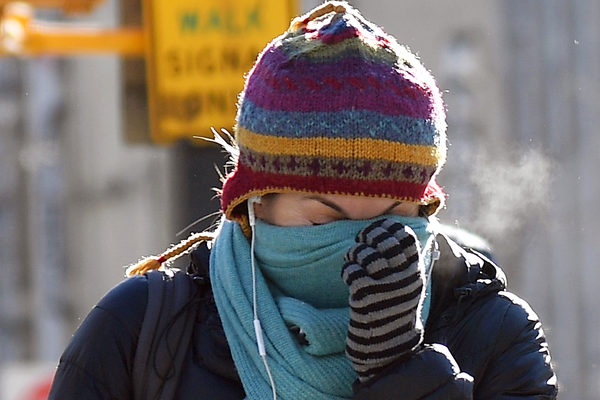
After months of record-breaking warm temperatures, much of the U.S. is facing a harsh, fast-approaching blast of frigid air from the Arctic that could plunge wind chill factors below zero degrees Fahrenheit (–18 degrees Celsius)—all close on the heels of a serious winter storm dumping snow over the Midwest and Great Lakes this weekend.
“It will be a very impressive—certainly one of the most impressive Arctic outbreaks of this century anyway,” says Judah Cohen, a climate scientist at the company Verisk Atmospheric and Environmental Research. Similar recent events have included the terrible cold snap that struck Texas in February 2021 and a sharp preholiday freeze in December 2022, Cohen notes.
Fortunately, this Arctic blast isn’t expected to be as deadly as the Texas event, which knocked out power for four million people, says Kristina Dahl, a climate scientist at the Union of Concerned Scientists, who adds that upgrades in recent years should reduce the strain that frigid air places on the power grid during this event.
On supporting science journalism
If you're enjoying this article, consider supporting our award-winning journalism by subscribing. By purchasing a subscription you are helping to ensure the future of impactful stories about the discoveries and ideas shaping our world today.
To understand how this Arctic blast could affect you and what risks to prepare for, consult your local National Weather Service office. Meanwhile here’s the science behind why temperatures are suddenly plummeting so sharply across such a wide swath of North America.
Typically, very cold air in the Arctic is trapped inside a high-altitude swirl of winds called the polar vortex, which is surrounded by a lower-altitude band called the polar jet stream. If the polar vortex gets disrupted, however, the jet stream can become wavy and carry frigid air much farther south than usual in an Arctic blast. Sometimes this frigid air brings snow and ice; other times the weather is dry but bitterly cold.
Scientists are still trying to pin down precisely what causes these disruptions. “It’s a very active area of research and something that scientists are passionately debating and trying to figure out at the moment,” Dahl says. “It’s definitely not settled science.”
Still, many experts believe climate change likely plays a role—and Cohen goes even further: he contends that climate change in the Arctic is directly disrupting the polar vortex. According to Cohen, this winter’s melting sea ice near Scandinavia coupled with high snowfall near Siberia to set up a thermal contrast, which he says drove the polar jet stream into waves. The polar vortex typically “wakes up” around January, he adds, so it makes sense that we’re now feeling the sharp chill from an Arctic blast whose stage was set by these distant trends.
“It seems very counterintuitive and surprising that a warmer planet can actually increase your odds of experiencing severe winter weather events—but that’s what our research has shown,” Cohen says.
Cohen adds that he expects a second, less severe Arctic blast to occur later this month and that the phenomenon could potentially repeat into February as well.
Although science is still working to hone an explanation for polar vortex disruptions and accompanying Arctic blasts, Dahl says that she sees the irony of this incident coinciding with the U.S. government confirming that 2023 was the hottest year on record. “To me, this is indicative of a climate changed world with greater extremes,” she says.
“I like to think of these polar jet stream outbreaks as ‘global weirding,’” Dahl adds. “Climate change is causing all sorts of different impacts, and some of them are counterintuitive.”