
Editor’s Note (9/26/24): This story was edited after posting. References to Hurricane Idalia were removed to emphasize general information about hurricanes.
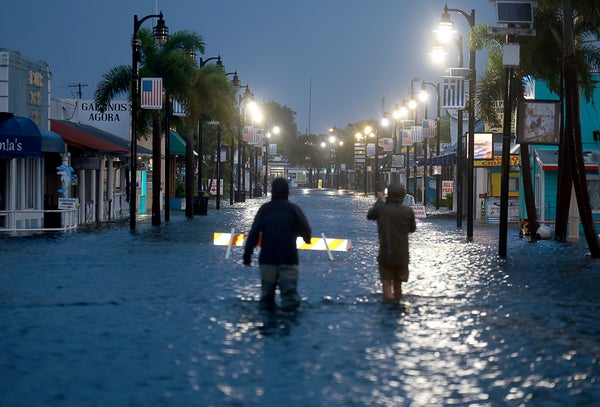
When large storms or hurricanes inundate areas with a storm surge and torrential rain, the resulting floodwaters pose major risks beyond the immediate physical damage they cause. As water accumulates in a region, whether the cause is a storm’s effects, a dam failure or any other reason, it picks up a host of threats to human health, including bacteria, viruses, chemicals, debris, downed power lines and even wild animals.
And those threats are only increasing as climate change causes floods to become more frequent around the world. “Flooding is going to continue to be an increasingly common problem,” says Thomas Frazer, an ecologist at the University of South Florida, who studies flooding. “We’re faced with a reality of rising sea levels, more intense tropical storms and hurricanes and just extreme rainfall events more generally.”
On supporting science journalism
If you're enjoying this article, consider supporting our award-winning journalism by subscribing. By purchasing a subscription you are helping to ensure the future of impactful stories about the discoveries and ideas shaping our world today.
The smallest materials in floodwaters can be the most dangerous, says Henry Briceño, a Florida International University geologist who studies water. “The problems are things that, many of them, you don’t see,” he says, citing in particular the pathogens and chemicals that can accumulate in floodwaters.
Pathogens often come from overwhelmed water-management systems that trigger sewage outflows—although bacteria such as the “flesh-eating,” wound-infecting Vibrio species can also ride in from the wild on seawater. “You might flood a septic system; you might have a sewage spill,” Frazer says. “So there’s a high likelihood that you’re going to get a lot of contaminants, pathogens potentially, into the water.”
Whether a flooded area is urban or rural, the waters can also pick up a range of chemicals usually kept safely away from humans, such as motor oil and cleaning chemicals from cities or pesticides and fertilizers from agricultural lands.
Other threats are physically larger. Downed power lines can electrify floodwaters, and tree limbs and other wreckage can hurt people trying to move through water, particularly if that wreckage is below the surface. “You often can’t see it, and it can be moving rapidly,” Frazer says.
Floodwaters can also carry wildlife. In Florida that can include examples as dramatic as alligators. More commonly floods displace animals such as snakes and rats—or prompt fire ants to form escape “rafts,” floating masses of the painfully stinging insects.
The basic mix of threats present in floodwater is the same around the world, Frazer and Briceño say, although the exact soup can vary depending on local conditions. In some areas of Africa, South Asia and the Caribbean, for example, floods have been known to spread the bacteria that cause the diarrheal disease cholera.
Taken together, it’s no surprise that emergency personnel recommend that you should stay out of floodwaters whenever possible, even if you’re in a vehicle. But while it’s best to avoid contact with floodwater, that’s not always feasible for people who need to evacuate an area during an emergency and its aftermath—or for rescuers who try to help them. Still, experts warn those dealing with flooding not to underestimate the dangers of this water.
“You don’t ever want to ingest floodwaters,” Frazer says. “Definitely try to take a shower, bath, whatever you need to do as soon as possible. You just want to reduce the exposure to pathogens and toxins that might be in that water; you want to get them off your body.” If at all possible, it’s best to keep any injuries high and dry. “Be careful with scratches and things like that,” Briceño says, “because those are places for bacteria and pathogens to enter your body.”
When floodwater lingers, particularly in warmer regions, it can also become a breeding ground for both pathogens and mosquitos that can carry them, Frazer says—so people in flooded areas shouldn’t lower their guard as time passes.
And even for people who live far from coasts, it’s important to remember that flooding can occur anywhere. “Flooding comes in all forms—it’s not just restricted to our coastal areas. We see it inland, in low-elevation areas as well as high-elevation areas,” Frazer says. “The general problem is geographically agnostic.”