
It’s been a brutal flu season. Rates of hospitalizations and outpatient visits for influenza are at a 15-year high, according to data from the U.S. Centers for Disease Control and Prevention. The season got off to a typical, relatively late start, but the CDC has now classified it as “high severity.” And as measured by outpatient visits for flulike symptoms, the level of illness in the U.S. has been comparable to that of the 2009 H1N1 (swine flu) pandemic.
Kids have been hit especially hard: as of February 22, 98 children—most of them unvaccinated—have died from flu in the U.S. this season. There has also been an increase in severe neurological complications in kids, including seizures, hallucinations and other symptoms.
And amid these high rates of illness, the U.S. Department of Health and Human Services recently canceled an advisory committee meeting to determine the flu vaccine strain to be used later this year, ahead of the next influenza season. (The Food and Drug Administration was allowed to participate in a World Health Organization meeting to determine the vaccine’s composition despite President Donald Trump’s ban on government employees working with the agency.)
On supporting science journalism
If you're enjoying this article, consider supporting our award-winning journalism by subscribing. By purchasing a subscription you are helping to ensure the future of impactful stories about the discoveries and ideas shaping our world today.
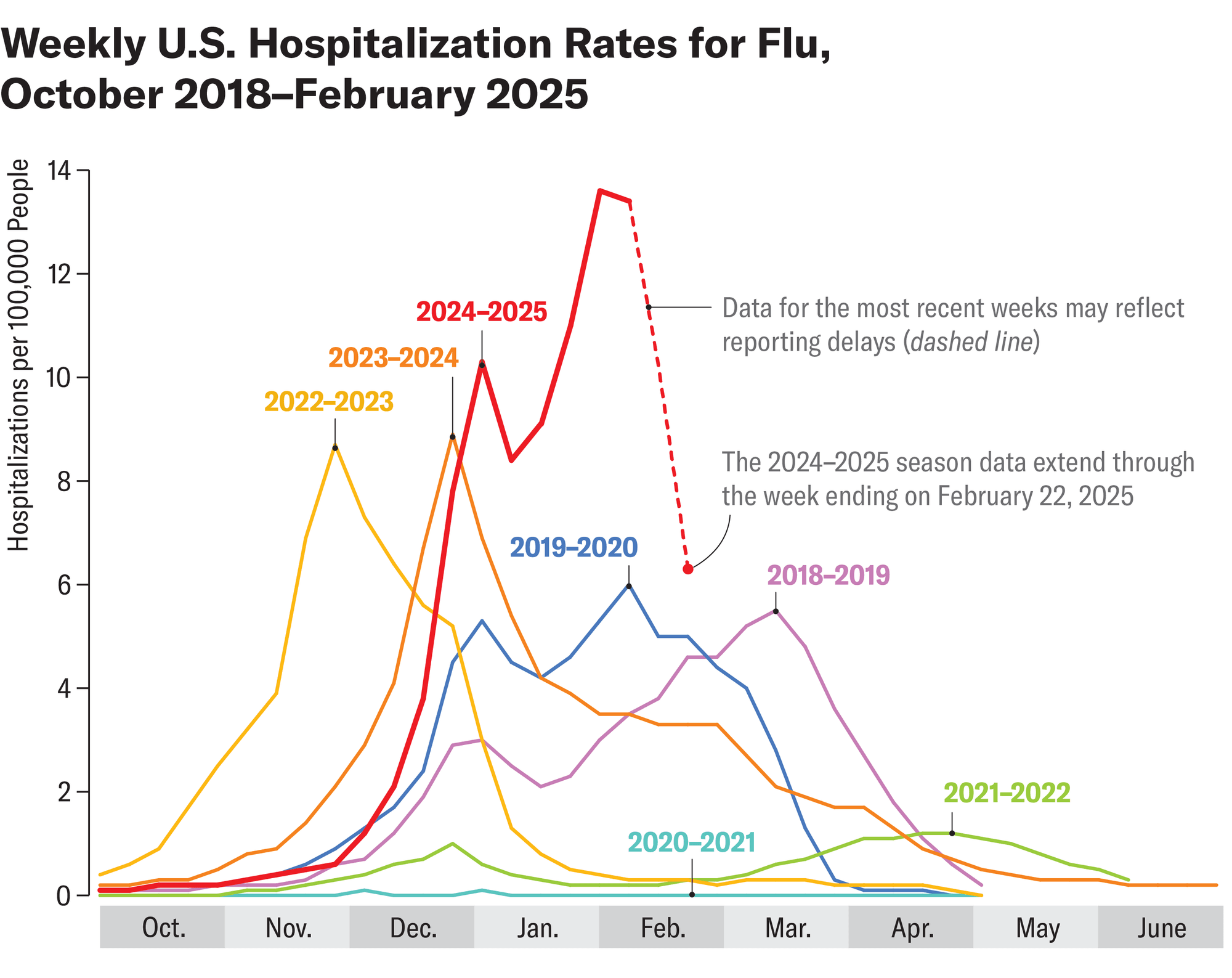
Amanda Montañez; Source: Centers for Disease Control and Prevention (data)
Flu season typically lasts from October through April in the Northern Hemisphere each year, peaking between December and February. But from 2020–2022, the first two years of the COVID pandemic, flu all but disappeared. This was likely a result of COVID-related social distancing measures—and possibly also because of viral interference from the COVID-causing virus itself. By 2022–2023, flu season returned to more of a prepandemic pattern (although it peaked a bit earlier than usual, in late November 2022). The 2023–2024 season appeared to signal a return to a more typical pattern.
The 2024–2025 season started quite normally, reaching an initial peak of just more than 10 weekly hospitalizations per 100,000 people in the first week of January. At the beginning of February, however, hospitalizations peaked again with close to 14 weekly hospitalizations per 100,000 people. There may be delays in reporting, but hospitalizations now appear to be on the decline once more.
Why Has This Flu Season Been So Severe?
It’s not totally clear why flu is hitting so hard this year. One possibility is that it got off to a late start, so the winter holidays arriving and kids going back to school may have fueled a second peak. This year’s flu vaccine provides a similar level of protection as that of recent years, but that protection wanes as the season goes on.
Other factors could be that the flu strains that are fueling illness this season (primarily the influenza A strains H3N2 and H1N1) cause more severe disease and that fewer people have been vaccinated against them. Flu vaccination rates have declined since the beginning of the COVID pandemic, as antivaccination sentiment has gained a stronghold.
Finally, it’s possible that people have less immunity against flu after several years of COVID-related social distancing.
In the U.S., there have also been a few dozen human cases of H5N1 bird flu and one known human fatality from the virus. But cases among people have been rare, appearing mostly in poultry or dairy workers. The current outbreak of H5N1 bird flu has been circulating in wild birds in the U.S. since at least 2022. It was detected in dairy cattle in March 2024 and has caused sporadic human infections since then.
If you get sick with seasonal flu, experts recommend rest, hydration and staying home if you can. People at risk of severe disease may also opt for antiviral drugs such as Tamiflu. The CDC recommends such treatment for pregnant people, as well as those with asthma or chronic lung disease, diabetes or heart disease. Antivirals work best when they are started within one to two days of symptoms (but “starting them later can still be beneficial,” according to CDC). And if you’re not already vaccinated against flu, it’s not too late to protect yourself.