
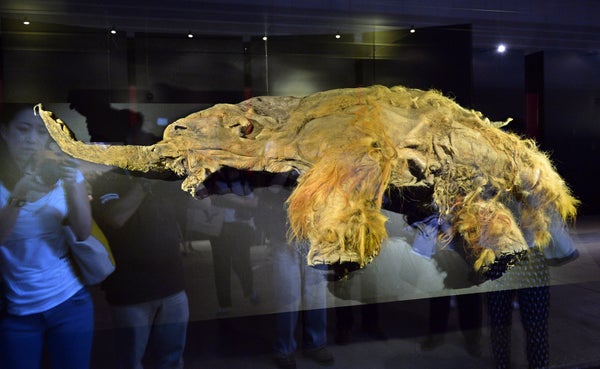
In 2010 Yukaghir hunters found the nearly intact carcass of a young woolly mammoth frozen in the northern Siberian permafrost. With its reddish-brown fur still clinging to its skin, the dog-sized calf was named Yuka Radiocarbon dating placed it at roughly 40,000 years old. Now a team of researchers has extracted from Yuka the oldest RNA molecules ever recovered, revealing traces of gene activity that survived the last ice age.
“This is a snapshot of the last minutes or hours of Yuka’s life,” says University of Copenhagen genomicist Emilio Mármol-Sánchez, lead author of a study on the discovery, which was published today in Cell.
Unlike DNA, RNA records which genes were active in a cell before an organism died. Extracting it is extremely difficult because the molecule is chemically unstable and rapidly destroyed by enzymes and environmental changes after death. Even RNA from living organisms, Mármol-Sánchez notes, degrades within minutes if it is not preserved. Yet obtaining it is crucial to reconstructing how extinct animals grew, adapted to their environments or responded to disease and stress.
On supporting science journalism
If you're enjoying this article, consider supporting our award-winning journalism by subscribing. By purchasing a subscription you are helping to ensure the future of impactful stories about the discoveries and ideas shaping our world today.
The oldest RNA ever reported until now came from a 14,300-year-old “wolf” puppy frozen in permafrost. But when Mármol-Sánchez received a box containing fragments of muscle and skin from 10 woolly mammoths, including Yuka, he suspected he could go even further back.
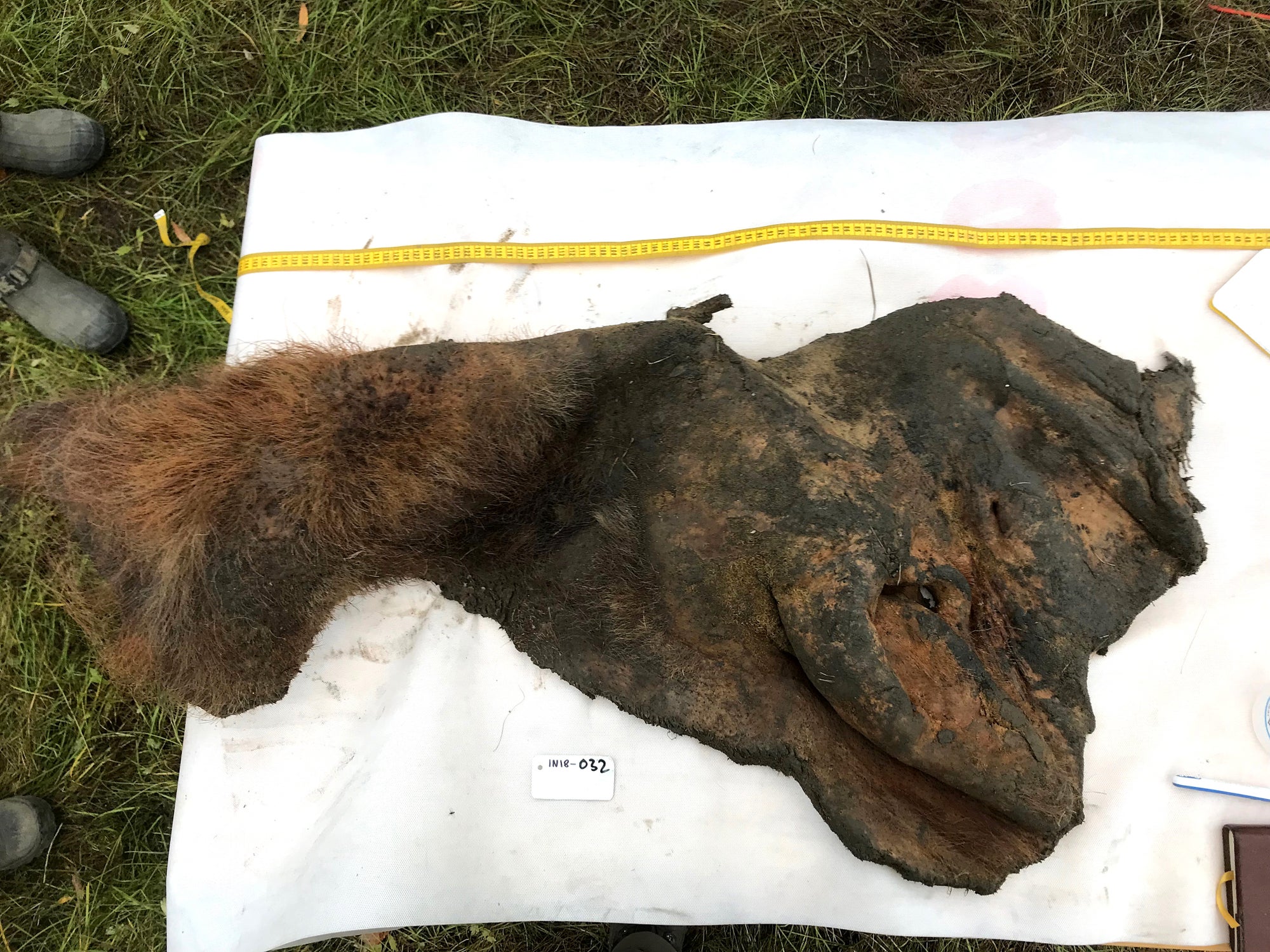
The skin and ear from part of the skull of a woolly mammoth that yielded ancient RNA. The skin was discovered in 2018 in Belaya Gora, near the Indigirka River in Siberia.
Love Dalén
After extracting both DNA and RNA in ultraclean laboratories, the researchers compared several computational tools to ensure that the sequences they recovered truly came from mammoths rather than from modern bacteria or modern contamination. The fragments were then mapped against the genomes of modern Asian elephants and the previously reconstructed woolly mammoth genome to identify which genes the RNA originated from.
In Yuka’s tissue, the team identified hundreds of messenger RNAs—molecules that control which proteins cells make—and noncoding RNAs, which have other functions. Many of the most abundant ones came from genes involved in muscle contraction and energy metabolism. These results open the door to new biological information that will allow scientists to study, for example, stress in the muscles of these ancient animals, Mármol-Sánchez says.
The researchers also detected ancient muscle-related microRNAs as well as two previously unknown microRNAs that were and are unique to mammoths and elephants. The RNA sequences also showed that Yuka carried Y-chromosome genes, meaning the calf wasn’t female, as previously thought, but male.
Oliver Smith, who helped discover the previous record-holding “wolf” RNA in his work as a forensic archaeologist, says the new findings show that “the potential for looking at RNA viruses in permafrost situations is entirely viable.” Beyond offering valuable insights into mammoth biology, ancient RNA can also help scientists study other long-lost organisms, including ancient coronaviruses or influenza strains, adds Smith, who was not involved in the new study . This is important because it helps scientists understand which viruses might remain viable over geological timescales, as well as the risks of reintroducing infections into modern ecosystems and the gaps in their understanding of how such events could translate into real health threats.