
Mind & BrainJune 3, 2011
Memories Are Made of This: Drugs to Boost Recall—or Destroy It
Gary Stix, formerly senior editor of mind and brain topics at Scientific American, edited and reported on emerging advances that have propelled brain science to the forefront of the biological sciences. Stix has edited or written cover stories, feature articles and news on diverse topics, ranging from what happens in the brain when a person is immersed in thought to the impact of brain implant technology that alleviates mood disorders such as depression. Before taking over the neuroscience beat, Stix, as Scientific American's special projects editor, was responsible for the magazine's annual single-topic special issues, conceiving of and producing issues on Albert Einstein, Charles Darwin, climate change and nanotechnology. One special issue he oversaw on the topic of time in all of its manifestations won a National Magazine Award. With his wife Miriam Lacob, Stix is co-author of a technology primer called Who Gives a Gigabyte? A Survival Guide for the Technologically Perplexed.
Memories Are Made of This: Drugs to Boost Recall—or Destroy It
The HDL Conundrum: What's Bad about Drugs for Good Cholesterol?
Ask the Experts: What Does Bin Laden's Death Mean to Us and Society?
It all depends on your social identity--how you relate as an individual to different groups
Artificial Intelligence: If at First You Don't Succeed...
Off the grid: a high-tech military deployed the ancient art of stealth to capture their man
Brain-computer interface guru featured on the Daily Show (and in Scientific American)
One pill makes you smarter: The myths of the meat machine
Cancer Metastasizes Globally: Additional Resources
Once thought to be endemic mostly to richer nations with their longer life expectancies, malignancies now confront denizens of lower and middle-income nations. A new global effort now focuses on the issue.
The deity by any other name: Army resilience program gets a thumbs down from atheists
The Neuroscience of True Grit
When tragedy strikes, most of us ultimately rebound surprisingly well. Where does such resilience come from?
Basic Resilience Training
Here are more details on a massive military program to teach psychological resilience, called Comprehensive Soldier Fitness, as highlighted in "The Neuroscience of True Grit" in the March issue
What Would Reagan Do? Check the MRI
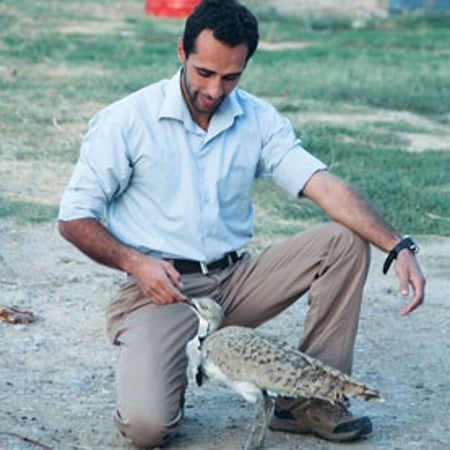
The Bird Man of Baghdad
An unassuming 32-year-old ornithologist, in the midst of war and chaos, continues to add to the store of knowledge about Iraq's assorted bird life
Monkey Think, Robot Do
A demonstration of brain-connected interfaces shows the power of this technology to control robots and other machines using neural signals alone
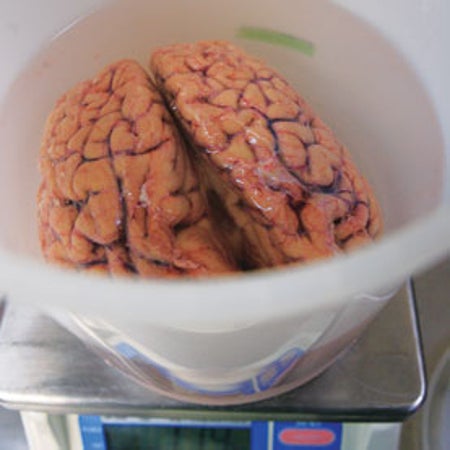
Donate Your Brain, Save a Buck
Hard times are making tissue donation more appealing
Neuroscience meeting: Researchers take a step toward a bionic eye
Neuroscience meeting: Emory University starts center to research autism and other disorders
Harper's: Former Scientific American editor pens bombshell Churchill critique
From gadfly to bureaucrat: The FTC's new chief technology officer
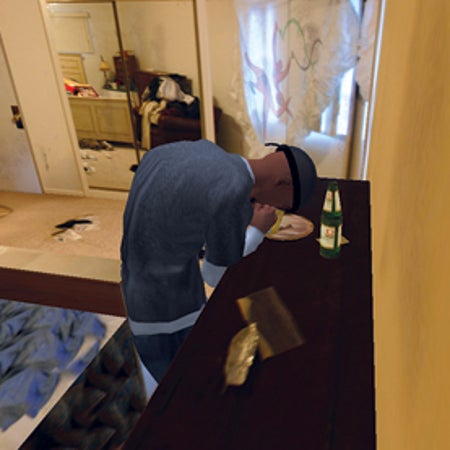
Craving a Cure: A Virtual Meth House Serves as Fodder for Addiction Studies
Researchers turn to virtual worlds for real-world insights into addiction
A "better brains" collective launches to improve cognition of the masses

Feeling the Pain of Rejection? Try Taking a Tylenol
Certain kinds of physical and emotional pain share a neural pathway that responds to acetaminophen
Evolutionary psycho-logy: Commandeering genetics to explain why Obama really is a Muslim

Alzheimer's: Forestalling the Darkness with New Approaches
Interventions before symptoms appear could be key to slowing or stopping the leading cause of dementia