
This article was published in Scientific American’s former blog network and reflects the views of the author, not necessarily those of Scientific American
In 2016 most of us value information for business advantage, personal utility, or sometimes just for fun. It arrives for us mostly over our cellphones or computers.
Information in wartime can mean the difference between victory and horrendous casualties. One hundred years ago today after two years of desperate fighting in the Great War, the process of gathering information had become part of the lethal struggle waged on the ground, sea and in the air. Being able to observe movements of opposing troops gathering for attack or defense gave warning of enemy intentions; being able to identify targets and ascertain the effects of long-range shellfire was also crucial. The image below from the same issue shows a large (probably 400-mm) French railway-mounted gun, sporting a camouflaged paint scheme to help hide it from German reconnaissance. Such a weapon could have a range of 20 miles, a distance not visible to someone on the ground given the curvature of the earth’s surface.
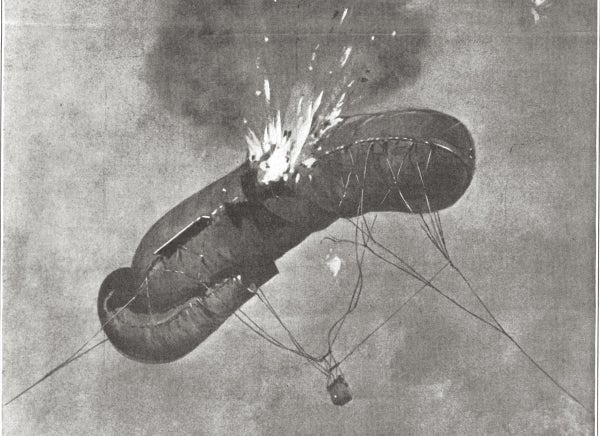
The value of having observers (with binoculars) aloft in balloons, kite balloons (sausage-shaped balloons with stubby wings) and aircraft is detailed in an article in this week’s issue of Scientific American:
On supporting science journalism
If you're enjoying this article, consider supporting our award-winning journalism by subscribing. By purchasing a subscription you are helping to ensure the future of impactful stories about the discoveries and ideas shaping our world today.
“As to [aeronautical machines’] utility, in spite of the uncertainty and experiment necessarily attendant upon their novelty, the services rendered have been so great that it is no longer possibly to conceive of an army not equipped with the aerial arm; such loss would make defeat the certain result of an encounter with a properly equipped force....”

Railway gun: a large gun of this caliber could fire a shell up to 20 miles away. To observe target and shell effects an observer had to be in a balloon or an airplane. Credit: ScientificAmerican Supplement, September 30, 1916
“Looking at the matter strictly from the standpoint of reconnaissance, the considerably increased effectiveness of fire to-day makes this service by the cavalry extremely difficult, and the information they are able to procure insufficient....”
“It is not enough, however, to know what goes on along the fringe of the hostile front with which we are in direct contact. The facilities of transportation which make possible the use of railroads for rapid concentration and shifting of forces along interior lines makes imperative a continuous surveillance of the enemy’s reserves and all movements thereof; various types of aircraft [including balloons] are the only means of foreseeing and forestalling his projects....”
“The singularly augmented range of cannon permits the setting up of these far from the advanced line, and affords the best means in the world for their concealment. How are these positions to be marked in the absence of elevated observatories, or aerial observatories?...”
“Such are the three ends—reconnaissance, direction of fire, and bombardment—to which the aerial service is put in present day warfare, filling a great void in the resources available to the army....”
-
The views expressed are those of the author and are not necessarily those of Scientific American.
Our full archive of the war, called Scientific American Chronicles: World War I, has many articles from 1914–1918 on the technology of warfare on the Western Front in the First World War. It is available for purchase at www.scientificamerican.com/products/world-war-i/