
This article was published in Scientific American’s former blog network and reflects the views of the author, not necessarily those of Scientific American
It was February 2001. I had just returned to Popular Science after my second daughter’s birth. Among the answering machine messages was one from another publication. I didn’t think anything of it; info requests are frequent enough. When I returned the call, however, I soon snapped to attention. Scientific American was looking for an executive editor, the caller told me. Would I possibly be interested? I thought: Would I?! And how!
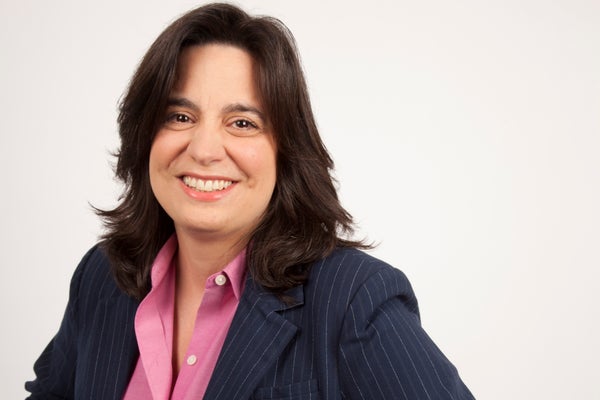
For the next, amazing eight years, I worked alongside the brilliant Editor in Chief John Rennie. When John eventually moved on to other adventures, I applied for the top job. In December 2009 I became Scientific American’s eighth EIC and the first woman to hold the role. My London-based boss at the time, the wonderful Steven Inchcoombe, joined us in New York for champagne. As we raised our glasses, I thanked everyone for their support and added: “Now get ready to work, because you’re going to work—hard!” That got a lot of laughs, as I’d hoped, but I wasn’t really kidding. In short order, the team completed redesigns on print and digital platforms, won a National Magazine Award for “General Excellence,” launched our first blog network, inaugurated a series of STEM educational activities inspired by the White House’s “Educate to Innovate” campaign and embarked on a decade of sustained ScientificAmerican.com audience growth. Team: what a remarkable set of achievements, thank you!
In recent years, I’ve also held an additional role as Executive Vice President of Magazines and Research Services at Springer Nature, Scientific American’s parent, working for the awesome Dean Sanderson. I’ve learned so much from our global Magazines team of 170 staff in 10 countries, which includes reporters, editors, designers, multimedia talent and publishers. In addition to producing some of the world’s finest science journalism under the Scientific American and Nature brands, the Magazines team includes award-winning custom media and publishing staff who support an array of client marketing services for our external partners. I’m grateful to have had the privilege to work alongside such an inspiring and talented group of people.
On supporting science journalism
If you're enjoying this article, consider supporting our award-winning journalism by subscribing. By purchasing a subscription you are helping to ensure the future of impactful stories about the discoveries and ideas shaping our world today.
Now it’s time for me to take on a new challenge. I’m truly honored that I’ve been asked to serve as the next Dean of Boston University’s College of Communication, my alma mater. Reflecting on my career, it occurs to me that all of the things I’ve learned so far are only prerequisites for one of the most important jobs I can imagine: being part of a team of faculty and staff whose goal is to support curious young minds and to give them the critical-thinking tools and other skills that they will need to create a better future for us all.
My new role at Boston University doesn’t start until August 15. From now through July, I’ll be working with colleagues to ensure an orderly transition. I’m pleased to say that I will continue as a contributing editor for Scientific American. And I’m really looking forward to celebrating next year with you all and with our editorial teams when Scientific American marks its 175th anniversary. If I may borrow the New York State motto: Excelsior!