
This article was published in Scientific American’s former blog network and reflects the views of the author, not necessarily those of Scientific American
World-changing ideas may just come from our youngest scientists. This year's winners of the annual Google Science Fair—including the winners of the Scientific American Innovators Award—were announced this week at Google headquarters in Mountain View, Calif. The event is the largest online science fair in the world, and since its inception in 2011 more than 30,000 teenagers have submitted projects in almost every country.
“Kids are born scientists,” says Scientific American Editor in Chief Mariette DiChristina, who served as head judge at the fair. “They ask great questions and we should foster their efforts to learn the answers firsthand."
For the past five years Scientific American has partnered with Google to award the Scientific American Innovator Award, which honors an experimental project that addresses a question regarding the natural world. This year's award went to three eighth graders from Ohio who were particularly disgusted with the amount of Styrofoam (polystyrene foam) trash they saw in their everyday lives—the material accounts for 25 percent of landfill space, and is exceptionally difficult to recycle or reprocess.
On supporting science journalism
If you're enjoying this article, consider supporting our award-winning journalism by subscribing. By purchasing a subscription you are helping to ensure the future of impactful stories about the discoveries and ideas shaping our world today.
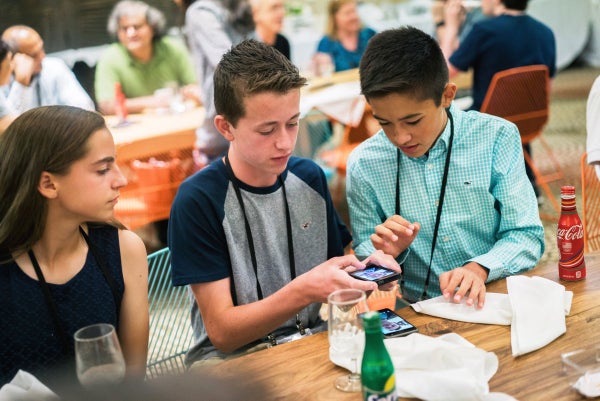
The team of Julia Bray, Luke Clay and Ashton Coffer, all age 14, analyzed the chemical structure of Styrofoam and determined that it is composed of over 92 percent carbon. This sparked their idea: They hypothesized that they could use heat to convert the Styrofoam into activated carbon—which could then be used to filter water. After 50 hours of experimental work, the team successfully converted the polystyrene into carbon with over 75 percent efficiency by heating the material to 120 degrees C. They then treated the carbon with a set of chemicals to increase the surface area of the material, and tested it against commercially available water filters. Their results showed that their carbon successfully filtered many of the same compounds that commercials filters remove from water.
"Styro-Filter is just the beginning of an innovation to take dirty waste and make clean water," Bray explains in her team's video summary of the project. The team has filed for a provisional patent for its filter-making process.
The winners of the Scientific American Innovators Award share a $15,000 cash prize. The grand prize of the Google Science Fair went to Kiara Nirghin, a 16-year-old from South Africa who used orange peels and avocado skins to devise a superabsorbent material that can absorb and hold 300 times its weight in water. She hopes that the nontoxic material can be used to boost agriculture in water-scarce regions.
"All of the finalists produced inspiring work,” DiChristina says. “It’s thrilling that the judges chose such exciting candidates from all around the globe."