
This article was published in Scientific American’s former blog network and reflects the views of the author, not necessarily those of Scientific American
Below is an edited version of an essay written 15 years ago for The New York Times. –John Horgan
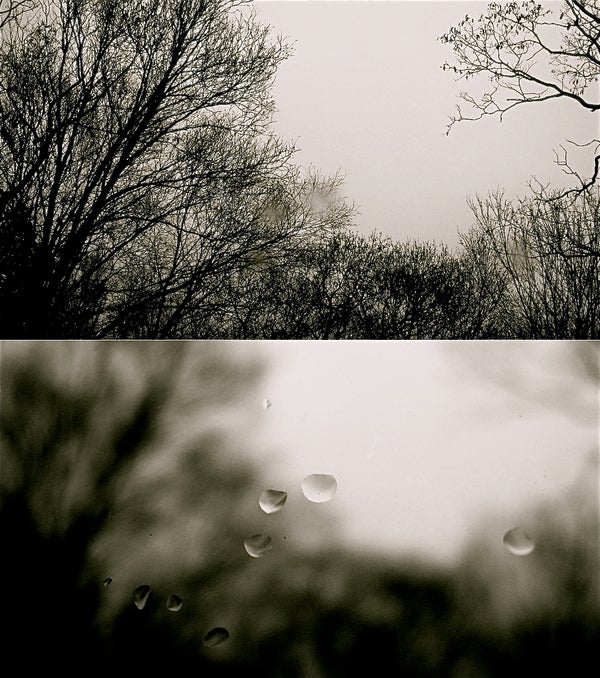
Soon after nightfall on Winter Solstice, the shortest day of the year, I pulled on my coat and boots and tramped into a field near my home. Near a clump of skeletal trees on the field’s far side, I found a circle of stones enclosing a heap of sticks, which my wife and two children had gathered earlier that day. With a chunk of artificial kindling and a dozen matches, I got the sticks burning just before three lanterns bobbed toward me out of the darkness.
We sat around the fire for only a half hour or so. The night was thumpingly cold, and smoke kept blowing in our faces. My six year old son and four year old daughter were more interested in jabbing the fire with sticks than in listening to their parents’ makeshift stories about the Man on the Moon and other celestial beings. My daughter singed her hair, and the tip of her mitten melted. Glancing up at the stars and moon, I was suddenly overcome with…
On supporting science journalism
If you're enjoying this article, consider supporting our award-winning journalism by subscribing. By purchasing a subscription you are helping to ensure the future of impactful stories about the discoveries and ideas shaping our world today.
Actually, no word captures the feelings that flooded me, but awe will suffice. As a science journalist, I know that scientists don’t have a clue how our universe sprang into being billions of years ago, or why it took this particular form out of countless other possibilities, including nonexistence. Nor does anyone know how inanimate matter on our little planet coalesced into living creatures, let alone creatures like us. Science, you might say, has discovered that our existence is infinitely improbable, and hence a miracle.
It is one thing to know intellectually that life is a miracle. Its quite another to see it. Saints and poets aside, most of us rarely do. Our pinched perception stems from two deep-rooted cognitive tendencies, instrumentality and automatization. Instrumentality is our compulsion to view life as a series of tasks that advance our selfish interests. Automatization is our propensity to learn chores so thoroughly that we perform them with little or no conscious thought.
These traits have undoubtedly helped our species survive. Automatization is an especially handy cognitive feature, because it allows us to carry out more than one task at the same time--pondering a drop in our 401K investments, for example, while watching our kids sing in a Christmas concert. The downside of instrumentality and automatization is that we end up sleepwalking through life.
Every now and then, if we’re lucky, we stop seeing the world as something to be manipulated for our ends. We simply see it, undistorted by our desires and fears. This form of perception is the goal of all contemplative spiritual traditions. When an aspirant asked the 15th-century Zen master Ikkyu to write down a maxim of the highest wisdom, Ikkyu wrote: Attention. The dissatisfied aspirant asked, Is that all? And Ikkyu wrote: Attention. Attention.
Art, poetry and music can help us pay attention. And so can religious rituals, which might explain why so many people who aren’t otherwise religious--including agnostics like me--still celebrate holidays like Christmas and Hanukkah. We especially need these rituals in this most benighted of seasons, when we are prone to dwelling on life’s darker aspects.
The bugbear haunting Christianity and other faiths is the problem of evil. If a loving God created us, why is life often so cruel? But sitting with my family in that circle of stones on Winter Solstice helped me see that birth, beauty, love and laughter also pose a problem. If there is no God, and we are here through sheer happenstance, why is life so wonderful? It’s a mystery, which no theory or theology can possibly dispel. I don’t know whom or what to thank, but I’m thankful.
Further Reading:
Can Faith and Science Coexist?
Can Science Solve--Really Solve--the Problem of Beauty?
My Modest Proposal for Solving the “Meaning of Life Problem”—and Reducing Global Conflict.
Is Scientific Materialism "Almost Certainly False"?
What Should We Do With Our Visions of Heaven and Hell?
Meta-Meditation: A Skeptic Meditates on Meditation.
Rational Mysticism: Spirituality Meets Science in the Search for Enlightenment.