
This article was published in Scientific American’s former blog network and reflects the views of the author, not necessarily those of Scientific American
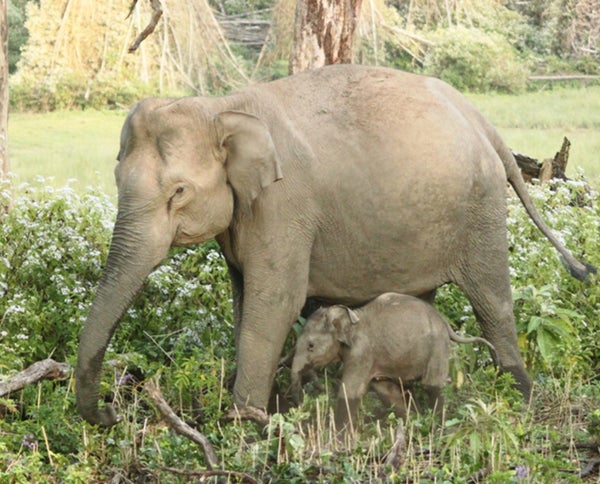
More than half of juvenile Asian elephants (Elephas maximus) living in India’s wildlife reserves die before they hit puberty and no one knows exactly why.
According to data collected by B.M. Arora, president of the Association of Indian Zoo & Wildlife Vets, elephants die for a lot of reasons but those reasons are not always clear. Predators and poachers kill some, while others die from fighting each other, touching electric fences, or being struck by trains.
Many more deaths, however, come from less certain causes. Of the more than 6,000 elephant mortalities since 1990 that Arora could document, the nature of 824 deaths remains unknown.
On supporting science journalism
If you're enjoying this article, consider supporting our award-winning journalism by subscribing. By purchasing a subscription you are helping to ensure the future of impactful stories about the discoveries and ideas shaping our world today.
Part of this comes from the fact that it’s hard to diagnose the cause of death if a body is already heavily decomposed by the time it is found, but some of it is just bad record-keeping. Arora explained that each of India’s state forestry departments keeps their data on elephant deaths in a different manner. Some states started documenting their deaths decades ago, while others didn’t begin the practice until 2012. Other data is incomplete. Many records indicate that an elephant died of disease but does not note which disease.
Even with missing data, however, the numbers Arora compiled present a picture of tough times for India’s elephants, especially the youngest animals. In the state of Assam, 61.4 percent of elephants died before they hit puberty (around the age of 15). In West Bengal, which has a smaller elephant population, the percentage was even higher: 66.18 percent. Five other states had juvenile mortality rates between 42 and 58 percent.
By comparison, death rates of breeding-age elephants ranged from 30 to 53 percent.
Arora warns that finding out exactly why elephants die—especially before so many reach breeding age—will be essential for future conservation efforts. The information will not just help the elephants directly; it could also help to reduce the growing number of people killed by elephants each year, as well as the number of elephants that are in turn killed in retaliation.
Conservationists are starting to take the first steps to understand these abnormal mortalities. Last month a number of experts gathered in India to discuss the issue at a symposium organized by Arora. The next steps have yet to be announced, but this is obviously an issue that we’ll be hearing much more about in the years to come.
Photo by Kamal Venkit. Used under Creative Commons license