
This article was published in Scientific American’s former blog network and reflects the views of the author, not necessarily those of Scientific American
The world of giraffe conservation just got turned upside down.
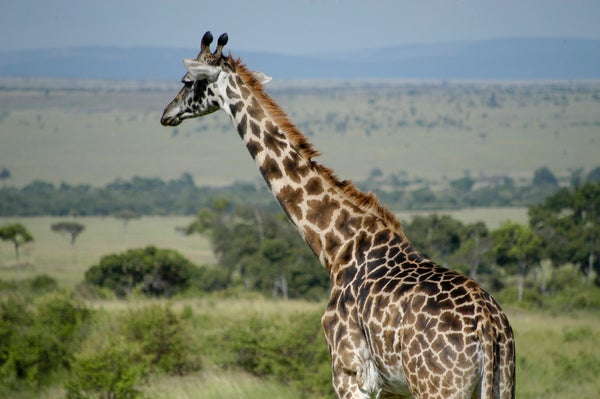
New genetic tests reveal that Africa’s giraffes are not all the same species. Instead, they are actually four separate, genetically isolated species, each of which may now be much more at risk than previously realized. The total population for all four species is now estimated at about 90,000 animals—far fewer than the number of elephants left on the continent.
A paper proposing the new giraffe taxonomy appeared this week in the journal Current Biology. In addition to the four species, researchers also identified several newly recognized or reorganized subspecies. Giraffes were previous recognized as one species with up to eleven different subspecies, some of which were already contentious.
On supporting science journalism
If you're enjoying this article, consider supporting our award-winning journalism by subscribing. By purchasing a subscription you are helping to ensure the future of impactful stories about the discoveries and ideas shaping our world today.
The new species, as detailed in the paper, are:
The southern giraffe (Giraffa giraffa), comprising two distinct subspecies, the Angolan giraffe (G. g. angolensis) and South African giraffe (G. g. giraffa)
The Masai giraffe (G. tippelskirchi), which includes the formerly recognized Thornicroft’s giraffe
The reticulated giraffe (G. reticulata)
The northern giraffe (G. camelopardalis), which includes Nubian giraffe (G. c. camelopardalis) and its new synonym, Rothschild’s giraffe (G. c. rothschildi), with Kordofan giraffe (G. c. antiquorum) and West African giraffe (G. c. peralta) as distinct subspecies.
The identification of new giraffe species also reveals how endangered some of these populations have become, Giraffe Conservation Foundation president Julian Fennessy said in a prepared release. “For example, the northern giraffe number less than 4,750 individuals in the wild, and reticulated giraffe number less than 8,700 individuals—as distinct species, it makes them some of the most endangered large mammals in the world and requires doubling of protection efforts to secure these populations.”
Of the four species, only two appear to currently be fairly healthy. The Giraffe Conservation Foundation estimates the southern giraffe population at 52,000 animals and the Masai giraffe at 32,500. The worst off? That would be the West African giraffe subspecies, with just 450 left alive today.
Will this genetic revelation light a fire under efforts to conserve all of Africa’s giraffes? That’s definitely the hope. This research came out of work to understand just how much each of the continent’s previously accepted giraffe subspecies were at risk. Now we know more than we expected, and that can only help in the long run.
Previously in Extinction Countdown: