
This article was published in Scientific American’s former blog network and reflects the views of the author, not necessarily those of Scientific American
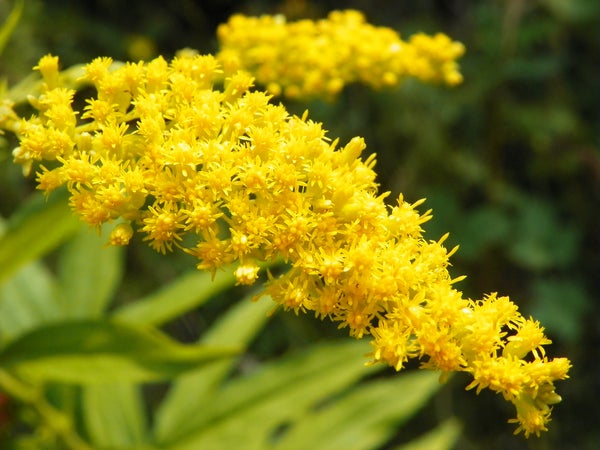
Here in North America, the ubiquitous plants known as goldenrod (from the genus Solidago) play host to literally hundreds of insects, providing shelter or food to bees, butterflies, spiders, praying mantises and all kinds of other species.
In other parts of the world, however, the relationship is decidedly negative. Goldenrod—a remarkably adaptable group of plants—has taken over fields throughout Europe and Asia, putting native species at risk wherever they grow. Goldenrod can reach up to 2 meters in height, so they block the sun from reaching smaller plants. They are also prodigious reproducers, with each adult plant capable of releasing up to 10,000 tiny seeds which are easily dispersed by the wind. Finally, their roots also produce a group of chemicals that can inhibit the growth of other plants that surround them, a process called allelopathy. Those three factors alone have been enough to label goldenrod as some of the world’s worst invasive plants.
Now new research shows that the effect of goldenrod invasions is even more dangerous than we previously knew. According to a paper published Jan. 11 in the Journal of Insect Conservation, invasive goldenrod in Europe are also killing off native ant and butterfly species.
On supporting science journalism
If you're enjoying this article, consider supporting our award-winning journalism by subscribing. By purchasing a subscription you are helping to ensure the future of impactful stories about the discoveries and ideas shaping our world today.
Researchers from Poland’s Jagiellonian University discovered this insect decline by examining ten semi-natural grasslands located southeast of Krakow. Five of those meadows, the authors wrote, have “a serious problem with uncontrolled spreading of goldenrod populations.” They looked at a total of 60 plots within those meadows and the insect compositions they contained.
More specifically, they looked at ants. The plots contained seven different ant species, the most common of which were from the genus Myrmica.
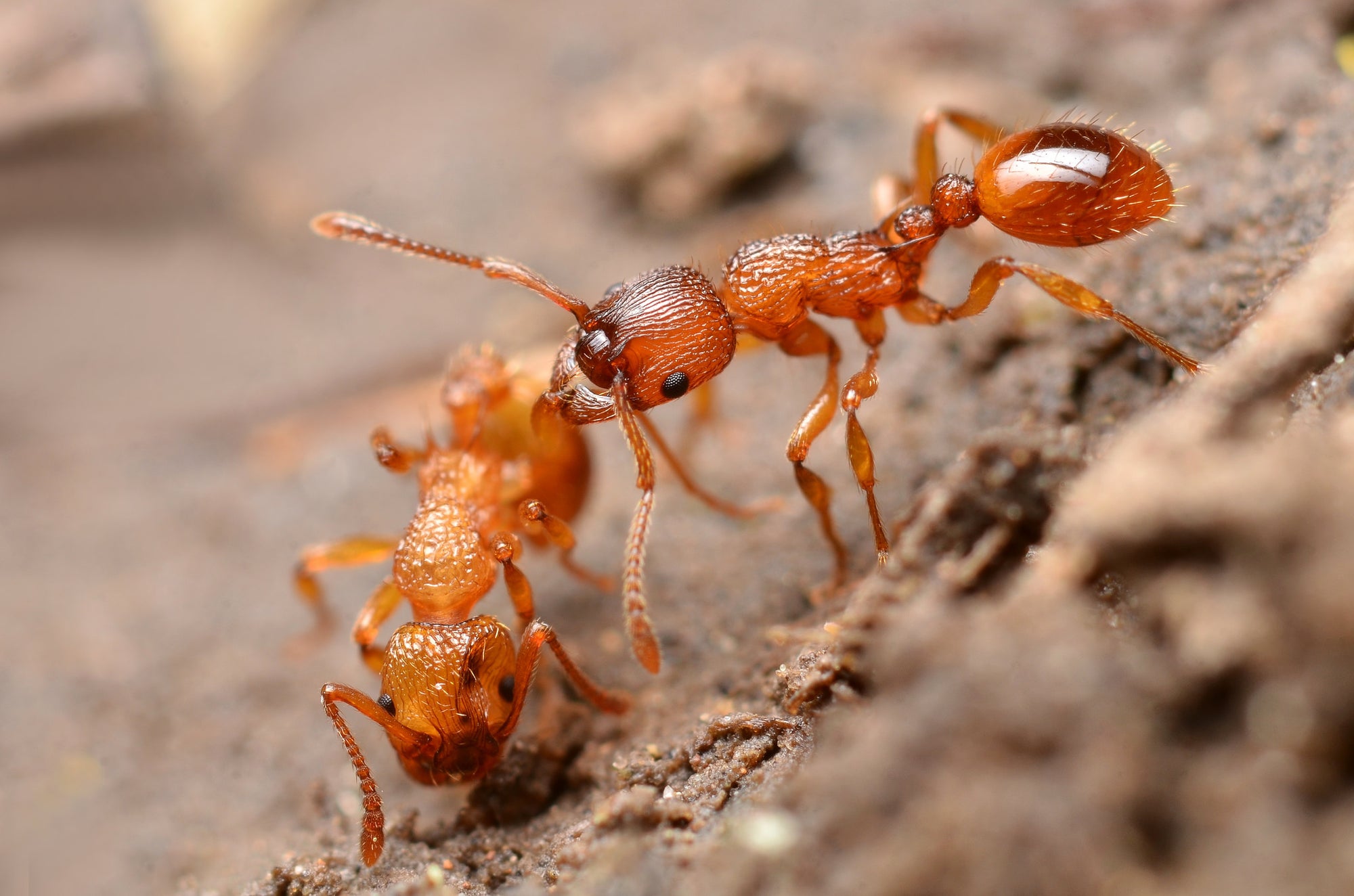
Photo: Gillies San Martin. Used under Creative Commons license
Well, they were the most common ants in the plots that didn’t contain goldenrod. In plots where the invasive plants were present, Myrmica populations were reduced by at least 50 percent and up to 81 percent. The most striking effect was on a species called M. scabrinodis, which the authors wrote should have adapted to the cool shade provided by goldenrod. Unfortunately goldenrod produces nectar later in the season than native plants, which apparently forces the ants to travel further and use more energy to search for food.
Why does that matter? For one thing, ants play a pretty important role in the ecosystem. As the authors wrote in their paper, ants in general consume 3 percent of a meadow’s biomass each season and in the process affect the chemical composition of the surrounding soil. Their corridors and nests also serve to make the soil more porous, enhance decomposition, and allow colonization of microbiota and fungi that plants need as parts of their diet.
More pressingly, the three Myrmica ant species also play an important part in the lifecycle of three threatened or endangered butterflies in the Phengaris genus, which lay their eggs in ant nests and often feed on the ants. Two of the three species fully depend on this parasitic relationship for their survival.
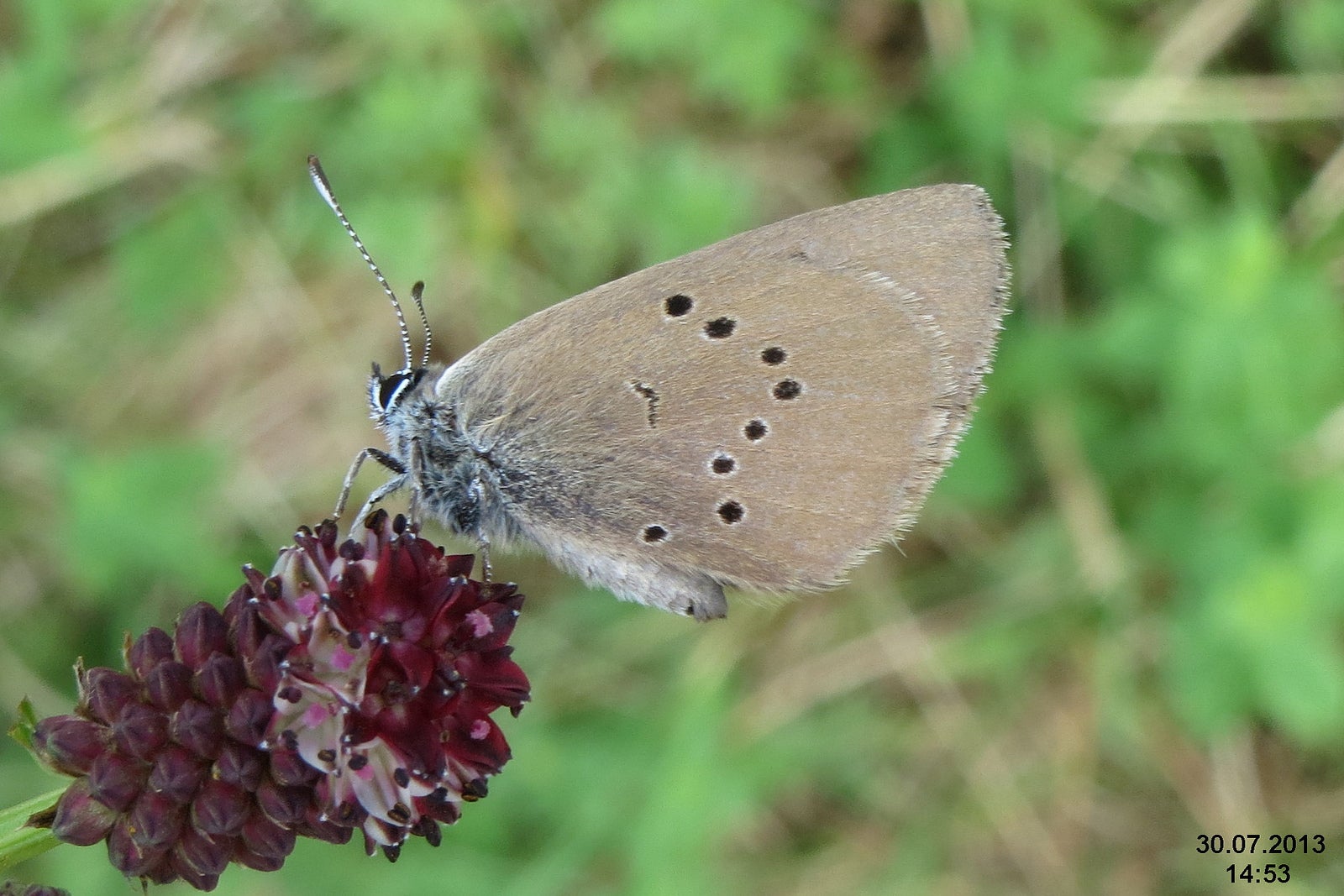
Photo: Dusky large blue butterfly (Phengaris nausithous) by David Short. Used under Creative Commons license
The authors say that a change in Phengaris butterflies has not yet been observed in the area of the study, but the goldenrod invasion is new enough that it could soon cause declines in at least two of the three species.
This might seem like a small-scale study, but it’s an important piece of the picture of Europe’s declining meadowlands. A paper published in 2014 estimated that Europe has lost as much as 80 percent of its ecologically important meadows over the past century due to development, mowing and cattle grazing.
The full effect of that meadow loss is still being determined, but the ants and the butterflies are just the beginning. Previous research has also linked goldenrod to other losses in biodiversity. The authors warn that serious attempts are necessary to stem the goldenrod invasion throughout Europe before the ecological damage can no longer be undone.