

This article was published in Scientific American’s former blog network and reflects the views of the author, not necessarily those of Scientific American
The world’s largest carnivorous bat species isn’t really a vampire, but it sure will take a bite out of whatever it wants.
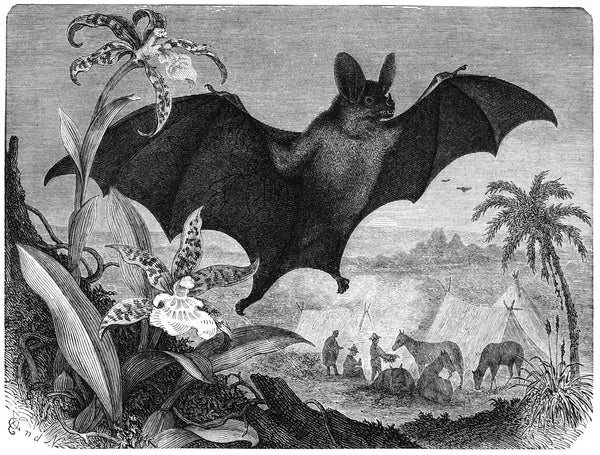
Spooky species name: The spectral vampire bat, a.k.a. the spectral bat, false vampire bat, or Linnaeus’s false vampire bat (Vampyrum spectrum).
What’s so scary about it? No matter what you decide to call it, this thing is huge. Some have wingspans as wide as 100 centimeters. They hunt just about every type of prey they can tackle, including dozens of species of birds, reptiles, mammals, insects, and even other bats. (Don’t worry, people don’t appear to be on the list.)
On supporting science journalism
If you're enjoying this article, consider supporting our award-winning journalism by subscribing. By purchasing a subscription you are helping to ensure the future of impactful stories about the discoveries and ideas shaping our world today.
Where should I not go if I want to avoid these bats? The spectral vampire bat can be found throughout large swaths of southern Central America and northern South America, so keep out of the forests in those regions.
IUCN Red List status:Near threatened
Major threats: Deforestation and habitat fragmentation.
Notable conservation programs: None? Well, none that I could find. Heck, there hasn’t even been much research about this species published over the past few years. It’s reportedly hard to study because it’s relatively rare, fairly widespread, and notably frightening.
Horror movie: Here’s grisly footage of a spectral vampire bat eating another, smaller bat—the stuff of nightmares!
Blood-curdling final message: Seriously, this is a somewhat scary critter, but that’s no reason not to study it, enjoy its existence and hope for its conservation. While no organization seems to have devoted any efforts specifically to this species, numerous programs in the spectral bat’s territory work on trying to limit the deforestation that threatens the region. Without their work, who knows what we could lose to extinction. And that’s the scariest possibility to think about this Halloween season.
Previously in Extinction Countdown: