
This article was published in Scientific American’s former blog network and reflects the views of the author, not necessarily those of Scientific American
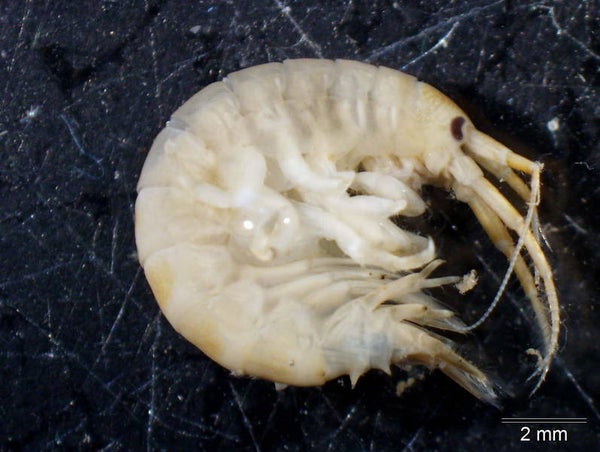
The killer shrimp (Dikerogammarus villosus) has a pretty nasty reputation.
Originally from Eastern Europe, these invasive amphipod crustaceans—they’re not really shrimp—breed quickly wherever they spread and have a bad habit of viciously attacking local aquatic wildlife. Killer shrimp are small (just 3 centimeters) but they make up for that lack of size with a bad attitude and a big mouth. They have often been observed biting and killing other creatures just for the sake of attacking them, not for food.
Over the past few decades killer shrimp have spread from their original habitat in the Danube River throughout much of Europe, usually in the ballast water of commercial fishing or shipping vessels. In many areas where they have taken up residence, local aquatic life has become depleted. Some species have disappeared altogether.
On supporting science journalism
If you're enjoying this article, consider supporting our award-winning journalism by subscribing. By purchasing a subscription you are helping to ensure the future of impactful stories about the discoveries and ideas shaping our world today.
But has the killer shrimp by itself caused any of these disappearances? New research suggests that it’s a bit more complex than we may have previously realized.
What’s true is that the arrival of killer shrimp in Bavaria led to the near-extinction of a native crustacean species, Gammarus pulex. But according to a paper published earlier this summer in BMC Ecology, the killer shrimp didn’t cause this population decline on its own. What the shrimp did was push the other crustaceans out of the river hiding places that would have normally protected them from predators. That left G. pulex out in the open, where they could became easy prey for a second invasive species, a fish called the round goby (Neogobius melanostomus).
Researchers from the Technical University of Munich tested this out by catching round gobies and checking their stomach contents, which proved they were eating G. pulex. They also tested things out in an aquarium setting, where the researchers were able to prove that G. pulex living in the same tank with killer shrimp were much more likely to be predated upon because the shrimp intensively took advantage of the best hiding places.
Yes, the killer shrimp effectively took the coward’s way out and lived to fight another day while the native species just became lunch.
That doesn’t minimize the killer shrimp’s role in the native crustacean’s decline. It does, however, prove that nature is a complex system which, in the case of Bavaria, is melting down due to the introduction of not just one but two invasive species.
Previously in Extinction Countdown:
The World's Worst Invasive Predators are Cats, Rats, Pigs and...Hedgehogs?
Unusual Night Lizard Returns after Eradication of Invasive Species
Squeaking By: Frog Species Rediscovered in Ghana, but Invasive Devil Weed Threatens Its Survival
Egg Swap for Operatic New Zealand Birds a Success, but Invasive Predators Create Discord