
This article was published in Scientific American’s former blog network and reflects the views of the author, not necessarily those of Scientific American
It takes a long time and a lot of effort to help shepherd an endangered species from near-extinction to the point of recovery.
That’s probably why it doesn’t happen very often.
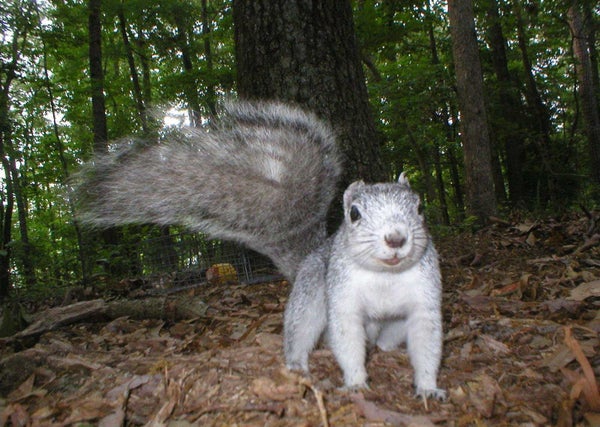
But last week it did. The U.S. Fish and Wildlife Service announced that the Delmarva fox squirrel (Sciurus niger cinereus) has recovered and will no longer need the protection of the Endangered Species Act.
On supporting science journalism
If you're enjoying this article, consider supporting our award-winning journalism by subscribing. By purchasing a subscription you are helping to ensure the future of impactful stories about the discoveries and ideas shaping our world today.
Getting to this point took decades. The massive squirrel—which can reach up to 75 centimeters in length, including its bushy tail—was nearly wiped out by hunting and deforestation. By the time the species was federally protected in 1967—six years before the Endangered Species Act itself became law—the squirrel had lost all but 10 percent of its historic range.
Oh how things have changed. Today the Delmarva fox squirrel has recovered about 28 percent of its old range and has a population approaching 20,000. According to FWS, the species is now stable, healthy and able to withstand whatever new threats might emerge in the future (something it couldn’t have done when its population was small and geographically restricted).
How did all of this happen? FWS biologists took an unusual step: they teamed up with private landowners to reintroduce the squirrels to farms which contained mature forests. There they have thrived. More than 80 percent of the squirrel’s habitat now is located on private lands. Several wildlife refuges hold the remainder of the animals.
The Delmarva fox squirrel will leave the Endangered Species List in December, but its protections won’t completely fade away. The squirrels will be monitored for several years to make sure they remain healthy. Meanwhile a Delaware program called the Delmarva Fox Squirrel Conservation Plan will continue work to boost the species’ population there.
Photo: DNREC, Division of Fish and Wildlife, courtesy of U.S. Fish and Wildlife Service
Previously in Extinction Countdown: