
This article was published in Scientific American’s former blog network and reflects the views of the author, not necessarily those of Scientific American
Like a lot of folks out there, I’m a collector. I spend a great deal of my free time tracking down rare comic books, out-of-print novels, Navajo pottery and unique artwork. I even tried stamp collecting, but as fun as that was for a little while I just never found the bug.
Maybe I was doing it wrong. You see, my small stamp collection was achingly random. I had stamps from around the world, but they were collected willy-nilly, without much thought or planning. A theme, on the other hand, might have not only grabbed my attention more strongly, it might have actually done some good in the world.
That’s the point made by M. Eric Ramanujam, principal investigator for Pitchandikulam Bioresource Centre in India, in a delightful new paper published last month in the Journal of Threatened Taxa.
On supporting science journalism
If you're enjoying this article, consider supporting our award-winning journalism by subscribing. By purchasing a subscription you are helping to ensure the future of impactful stories about the discoveries and ideas shaping our world today.
Ramanujam, you see, is a researcher studying the Indian eagle owl (Bubo bengalensis). He’s also a philatelist, the term for a person who collects rare stamps.
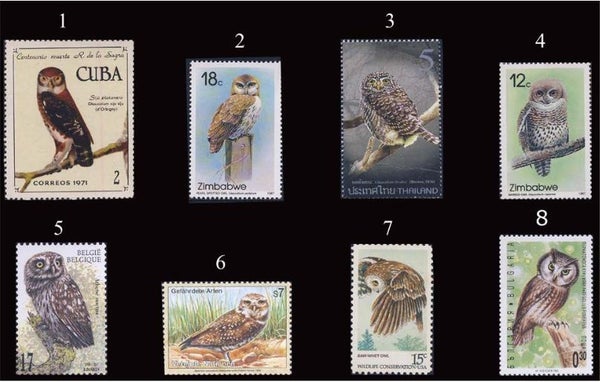
Stamps are where Ramanujam’s two passions collide. He doesn’t have an un-themed, easily neglected collection. The stamps he has acquired over the years all depict owls from around the world.
Their images, and their stories, illustrate almost every page of Ramanujam’s paper. There’s the greater sooty owl (Tyto tenebricosa), depicted with haunting eyes in a stamp from Papua New Guinea. A stamp from Zimbabwe presents us with an image of the mysterious-looking African scops owl (Otus senegalensis). Another stamp from Tanzanian honors the extinct South Island whekau (Sceloglaux albifacies albifacies) of New Zealand. A Blakiston’s fish owl (Bubo blakistoni) sits atop a snow-covered tree in a stamp from Japan. An entire series showcases the owls of Namibia.
Of course, a scientific paper such as this isn’t the only opportunity philatelists have to share their collections. As the paper points out, philatelists can join philatelic societies and display or even competitively exhibit their stamps. Many collectors have unique niches—Ramanujam says he’s one of the few owl-stamp collectors—so displaying them draws attention and maybe even awards.
The display may also inspire a broader message. As he writes, the satisfaction one gains from a collection—especially an owl-themed one such as his—may derive from the “impact it has on those who view and appreciate a collection.” He doesn’t mention if his own collection has had that particular impact, but he cites a 16-year-old philatelist named Jesse Chevrier of Canada whose own owl-themed collection exhibit “was given the 2013 ‘Youth Grand Champion of Champions’ award by the American Association of Philatelic Exhibitors.” (You can see Chevrier’s collection and his notes about each stamp here.)
I don’t know how many people will suddenly become philatelists upon reading this paper, but I can say that Ramanujam’s collection presents a wonderful opportunity for education and illumination. His captions for the illustrations in his paper not only bring the stamps to life, but also the owls.
Ramanujam writes that stamp collecting can be financially draining, but the emotional satisfaction created by a successful display can help to offset that cost. And as people read about the stamps in philatelists’ collections, it may also inspire them to learn more about the creatures they depict. Will that turn them into conservationists? That’s hard to say, of course, but it certainly can’t hurt.
Previously in Extinction Countdown: