
This article was published in Scientific American’s former blog network and reflects the views of the author, not necessarily those of Scientific American
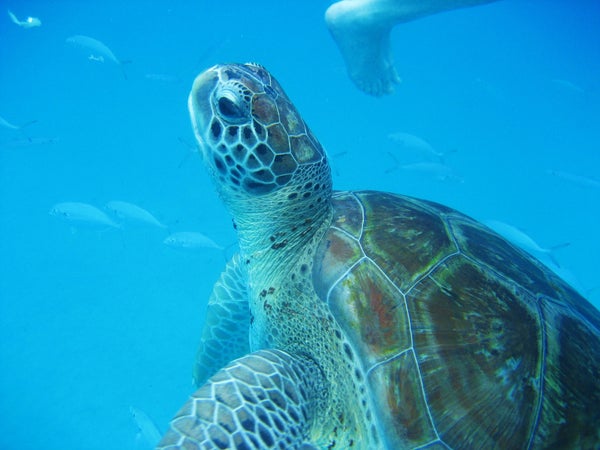
Is wildlife tourism safe for wildlife? It all depends on how it’s done. A new study finds that green turtles (Chelonia mydas) can enjoy a few interesting benefits and a number of dangerous risks when tourists are allowed to swim with them.
The study, published in last month’s issue of Journal of Wildlife Diseases, took place in Barbados, where a thriving tourist industry features numerous opportunities where visitors can jump in the water with sea turtles that swim in the waters around island nation. A team of researchers from the West Indies, U.S. and UK wanted to see how those turtles fared amidst all of this well-intentioned activity. They captured 29 green turtles from four sites around Barbados and gave them each full medical workups to see how they were doing.
The results differed widely depending on where the turtles were captured. As the researchers wrote in their paper, many of the attractions that offer swimming with turtles allow tourists to feed the animals. This supplemental food includes everything from whole or chopped up fish to chicken, hot dogs, bread and “various other leftovers.” The turtles that received this food were, the researchers found, absolutely huge. They had significantly larger carapaces and body weights about three times as heavy as the turtles that came from areas where their diets were not supplemented.
On supporting science journalism
If you're enjoying this article, consider supporting our award-winning journalism by subscribing. By purchasing a subscription you are helping to ensure the future of impactful stories about the discoveries and ideas shaping our world today.
That might not seem like a bad thing—heck, these were all juveniles, and rapid growth means a potentially better chance of survival from predators—but the blood panels and other tests revealed more news. The turtles with supplemented diets also had much higher levels of triglycerides, blood urea nitrogen and cholesterol. In fact, just about everything the researchers tested for in the diet-supplemented turtles existed at higher levels. This, the researchers wrote, leaves the turtles at risk of health conditions include liver disease, gout and cardiovascular issues.
Previous research cited in the paper had already indicted that supplementing green turtles’ diet in Barbados puts the animals at greater risk of boat strikes and other injuries. The animals learn that humans are a food source, which makes them more vulnerable to capture when they swim outside of protected waters. This new research adds to the risk levels created by all of this tourist activity.
That doesn’t mean, however, that the researchers think the industry should be shut down. In fact, they wrote that such an action is unlikely because tourism is an important source of income in Barbados.
But they add that existing codes of conduct may not be enough. The authors suggest that operators should provide turtles with more natural food on a limited basis, perhaps once a day. They also recommend establishing a health-monitoring program to ensure that sea turtles that receive supplemental food aren’t suffering as a result.
So should tourists swim with sea turtles? The paper doesn’t make a recommendation either way, but the conclusions are pretty clear. If you want to go snorkeling with green turtles, go for it. Just leave the hot dogs on the boat.
Previously in Extinction Countdown: