
This article was published in Scientific American’s former blog network and reflects the views of the author, not necessarily those of Scientific American
Austrosaurus was buried at sea. This was unusual for a sauropod.
Despite decades of 20th century dinosaur dogma, the large, long-necked dinosaurs that roamed the Jurassic and Cretaceous were not at home in the water. Their titanic bulk was adapted to the land, a life of feeding on ferns and conifers as they stamped across ancient floodplains and through primordial forests. More often than not, these were the places where they lived, died, and were buried. But the first specimen of Austrosaurus was different.
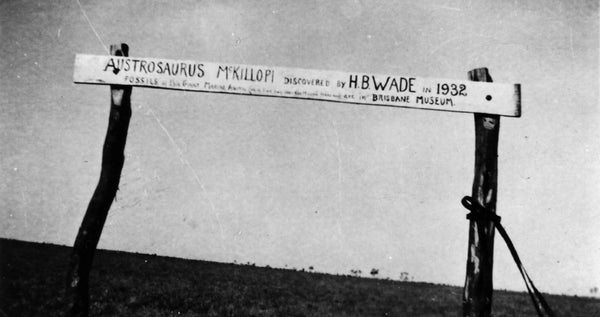
This hulking Cretaceous dinosaur was discovered in 1932 outside of Richmond, Queensland, named shortly thereafter by paleontologist Heber Longman from a trio of vertebrae. While not the first sauropod to be found in Australia, it was the first to get a name. And, for decades after, only an uncertain number of vertebrae were known from this animal. That is, until a 2014 effort to relocate the site paid off. There, paleontologist Stephen Poropat and colleagues found six ribs from the dinosaur. It wasn’t as much as they hoped, but it nevertheless added a little more to the Austrosaurus and gave the researchers a reason to examine what led this dinosaur to be buried in the ocean sometime between 113 and 100 million years ago.
On supporting science journalism
If you're enjoying this article, consider supporting our award-winning journalism by subscribing. By purchasing a subscription you are helping to ensure the future of impactful stories about the discoveries and ideas shaping our world today.
Matching up the historic specimens with the new bones, Poropat and colleagues were able to reassemble the dinosaur as it was buried. Austrosaurus had apparently come to rest on its left side before being blanketed with sediment. It’s not a pretty fossil, but it's articulated. More than that, the mudstone that encased the dinosaur’s remains are full of marine invertebrates like ammonites and clams. There’s no doubt that Austrosaurus was buried in the ocean, just a section of torso being all that made it into the fossil record. Just before being covered, the dinosaur would have looked like a half rack of ribs.

How the body of Austrosaurus may have broken down. Credit: Travis Tischler Poropat et al 2017
What killed this Austrosaurus, we’ll never know. Nor is it clear how far it traveled. The dinosaur could have lived near the coast or far inland. A postmortem process called bloat and float frequently turned dinosaurs into giant, rotting balloons that could be transported by rivers and localized flooding for long distances. Over time, however, these gaseous giants would have started to fall apart – either on their own or with the help of scavengers – thereby releasing the gas and sinking. By the time Austosaurus got to this phase, it had already made it into the sea.
But the Austrosaurus didn’t get buried right away. Filter-feeding clams found adhered to some of the bones suggest that the vertebrae and ribs stayed exposed for a while. Invertebrates started to colonized the exposed skeleton, just like they still do with modern-day whales. Meat and bone don’t go to waste in the ocean.
Austrosaurus wasn’t the only dinosaur to find its way into the ocean. Other dinosaurs – like the armored dinosaurs Aletopelta and the Suncor Nodosaur – have also turned up in the rocky remnants of ancient seas. In fact, being large and sturdy probably gave these hapless dinosaurs a better chance at being preserved over smaller species that could be more easily scattered by scavengers or decomposition. So while Austrosaurus might not be much to look at, its story goes deeper than anatomy. The bones encapsulate an ancient journey, one that gives us a little peek into one dinosaur’s unusual afterlife.
Reference:
Poropat, S., Nair, J., Syme, C., Mannion, P., Upchurch, P., Hocknull, S., Cook, A., Tischler, T. Holland, T. 2017. Reappraisal of Austrosaurus mckillopi Longman, 1933 from the Allaru Mudstone of Queensland, Australia’s first named Cretaceous sauropod dinosaur. Alcheringa. doi: 10.1080/03115518.2017.1334826
