
This article was published in Scientific American’s former blog network and reflects the views of the author, not necessarily those of Scientific American
The language of paleontology can sometimes feel, well, a bit stuffy. It’s a dialect of clade names, anatomical characters, and evolutionary patterns like the Signor-Lipps Effect that requires years to master. But every now and then experts adopt a term that is both apt and accessible. Maybe even adorable. My favorite? Flaplings.
A flapling is a baby pterosaur. The term immediately evokes the image of a little ball of wings and fuzz, not unlike a baby bat, stretching its wings as it tries to acquire aerial skills. Unsurprisingly, such fossils are incredibly rare. Pterosaur bones are about as thin as osteological tissue paper, and finding the intact remains of an adult – much less a hatchling – takes a hell of a lot of luck. But if the fossil record has taught us anything, it’s that the stacked chapters of Life’s history are full of surprises. Whoever would have thought discovering a pterosaur nesting ground packed with eggs and the remains of embryos would be a possibility? Yet that's exactly what experts have found.
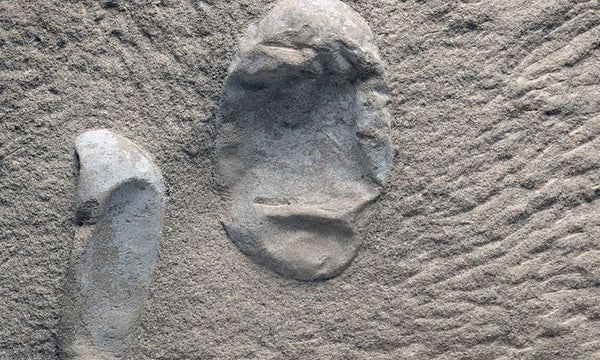
This exceptional slice of Deep Time, described by paleontologist Xiaolin Wang and colleagues, was uncovered in the 120 million-year-old rock of China’s Turpan-Hami Basin. Nothing quite like it has been seen before. At least 215 more-or-less intact eggs have been recovered from this place, and 16 of the Cretaceous eggs have embryonic remains inside them. And while it’s often very difficult to match eggs to the prehistoric creatures who laid them, the associated bones allowed Wang and coauthors to make a positive id. This was the breeding ground of a pterosaur called Hamipterus tianshanensis - a toothy, crested species that soared over the heads of dinosaurs.
On supporting science journalism
If you're enjoying this article, consider supporting our award-winning journalism by subscribing. By purchasing a subscription you are helping to ensure the future of impactful stories about the discoveries and ideas shaping our world today.
Short of a still-living pterosaur, it’s hard to ask for a more informative find. Despite the fact that the eggs were transported out of their nests during the burial process, that same circumstance filled the relatively-pliable structures with sandstone that allowed some to retain three-dimensional shapes. That infill also preserved some of the bones from embryonic pterosaurs, and it’s those remains that help us get a better picture of what Hamipterus was like upon hatching.
CT scans and careful preparation of the fossils show that the Hamipterus embryos – hypothesized to be late term – didn’t have well-ossified skeletons. They still had some growing to do upon breaking out of their eggs, meaning that the flaplings could probably move around the nest but needed additional time and care before they could take off on their own. Think of Petrie from The Land Before Time, the little pterosaur who struggled with earning his wings as a flier. That’s basically a cartoon version of Hamipterus, a real pterosaur that flapped and fluttered around the nest before eventually taking to the skies.
