
This article was published in Scientific American’s former blog network and reflects the views of the author, not necessarily those of Scientific American
When I think of the dinosaur fossil record, I think of big bones. I’m sure childhood nostalgia plays into it. I have fond memories of feeling very small standing in the shadow of animals like “Brontosaurus,” and big dinosaurs typically get much more press than little ones. So it can be easy to forget that there’s an entire dinosaur fossil record that is difficult to assemble - not just of small species, but of the dinosaurs with extra-light and comparatively fragile bones. I’m talking about avian dinosaurs, and that’s what makes a specimen found in my home state of Utah so special.
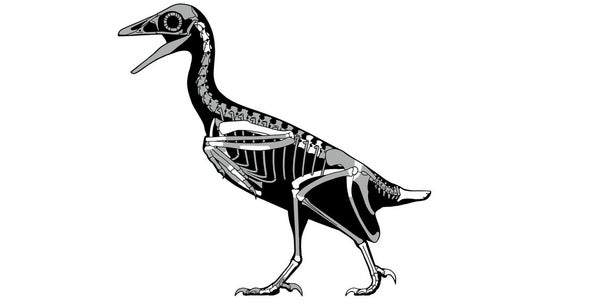
Known for years as the “Kaiparowits avisaurid,” the feathery dinosaur was described late last year by paleontologists Jessie Atterholt and colleagues. To date, it’s the most complete example of a particular form of fossil bird - called enantiornithines - found in North America. The roughly 75 million-year-old skeleton includes parts of the spine, the limbs, and more, which is actually something to squawk about given that Mesozoic birds are sometimes known from nothing more than isolated bones. (There are places like the Jehol Group in China that preserve thousands of lovely bird specimens, but the fossil record across the rest of the world and the Mesozoic isn’t usually as good.) Atterholt and coauthors have named the bird Mirarce eatoni - Eaton’s wonderful winged messenger. Given that the North American record of these fossil birds is mostly scraps, Mirarce brings good news, indeed.
The new bones will undoubtedly help paleontologists better understand where various early birds perch in their family tree. But Mirarce does more than that. This bird acts as a snapshot of what North America’s enantiornithine birds were like about 75 million years ago.
On supporting science journalism
If you're enjoying this article, consider supporting our award-winning journalism by subscribing. By purchasing a subscription you are helping to ensure the future of impactful stories about the discoveries and ideas shaping our world today.
Just from the size of the bones alone, Atterholt and coauthors note, Mirarce was almost turkey-sized. That’s a big bird, and follows the trend that enantiornithines got plumped up as the Cretaceous wore on. Among other skeletal features, Mirarce also stands out for preserving bumps along one of the lower arm bones - called remige papillae - that were anchor points for flight feathers. Given that the prominence of these bumps is a proxy for flight ability, Atterhold and colleagues write, it seems that Mirarce was a strong flier despite its size. We can now envision this bird perched in the trees of the swampy Kaiparowits habitat, perhaps taking flight at the honk of a passing Parasaurolophus - a herald of the dinosaur future when only the birds would remain.