
This article was published in Scientific American’s former blog network and reflects the views of the author, not necessarily those of Scientific American
“Bones of contention” is a common paleo idiom, sure to be slapped onto any remains that seem to evade consensus in one respect or another. The most recent example to kick up the phrase in my mind is at the center of a new study by Dean Lomax and colleagues, focused on
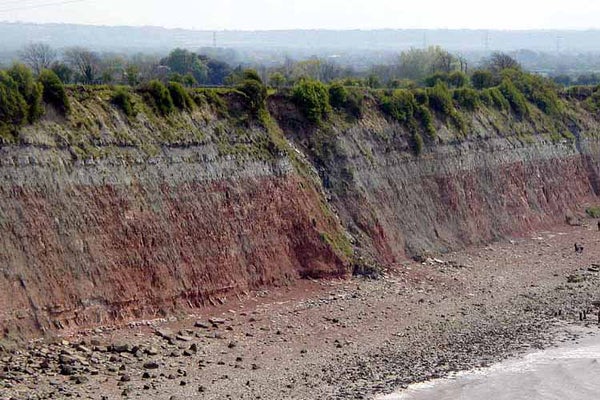
skeletal scraps found long ago on southwestern England’s Aust Cliff. Depending on who you ask, the Triassic shards could be pieces of dinosaur, some unknown terrestrial creature, or, as the new study posits, some of the largest marine reptiles of all time.
The Aust Cliff bones were excavated in the mid-19th century, five skeletal shafts in all. Three of the five survived to the modern era of paleo interpretation, but, even then, the bones didn’t offer experts much resolution. In 2005 paleontologist Peter Galton proposed that the bones could be from Triassic stegosaurs, extending the origin of these armored dinosaurs back tens of millions of years earlier than previously thought. But over the next three years different groups of dinosaur experts couldn’t find any support that the Aust Cliffs bones belonged to stegosaurs, or even dinosaurs at all. The emerging picture was that the bones were reptilian, but what sort couldn’t be said from such paltry remains. A follow-up by Galton and colleagues in 2012 was similarly uncertain, pointing out that the indeterminate bones resembled those of crocodile relatives in their microscopic structure but that their true identity could not be determined with confidence.
On supporting science journalism
If you're enjoying this article, consider supporting our award-winning journalism by subscribing. By purchasing a subscription you are helping to ensure the future of impactful stories about the discoveries and ideas shaping our world today.
Now paleontologist Dean Lomax and colleagues propose that they’ve finally cracked the mystery. The focus on the possible dinosaurian character of the bones had led other experts astray. The enigmatic Aust Cliff bones, Lomax and coauthors argue, belonged to immense ichthyosaurs that rivaled the largest whales in size.
The keystone - or keybone, if you like - was a fossil found elsewhere in the UK. It’s part of the lower jaw of an immense ichthyosaur discovered in the Late Triassic stone of Lilstock, Somerset. And while just a scrap compared to complete skeleton, Lomax and colleagues suggest that it’s important for several reasons. The first is that it came from an immense animal. If the animal the jawbone belonged to had the same proportions of other giant ichthyosaurs found elsewhere - like Shastasaurus and Shonisaurus - then this animal might have been larger still, perhaps over 80 feet from snout to tail. Long before whales, these reptiles were ocean giants.
But that’s not all. The jaw fragment comes from the latest part of the Triassic, documenting that these stupendous swimmers arose in the Middle Triassic and persisted through tens of millions of years to the close of that first Mesozoic chapter. (And, while not the focus of what I’m writing here, there are some lovely trace fossils on the bone showing that it was exposed on the seabottom to encrusting and burrowing invertebrates before burial.) And that leads us to where the Aust Cliffs bones come in. Giant ichthyosaur bones could easily be mistaken for dinosaur remains just by virtue of their size. To that end, Lomax and colleagues had another look at the strange skeletal pieces and came back with a different identity.
The three Aust Cliff bones look very much like pieces of ichthyosaur jaw, Lomax and colleagues point out, the features that seemed strange for dinosaurs fitting better with the anatomy of the marine reptiles instead. The fact that large ichthyosaur vertebrae have been found at the Aust Cliff site further strengthens the conclusion. And now that paleontologists know enormous ichthyosaurs persisted until the closing days of the Triassic in this area, perhaps future finds will reveal even more about the nature of these spectacular saurians.

