
This article was published in Scientific American’s former blog network and reflects the views of the author, not necessarily those of Scientific American
Sometimes our memories are just made up.
Our brains play tricks on us all the time, and these tricks can mislead us into believing we can accurately reconstruct our personal past. In reality, false memories are everywhere.
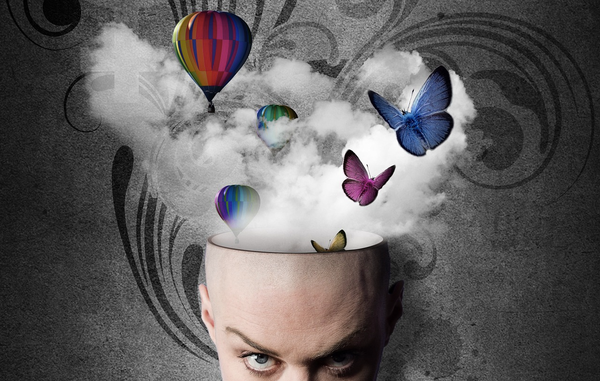
False memories are recollections of things that you never actually experienced. These can be small memory errors, such as thinking you saw a yield sign when you actually saw a stop sign, or big errors like thinking you took a hot air balloon ride that never actually happened.
On supporting science journalism
If you're enjoying this article, consider supporting our award-winning journalism by subscribing. By purchasing a subscription you are helping to ensure the future of impactful stories about the discoveries and ideas shaping our world today.
If you want to know more about how we can come to misremember complex autobiographical events, here is a recipe and here is a video with footage from my own research.
A few weeks ago I reached out to see what you actually wanted to know about this phenomenon on Reddit, and here are the answers to my six favorite questions.
1. Is there any way a person can check if their own memories are real or false?
The way that I have interpreted the academic literature, once they take hold false memories are no different from true memories in the brain.
This means that they have the same properties as any other memories, and are indistinguishable from memories of events that actually happened. The only way to check, is to find corroborating evidence for any particular memory that you are interested in “validating”.
2. Are some people more susceptible to creating false memories than others?
Certainly there are individuals who are considered more vulnerable, such as those with low IQ, children and teenagers, and people with mental illnesses like schizophrenia that already make it difficult for individuals to engage in ‘reality monitoring’. Essentially anyone who may already be bad at telling fact from fiction is probably more likely to generate false memories.
However, in my own research on ‘normal’ adults, I did not find any systematic personality differences between those who did and those who did not form false memories. I tested for ‘fantasy proneness’, compliance, and the ‘Big Five’ personality types… in addition to testing for gender, age and education. I found nothing.
This does not mean that such personality vulnerabilities don’t exist - they probably do - but they are probably not as important as we may assume. I am convinced that everyone can, and does, make false memories.
3. What is an area outside your direct expertise where you secretly suspect people routinely form false memories?
Everywhere. The question isn't whether our memories are false, it's how false are our memories.
Complex and full false memories (of entire events) are probably less common than partial false memories (where we misremember parts of events that happened), but we already naturally fill in so many gaps between pieces of memories and make so many assumptions, that our personal past is essentially just a piece of fiction.
4. What do you think the implications of your research are for the way our criminal justice system works?
The implications of false memory research for the criminal justice system are tremendous. It calls into question our current reliance on memories by suspects, victims, witnesses, even police officers and lawyers.
Memories currently make or break cases, and by showing that they are often inherently unreliable, we call into question the very foundation of the way we currently use evidence in criminal trials. It leads to us asking whether we can ever be certain "beyond a reasonable doubt" that someone committed a crime for cases that rely exclusively on memory recall. It also shows us how easily bad interview/interrogation techniques can create false memories, making us rethink police practices.
5. Can false memories be advantageous or have positive consequences?
I think that false memories are a gorgeous consequence of a beautifully complex cognitive system, the same system which allows us to have intelligence, problem-solving, and a vivid imagination. Overall false memories are a part of this, and are neither positive or negative, they just ARE.
Whether or not they are considered ‘good’ is also incredibly dependent on the circumstances. For example, a victim not remembering part of a crime committed against them may be considered a bad thing for an investigation, but a good thing for the victim.
6. Has learning about this stuff changed how you use your own memories?
Definitely. I have always been self-conscious about my autobiographical memories, since I have always been really bad at remembering things that happen in my personal life. I am pretty good, on the other hand at remembering facts and information. This is part of why I was confident my research on creating false memories could work, since if my memory was like this surely there must be others out there whose memories also don't work perfectly.
While I was always cautious about memory accuracy (as far as I remember, hah!), now I am convinced that no memories are to be trusted. I am confident that we create our memories every day anew, if ever so slightly.
It's such a terrifying but beautiful notion that every day you wake up with a slightly different personal past.