
This article was published in Scientific American’s former blog network and reflects the views of the author, not necessarily those of Scientific American
I am saddened by the news that Don Herbert, aka "Mr. Wizard" died yesterday at the age of 89. His weekly program, on NBC from 1951 to 1965, brought simple science to children—and made it fun. Although its pace would probably bore kids today, for me it was like a gateway drug, addicting me to scientific curiosity that eventually would only by sated by the harder stuff, like a subscription to Scientific American.
In 1960 I was seven. I was fortunate enough to spend my formative years in the late 1950s and 1960s. It was a great time for American science and technology. Despite the Damoclean threat that was the Cold War and the sci-fi outcome of WW III that it portended, for a kid, it was easy to seize on the optimism that bordered on naivete, but, more importantly, was devoid of irony and cynicism. Mr. Atom really could be our friend and taglines like "better living through chemistry" were said with all earnestness. Being part of the first television generation (that is, people who can't remember a time without electron tubes) we were amazed at the rapidly changing world it showed us—albeit in black and white. Those gee-whiz years included extensive coverage of the space race, which, along with the angst generated by the Cuban missile crisis in 1962, would hone my future academic interest in international politics and science.
But also on TV was Watch Mr. Wizard.His experiments often used everyday household items and dealt with the mysteries of the mundane: "Why does it rain?" or "How does a vacuum cleaner work?"
On supporting science journalism
If you're enjoying this article, consider supporting our award-winning journalism by subscribing. By purchasing a subscription you are helping to ensure the future of impactful stories about the discoveries and ideas shaping our world today.
The hook, and what Herbert considered the key to the show's success, was that he always had a kid help him out with the experiment. With rapt attention, I would follow his instructions and run my own kitchen-muddling experiments. I even built, per his instructions, a homemade hydrometer (or some kind of weather gauge) out of a milk carton, rubber bands, a sponge and needles (surreptitiously borrowed from my mother's sewing kit). I may be idealizing my recollection here, but I think the thing actually did what it was supposed to do. Later, I would assemble a chemistry lab in my basement that eventually grew to about 50 chemicals, along with retorts, test tubes, Erlenmeyer flasks—and no rubber gloves or safety goggles. At this point I had advanced far beyond the intentions of my mentor.
In the beginning, all my parents seemed to know about my underground activity was that an occasional smell of rotten eggs would waft out of the basement door. Of course coming to the dinner table without eyebrows one evening drew a number of anxious parental queries, and much closer scrutiny. It didn't stop me, though, from eventually collaborating with a fellow Mr. Wizard graduate to build for the science fair a multithousand-volt, lightning spewing Tesla coil that lit fluorescent bulbs that weren't turned on and no doubt doubled the ground ozone content of the school auditorium.
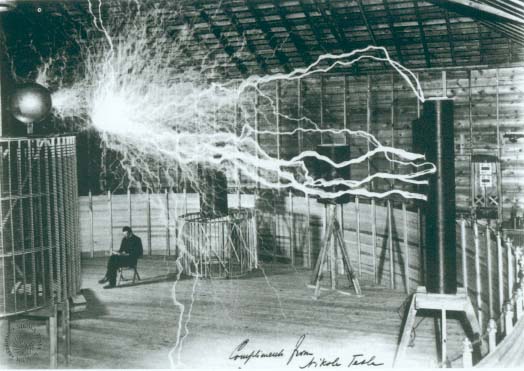
If it was Walter Cronkite and his detailed coverage of the space program that helped cultivate my wonderment about the universe, it was Mr. Wizard who helped me to think empirically about it. He made science something I could grasp, opening my mind to ask about, rather than take for granted, the physical world. And he showed me how to test what I observed. It is the first rule in the handbook of thinking.
I'll miss you Mr. Wizard, but your work lives on. Who knows how many scientists and engineers you inspired to go on to great achievements and how much you helped nurture popular science literacy in a world all too prone to fall back on superstition and popular misconceptions? I wonder who could inherit his mantle today?
UPDATE: For more on Mr. Wizard click here for SciAm's June 15 60-Second Science podcast, and also here for the June 20 Science Talk podcast to hear Steve Mirsky interview now-retired kid Doug Lane, who used to appear on the show.