
This article was published in Scientific American’s former blog network and reflects the views of the author, not necessarily those of Scientific American
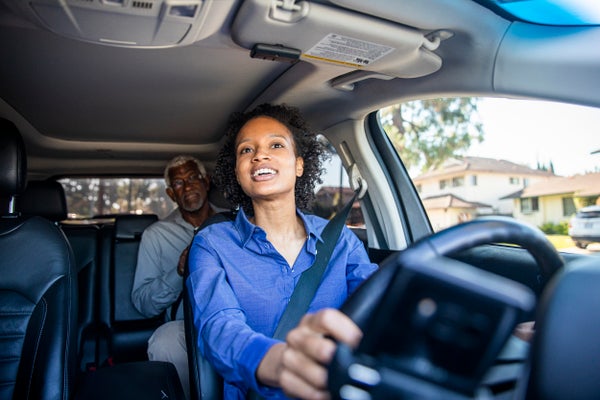
I recently took an Uber in San Francisco to catch a red-eye flight. I asked the driver whether it was tiring to be driving so late, and I wish I had recorded his answer. He said it was tiring at times, but it was worth it because it enabled him to save money for his three daughters’ education. He wanted them to go to college and have a better life. The long hours were his choice. He set his own schedule. He was his own boss.
His story sounded like the classic first chapter in the story of the American Dream. It reminded me of my own long days of juggling low-paying jobs when I first came to this country. I tutored, worked in the library and worked as a research assistant to make ends meet for my family.
When I was in India recently, I used a ride-sharing service called Ola. I learned from my driver that his business selling parts from scrapped automobiles was dying, but that driving for Ola 12 or 13 hours a day allowed him to continue to support his family, educate his daughter and live with dignity.
On supporting science journalism
If you're enjoying this article, consider supporting our award-winning journalism by subscribing. By purchasing a subscription you are helping to ensure the future of impactful stories about the discoveries and ideas shaping our world today.
These drivers don’t want to be employees beholden to employer mandates. Despite an emerging narrative of ride-sharing companies as villainous (a New York Times columnist labeled Uber “one of the sorriest companies ever to emerge from Silicon Valley’s tortured hothouse”), the notion that they are ruthlessly making life miserable for their drivers is simply not true.
Ride-sharing platforms work by connecting consumers to those who want to monetize their assets in a flexible way (e.g., work part-time, unusual hours or more than full-time). The platforms create market efficiency, increase availability of services and reduce cost to consumers.
Ride-sharing increases geographic diversity in spending and boosts economic activity in underserved areas. Further, ride-sharing complements public transportation by expanding the reach of affordable transit. With public-private partnerships, ride-sharing helps expand services for disadvantaged people. All this has implications for employment opportunities, social services and mobility.
Ride-sharing may reduce drunken driving. A new protocol in many families is for ride-sharing to be used anytime someone is attending an event where alcohol is consumed. Many universities across the country work with ride-sharing companies to make it safer for students to move around the city late at night. These are positive new behavioral norms.
Unfortunately, California’s new law forcing ride-sharing companies to treat drivers as employees instead of independent contractors is the exact opposite of what made the business model so innovative. Since Uber is valued at $55 billion and Lyft at $14 billion, the idea that the innovators are getting rich while the drivers are being exploited is part of what brought the situation to a head in California.
We should be thankful to the entrepreneurs whose innovative thinking unleashes efficiencies and creates opportunities to use assets productively. That’s what they are supposed to do. Innovations often destroy old jobs and make new ones. When opportunities are created, there will always be challenges. Do those who say ride-sharing companies are evil say the same for the solar and wind farms that are destroying jobs in the fossil fuel industry?
It is fine for government to require ride-sharing companies to better reward drivers or to subsidize their health care. But don’t enact regulations that violate the basic foundation of the innovation.
Some innovations, such as renewable energy, thrive under regulations that promote safety and lower barriers to entry. But the California law imposes huge barriers to entry. The best scenario is for regulators to help tweak business models, not destroy the models themselves.
Ride-sharing companies are part of the gig economy, which has declined in reputation significantly for its purported exploitation of workers. But what may seem like exploitation to some may feel like opportunity to others. In India, for more than 150 years, the companies that made the cheap cigarettes known as beedis used crowdsourcing to establish an elaborate supply chain. They paid a large number of women to spend a few hours each day working in their own homes for the company. These women generated additional income for their families. That is empowerment.
Sadly, there is too much political assault and demonization of Silicon Valley entrepreneurs today. When the true land of opportunity is turned into a land of missed opportunities because of overzealous regulation, we all lose.