
This article was published in Scientific American’s former blog network and reflects the views of the author, not necessarily those of Scientific American
In the 1980s, the fight against AIDS was tragically delayed, in part because the virus primarily affected the marginalized populations of drug addicts and gay men.
Today another epidemic rages unchecked: the number of Lyme disease cases has doubled since 2004, for a total of over 400,000 since then.. The victims are mainly residents of suburban and rural enclaves—93 percent white, many middle-class, and surely an atypical disenfranchised group.
These people, including many children, are infected by ticks in backyards and on playgrounds, while walking their dog or visiting a park. At least 10 to 20 percent stay sick for a year, with 5 percent still suffering 15 years later—this among patients receiving early treatment, who have the best outcomes. Braininflammation, nerve damage and “severe” functional impairment have been documented.
On supporting science journalism
If you're enjoying this article, consider supporting our award-winning journalism by subscribing. By purchasing a subscription you are helping to ensure the future of impactful stories about the discoveries and ideas shaping our world today.
Yet when patients blame failed tests and treatments for their persistent symptoms, when they seek additional care for Lyme disease, they are often told they suffer from anxiety or chronic fatigue syndrome. They are derided, called anti-science, denied insurance reimbursement.
They are dismissed in ways comparable to those experienced by their AIDS-afflicted brethren.
We are at a crossroads for Lyme and other serious tick-borne diseases. A controversy over the cause of lingering symptoms—is it ongoing infection or something else?—has so stymied progress that it has let mushroom an army of ticks. There is a solution. When society finally accepted the threat and gravity of AIDS, scientific conferences, fellowships and laboratories were funded. Researchers carried out clinical studies—11,500 are listed to date in the U.S. government’s database of clinical trials. Scientists found answers.
We must do the same for Lyme disease, for which, by comparison, only 66 studies have been conducted. We must build an infrastructure to attack the illness.
In the past century, the U.S. has faced two major epidemics caused by bugs that bite. The responses were drastically different: In the 1930s, the country financed huge public works programs that, by 1951, brought mosquito populations under control and eradicated malaria. But since the 1970s, government agencies have battled Lyme disease largely by urging people to use repellent, wear white clothing and do body checks.
The upshot: mosquito-borne diseases are “largely suppressed” while “tick-borne diseases are rampant,” scientists reported recently in the journal BMC Public Health. For ticks, “proven and scalable control measures do not exist,” wrote three officials from the U.S. Centers for Disease Control and Prevention in 2018.
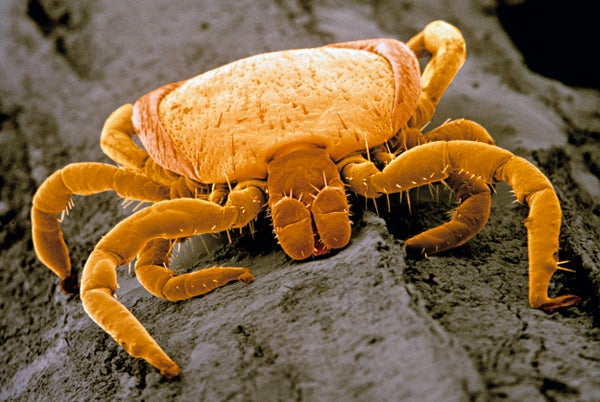
Somehow, insects that fly are far scarier than eight-legged arachnids that lie in wait on a bit of shaggy grass, their forelegs waving expectantly, when they sense the breath of a passing human.
In 2017, mosquito-borne West Nile virus, which currently infects about 2,000 people annually in the U.S. received $42 million in support from the U.S. National Institutes of Health. Lyme disease, with 20 times the number of reported cases, got half as much, a figure that has changed little in a decade.
Just months after the mosquito-borne Zika virus emerged in 2016, Congress appropriated $1.1 billion, alarmed over its real potential to cause birth defects. The epidemic quickly petered out, however, with just seven mosquito-acquired Zika cases reported in the U.S. in 2017. That year 42,700 Lyme disease cases were reported, about a tenth of what the CDC suspects the actual toll, since most cases go unreported.
Lyme disease from black-legged ticks is only a part of the problem. Cases of anaplasmosis and ehrlichiosis have soared, increasing sixfold since 2004. Malaria-like babesiosis, once limited to coastal islands, has been reported in 27 states; it makes Lyme disease far worse. The lone star tick, common in the South, has migrated to vast tracts of new territory as the climate has warmed, its bite causing a potentially severe meat allergy unheard of a decade ago. In 2017 the Asian longhorned tick became the first new tick species in the U.S. in 80 years. Now in 11 states, the ticks so infested five cows in North Carolina recently that they died of anemia from blood loss. The implications for agriculture could be dire because female longhorned ticks can clone themselves, vastly increasing birthrates.
Too much time has been wasted amid arguments over so-called chronic Lyme disease. We know we have a problem. It demands a “paradigm shift,” as the authors of the BMC article put it.
We must put aside our entrenched views of Lyme disease, for which research funding has been paltry and static. The ranks of the infected and infirm are growing. Prevention efforts have failed. Do the work on ticks.