
This article was published in Scientific American’s former blog network and reflects the views of the author, not necessarily those of Scientific American
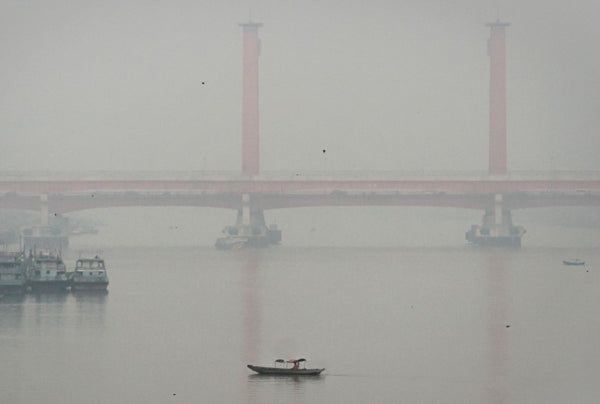
September saw the return of the dreaded haze in full force—the worst it has been since 2015. Millions of people here in Singapore and other parts of Southeast Asia choked on toxic air and wondered if this would be a recurring event, a new normal to resign themselves to. On September 18, the Pollutant Standards Index (PSI) shot as high as 149 in the southern region of the island, with one-hour PM2.5 concentrations reaching up to 181 micrograms per cubic meter (µg/m3).
A PSI above 100 is generally seen as “unhealthy” while a PM2.5 concentration above 150µg/m3 is considered “high”, exceeding the World Health Organization’s (WHO’s) air quality guidelines for airborne particulate matter by more than 10 times the “safe” threshold. PM2.5 refers to a class of toxic particles with diameters of 2.5 micrometers (µm) or smaller—small enough to enter our lungs and bloodstream, with the ability to cause cardiovascular and respiratory problems, especially for individuals who are sensitive to fine particles.
Satellite imagery shows the source of the haze to be raging forest fires on the Indonesian islands of Sumatra and Kalimantan, the smoke from which is carried over to neighboring countries by winds. Palm oil cultivators, both small- and large-scale, and often hard to track, rely on fire as a quick means of clearing the land for their plantations. These blazes can spread quickly and unpredictably, and have led to a rising death toll in parts of Indonesia as locals struggle to contain the flames.
On supporting science journalism
If you're enjoying this article, consider supporting our award-winning journalism by subscribing. By purchasing a subscription you are helping to ensure the future of impactful stories about the discoveries and ideas shaping our world today.
Beyond the immediate threats they pose to human health and biodiversity on a local and regional level, the Indonesian fires also compound global climate change. The rampant deforestation by burning is severely depleting the carbon stocks of the world’s forests. Forests, besides oceans, make up the largest carbon sink on the planet, and these harsh land-clearing activities end up releasing carbon dioxide back into the air to further warm the earth. Climate change caused by deforestation could in turn increase air pollution–related deaths, through the rising occurrence of extreme weather events like heat waves and air stagnation.
It comes as no surprise, then, that the significant emissions from Indonesia’s forestry sector jeopardize the country’s chances of meeting its climate targets under the Paris Agreement. The transboundary haze is a visceral reminder that many nations are falling behind on climate change policy, and that time is running out. The world is currently on track for dangerous 3.6 degrees Celsius warming in 2100, based on countries’ Paris Agreement pledges. Only a handful of countries—mostly developing—appear to have sufficient emissions reduction targets compatible with the goals of 1.5–2 degrees C. More needs to be done, and soon.
To bridge the ambition and emissions gap, we need more than the usual finger-pointing. Every citizen, company, city and organization needs to play a part in an “all-hands-on-deck” approach. My group, the Data-Driven Lab (DDL), and a consortium of researchers, last week launched a new report that lends quantitative credence to the fact that these “bottom-up” actions from individuals, local governments, and business are impactful.
Our analysis suggests cities, regions, and businesses could help countries meet—and in some cases, overachieve—their emissions reduction goals under the Paris Agreement. In 10 of the world’s largest GHG-emitting economies, including Indonesia, the climate commitments made by more than 6,000 cities and regions and 1,500 companies could cut emissions by 1.2–2 billion metric tons of carbon dioxide equivalent (GtCO2e) per year by 2030, in addition to current government policies.
In Indonesia, specifically, the commitments of seven cities and more than 160 companies could reduce emissions in 2030 by an additional 100 to 180 metric tons of carbon dioxide equivalent (MtCO2e) per year below the reductions from existing national efforts. These reductions could lower Indonesia’s current GHG emissions by between 3.5 percent to 5.5 percent, helping to get the level closer to the nation’s emission reductions goal. Further, when cities, regions and companies work together alongside national governments in international initiatives, new synergies could arise, leading to greater reductions in emissions. In Indonesia, the commitments of such initiatives could reduce emissions by 56–59 percent below current national efforts in 2030, enabling the country to overachieve its emissions reduction goals.
On September 23, policymakers and business leaders from around the world descended on New York City to announce new plans to tackle climate change at the United Nations Climate Action Summit. Coinciding with this event was a series of global climate strikes, where more than 7 million youths and adults poured out of schools, home, and offices to send a message to these actors: “We’ll be watching you.” The window to act on the existential threat of climate change is narrowing. With ambitious action by cities, regions, companies and citizens, an “all-hands-on-deck” approach addressing land and forest fires is possible and could not only alleviate transboundary haze but help high-emitting countries like Indonesia get back on track to meeting their national climate targets, ultimately giving the world a fighting chance to align with a 1.5 degrees C warming limit.