
This article was published in Scientific American’s former blog network and reflects the views of the author, not necessarily those of Scientific American
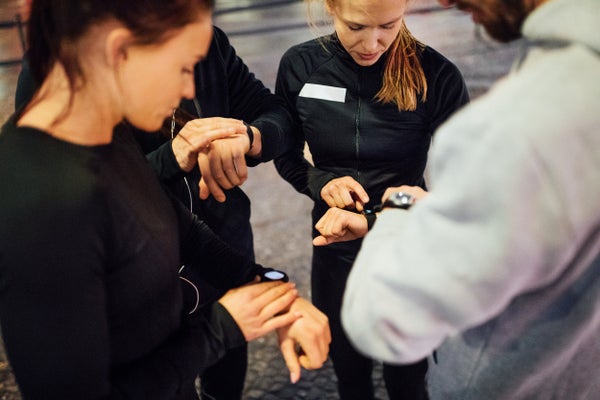
Millions of Americans make New Year’s resolutions each year, with losing weight, eating healthier and focusing on wellness among the most popular goals. Many look to self-tracking gadgets for support. But while tools like Fitbits and Apple Watches, and apps like Happier and Sleep Cycle, promise utility and convenience, they also introduce unintended consequences that may make you think twice about how to reach your 2020 goals. Self-tracking tools may help us be more fit or productive, but can also lead users to feel insecure and competitive, while providing new inroads for corporate monitoring of our daily habits.
Today’s Fitbits and built-in step-trackers (in phones, watches and even shirts) have their roots at least as far back as the late 18th century, when some early pedometers were developed. Today, new tools allow users to track key facets of daily life including productivity, fitness, sleep and even more minute details such as cups of water consumed. On the surface, these seem like harmless metrics for improvements in health and well-being.
Yet quantifying activities in daily life becomes ground not only for discussion but also for comparison and sometimes even competition. Self-tracking devices provide a kind of social currency: if you’ve taken more steps, you’re somehow a “better” person. But if you haven’t reached your goal, you’re a failure. As such, self-tracking can induce or reinforce negative self-image. In addition, such comparisons can distract from the act of counting and progressing along individual measures, and shift to a focus on using those measure to compete, and beat, peers. The goals become less about ourselves and more about others, which can cause people to bend the truth about what they’re tracking or give up altogether.
On supporting science journalism
If you're enjoying this article, consider supporting our award-winning journalism by subscribing. By purchasing a subscription you are helping to ensure the future of impactful stories about the discoveries and ideas shaping our world today.
Research shows that sharing goals with family and friends makes success at new habit development more likely. But when we track, we have committed to a view that our current bodies, lifestyles and habits are not enough. This can be stress-inducing by itself, but the act of tracking can also add one more to-do item to our ever-growing lists, introducing new pressures and a feeling that we’ve given control of our bodies over to an app or gadget.
Self-tracking also encourages us to turn our connection to our bodies over to a machine. Using sleep or hydration trackers encourages users to wait for the electronic nudge from our phone rather than internal signals of fatigue or thirst. Such reliance runs the risk of encouraging us to discount our body’s knowledge.
Interestingly, individuals are not the only ones interested in our goals, longings and daily accomplishments and failures. Corporations gain access to the minutiae and intimate details of daily life when we enter our behaviors into self-tracking devices, acquiring our data for free—something scholars call “data exhaust.” When we track, we often lose ownership over our data; every step that is tracked or calorie counted are data being mined, bought and sold by big corporations. As such, self-tracking data has a high value for corporate interests. What begins as a private health goal also brings in other interested parties, including companies that want more active employees, corporations attempting to sell to people like you, and even insurance companies interested in more real-time health information about the people they insure.
So, when it comes time to choose tactics for achieving your goals, choose wisely. Incorporate face-to-face measures as well as apps; select any tools you employ carefully, and trust the messages your body provides, not just the digital assistants that help you make and remake yourself in 2020.