
This article was published in Scientific American’s former blog network and reflects the views of the author, not necessarily those of Scientific American
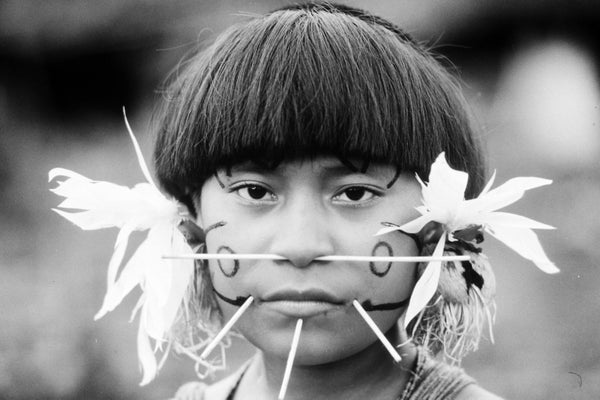
Anthropologist Napoleon Chagnon has died at the age of 81. Chagnon was famous for his studies of the Yanomamö people of Amazonia and his use of biology, rather than culture, to explain the violent conflicts he observed among them.
In December 2000 I went to Chagnon’s home in Traverse City, Mich., to interview him. This exchange was shortly after publication of journalist Patrick Tierney’s book Darkness in El Dorado, which accused Chagnon of inciting warfare and spreading a deadly measles epidemic among the Yanomamö.
We talked about how Chagnon became an anthropologist, why he chose to study the Yanomamö and how he, in his words, “basically had to create and invent [his] own theory of society” to explain his observations of conflict.
On supporting science journalism
If you're enjoying this article, consider supporting our award-winning journalism by subscribing. By purchasing a subscription you are helping to ensure the future of impactful stories about the discoveries and ideas shaping our world today.
And then I read the passages of Tierney’s book containing the most explosive allegations to him and asked him to respond. Our discussion resulted in a 2001 profile of Chagnon I wrote for Scientific American (which now bears an updated headline and an editor’s note acknowledging his death).
When I learned Chagnon had died, I dug up my story file for that profile, including the transcript of my interview with him, which was dated to December 29, 2000. As is often the case, there was a lot of material that didn’t make it into the article Below are some excerpts of his comments.
Most anthropologists say they explain culture; they’re only interested in how culture traits can be used to explain other culture traits.... I’m more interested in explaining behavior than simply explaining culture. Of course, there are no genes for culture. Nobody said there were! It is hard to explain human behavior without becoming aware that humans are biological organisms, and they have genes.
All social behavior can be viewed from the [standpoint] of what effect it has on your biological success. Thus, all social behavior becomes the purview of the study of reproduction. And that requires being meticulous—observing and weighing and counting and measuring how many resources [people] give to each other and whether they’re scaled along lines of descending degrees of kinship. And that’s now where everyone is going. But that flies right in the face of social anthropological theory, which insists that there’s no relationship between biology and culture—we want culture to write on our blank slate what it is that’s written.
Achieving great cultural success leads to, in some cases..., reproductive success.... In a perfect world, you can imagine cases in which being peaceable would be highly admired; people should strive for it. But peaceable societies don’t last long if you’ve got murderers ... who are going to take advantage of you if you turn the other cheek. They’re just going to run right over you. The more common phenomenon in the primitive world has been to be surrounded by neighbors who are less than trustworthy. And that’s why defending your group tends to be a more commonly found, admired social characteristic.
To what extent should any anthropologist interfere in the lives of his or her subjects?
What kind of question is that?
It’s just a question.
In general, the principle of anthropology is to have as little impact as you can on the people you study—guard their anonymity, do nothing to harm them or get them into trouble, and participate to the extent that it’s feasible or correct in their culture.
Around midway through the interview, a large flock of wild turkeys appeared in Chagnon’s yard, outside the living room where we were sitting. He was an avid bird hunter—his hunting dogs had greeted me at the front door when I arrived. I asked him about the turkeys.
One day I saw them in the woods, and I put some birdseed out. Ever since then, they come three times a day. They’re getting so tame that I go out and scatter the birdseed..., and they’ll come right up to me. I used to think I was going to shoot and kill a turkey. Can’t do it now.