
This article was published in Scientific American’s former blog network and reflects the views of the author, not necessarily those of Scientific American
Carbon dioxide in the atmosphere blew past 415 parts per million last week. The last time levels were this high, two or three million years ago, the oceans rose tens of feet, something likely to happen again as our ice melts over the next thousand years.
To replace bad news with action, we need hope—a vision for restoring the atmosphere. Think about the Endangered Species Act: it doesn’t stop at saving plants and animals from extinction; it helps them recover. When we see gray whales breaching on their way to Alaska each spring, as they’re doing now, grizzly bears ambling across a Yellowstone meadow, bald eagles and peregrine falcons riding updrafts, we’re celebrating a planet restored. Our goal for the atmosphere should be the same.
As leaders of the Global Carbon Project, we’ve spent our careers working to reduce greenhouse gas pollution. Today, we’re making what may seem like a counterintuitive proposal: temporarily increasing carbon dioxide emissions in order to cleanse the atmosphere of a much more potent greenhouse gas.
On supporting science journalism
If you're enjoying this article, consider supporting our award-winning journalism by subscribing. By purchasing a subscription you are helping to ensure the future of impactful stories about the discoveries and ideas shaping our world today.
Stick with us here.
We want to remove methane from the atmosphere and then use porous materials called zeolites to turn it into carbon dioxide. Zeolites can trap copper, iron and other metals that can act as catalysts to replace methane’s four hydrogen atoms with two oxygens. Because a methane molecule holds more energy than carbon dioxide, the reaction typically runs to completion if you can jump-start it. Furthermore, by releasing the carbon dioxide back into the air instead of capturing it, you make the process less expensive and lengthen the life of the zeolites.
Researchers around the world are already studying zeolites and other materials to convert methane to methanol, a valuable feedstock for the chemical industry. Making methanol is a half-way point in our reaction, tacking one oxygen atom onto methane. No one seems to have considered finishing the job—making carbon dioxide in the same way—because carbon dioxide isn’t valuable like methanol. We should consider it now.
Another surprise about our proposal is that you could restore the atmosphere by removing “only” three billion tons of methane. Doing so would generate a few months’ worth of industrial carbon dioxide emissions but eliminate up to one sixth of warming. That’s a good trade by any measure.
Our proposal won’t be easy. Methane isn’t easy to crack. It’s also uncommon in air, amounting to two or so molecules out of a million. (Isolating it is a lot harder than keeping it from reaching the atmosphere to start with.) We’ll need other things to work as well—a price on carbon emissions or a policy mandate to pay for removing methane, and research on the large arrays needed to capture it from air.
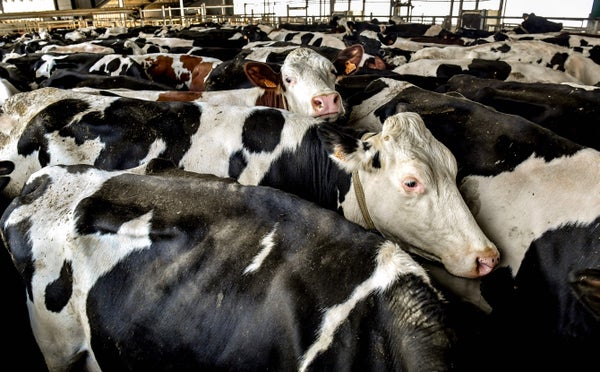
Methane removal could continue even after atmospheric restoration to offset the most intractable emissions from agriculture and industry. Large sources of methane today come from cattle and rice farming. There’s exciting work underway to reduce them, but they won’t disappear anytime soon. We also face difficult emissions from the energy industry. Methane removal could offset some of this pollution, too.
Atmospheric restoration of all gases to preindustrial levels may seem unlikely today, but we believe it will occur eventually. Such a goal provides a positive framework for change at a time when climate action is sorely needed. Stabilizing global warming at 1.5 or 2 degrees Celsius isn’t enough. We need the earth to recover.