
This article was published in Scientific American’s former blog network and reflects the views of the author, not necessarily those of Scientific American
Over the last couple weeks, a debate has been raging among energy wonks on the question of whether or not renewable energy sources like wind and solar lead to an increase in retail electricity prices.
The debate stems from an article by Environmental Progress president and California gubernatorial candidate Michael Shellenberger asking: if solar and wind are so cheap, why are they making electricity so expensive? The article looked at electricity prices in renewable-heavy places like California, Germany, and Denmark to argue a causal relationship between adding renewable energy and increasing electricity prices.
Energy wonks of the internet were quick to punch holes in Shellenberger's argument, claiming he cherry-picked data and ignored confounding factors such as the cost of electric delivery equipment like wires and poles and the myriad of other regulatory and subsidy differences.
On supporting science journalism
If you're enjoying this article, consider supporting our award-winning journalism by subscribing. By purchasing a subscription you are helping to ensure the future of impactful stories about the discoveries and ideas shaping our world today.
One of my own articles — that was published months before Shellenberger's — summarizes a clear counterexample to his logic. Texas got 18 percent of its energy from wind and solar last year and has seen declining electricity prices coming in well below the U.S. average.
Other good responses to Shellenberger's argument were published by University of Texas at Austin research fellow Joshua Rhodes and SparkLibrary cofounder Alex Gilbert.
I think one of the best responses to the debate Shellenberger kicked off came from University of Guelph geography Ph.D. candidate Abhilash Kantamneni, who put together an incredible interactive graphic that lets Americans see just how much they pay for electricity, where their electricity comes from, and how their price and supply mix has changed over time.
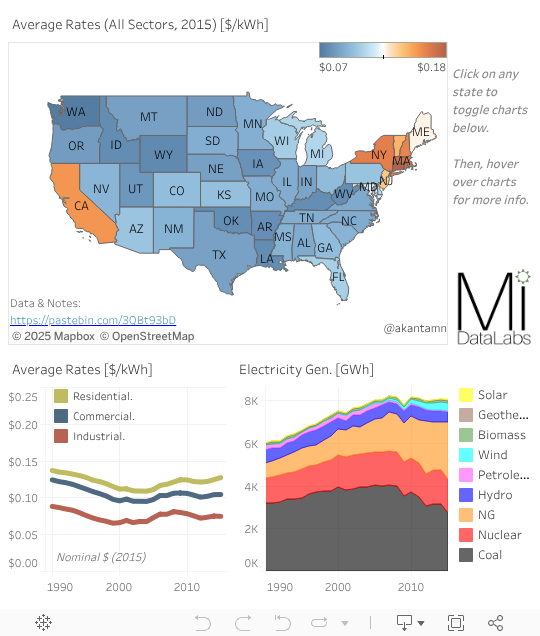
Credit: Abhilash Kantamneni
Click on your state on the graphic above and you can dive into what electricity generation mix you get for your money. You can also quickly conduct your own survey of states to see whether or not Shellenberger's claim that renewable energy increases prices really pans out. Kantamneni's take: "At current grid penetration levels of solar and wind in the United States, there isn't enough evidence to suggest that solar and wind ALONE are responsible to electricity costs rising."