The Eagle Ford Shale Boom from Space

Join Our Community of Science Lovers!

This article was published in Scientific American’s former blog network and reflects the views of the author, not necessarily those of Scientific American


It can be difficult to comprehend just how big the current U.S. shale boom is. Here in Central Texas, we hear about the Eagle Ford Shale and how it’s transforming South Texas (in both positive and negative ways).

The shale, named for the town of Eagle Ford, TX, is a geologic remnant of the ancient ocean that covered present day Texas millions of years ago, when the remains of sea life (especially ancient plankton) died and deposited onto the seafloor, were buried by several hundred feet of sediment, eventually turning into the rich source of hydrocarbons we have today.

The shale was first tapped in 2008 and now has around 20 active fields good producing over 900 million cubic feet per day of natural gas. For perspective, the United States produced over 2 trillion cubic feet of gas in September 2012.


On supporting science journalism

If you're enjoying this article, consider supporting our award-winning journalism by subscribing. By purchasing a subscription you are helping to ensure the future of impactful stories about the discoveries and ideas shaping our world today.


There is so much activity in the Eagle Ford Shale that you can see it from space.

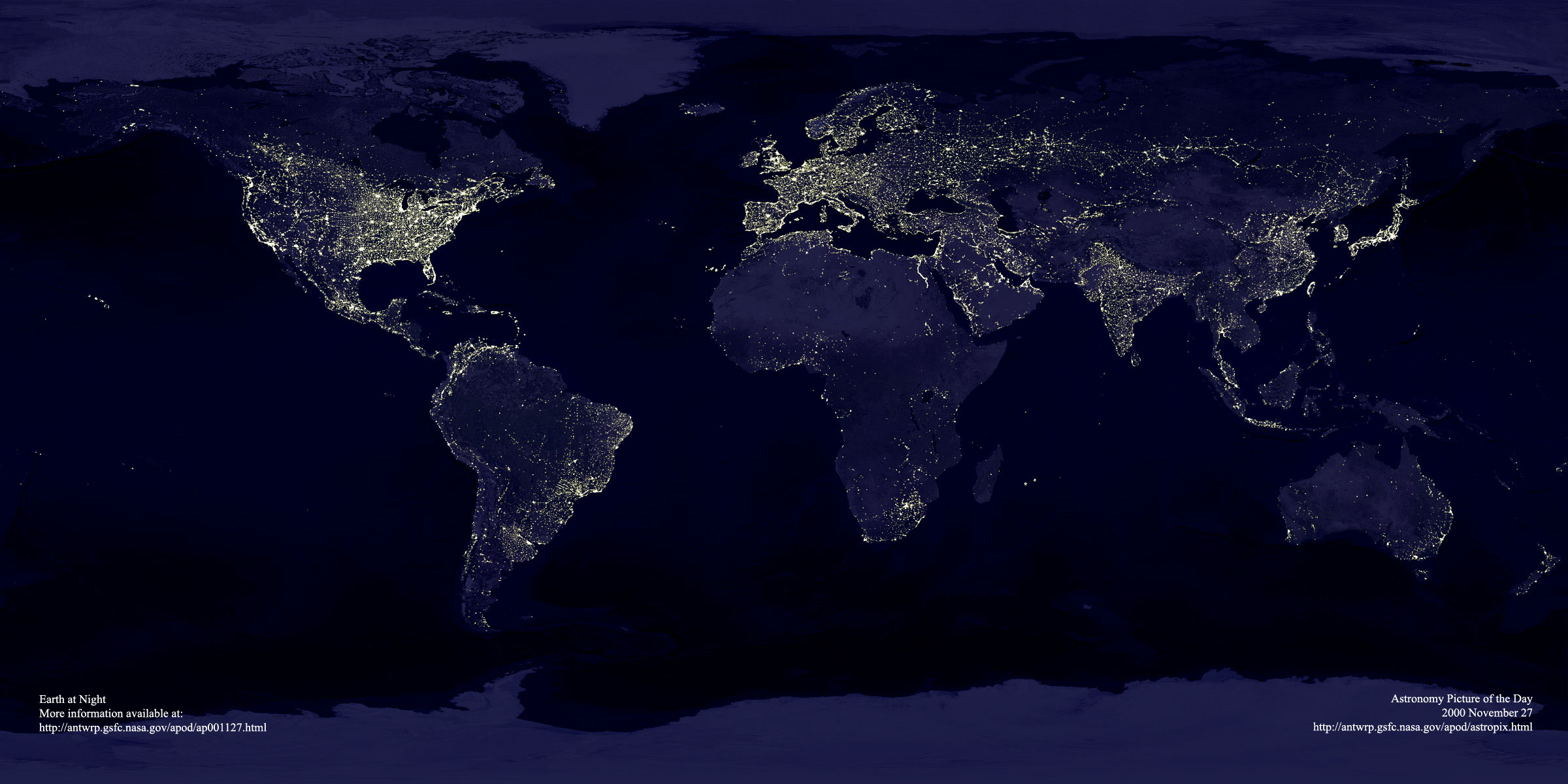
This image is originally from NASA’s Earth at Night series that I’ve been following. The Eagle Ford Shale shows up as bands of lights below San Antonio, stretching from where the “Tex meets the Mex” to Interstate 10. What we’re seeing on the shale is not city or town lights that have sprung up because of the fracking activity. More than likely, we’re seeing well flares that are picked up by the imaging sensors aboard the Soumi NPP satellite, which detects both city lights and gas flares using a “day-night band”. You can also see flaring from offshore oil and gas platforms in the Gulf of Mexico, spreading out like silt from the Mississippi River, and some more flaring out in West Texas.

For perspective, here is a map (PDF) of the Eagle Ford Shale from the Energy Information Administration. The banding and well sites seem to match what we see from space.

And finally, if you zoom in and squint a bit, we can see South Texas circa 2000, pre Eagle Ford Shale. The major metro areas of Texas show up, but no banding along the Shale. Larger version here.
 

David Wogan is an engineer and policy researcher who writes about energy, technology, and policy.

David's academic and professional background includes a unique blend of technology and policy in the field of energy systems. Most recently, David worked at Austin Energy, a Texas municipal utility, implementing a Department of Energy stimulus grant related to energy efficiency. Previously, David was a member of the Energy & Climate Change team at the White House Council on Environmental Quality for the Obama Administration.

David holds two Master's degrees from The University of Texas at Austin in Mechanical Engineering and Public Affairs. While at UT, David was a researcher in the Webber Energy Group, where his research focused on advanced biofuel production to offset petroleum use in the transportation sector. David holds a Bachelor's of Science degree in Mechanical Engineering from The University of Texas at Austin, where he researched nuclear non-proliferation measurement technology.

David is a 2013 Aspen Institute Journalism Scholar, joining a select group of journalists from Slate, ABC News, and The New York Times.

David lives in Austin, Texas. Follow along on Twitter or email him at david.wogan@me.com.

More by David Wogan

It’s Time to Stand Up for Science

If you enjoyed this article, I’d like to ask for your support. Scientific American has served as an advocate for science and industry for 180 years, and right now may be the most critical moment in that two-century history.

I’ve been a Scientific American subscriber since I was 12 years old, and it helped shape the way I look at the world. SciAm always educates and delights me, and inspires a sense of awe for our vast, beautiful universe. I hope it does that for you, too.

If you subscribe to Scientific American, you help ensure that our coverage is centered on meaningful research and discovery; that we have the resources to report on the decisions that threaten labs across the U.S.; and that we support both budding and working scientists at a time when the value of science itself too often goes unrecognized.

In return, you get essential news, captivating podcasts, brilliant infographics, can't-miss newsletters, must-watch videos, challenging games, and the science world's best writing and reporting. You can even gift someone a subscription.

There has never been a more important time for us to stand up and show why science matters. I hope you’ll support us in that mission.

Thank you,

David M. Ewalt, Editor in Chief, Scientific American

Subscribe