
This article was published in Scientific American’s former blog network and reflects the views of the author, not necessarily those of Scientific American
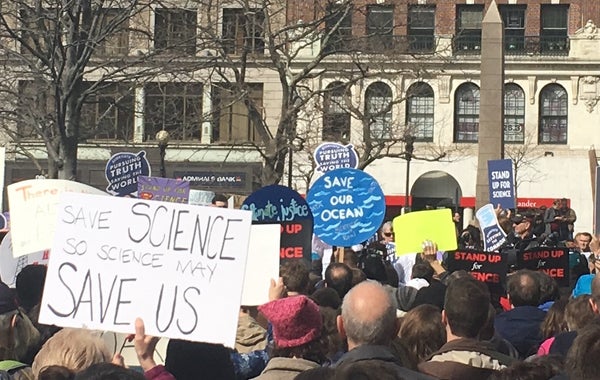
On April 22, scientists and their allies will gather at over 500 locations around the world to march in defense of science and evidence-based policymaking. The lead march will convene scientists and allies from around the United States in Washington DC, where they will march from the Washington Monument to the U.S. Capitol. I’m joining them because I’m convinced the scientific community must build a unified political movement to advocate for the considerable benefits science brings to our nation and the world — benefits that have been undermined for too long.
Scientists didn’t start this fight. For years, a growing cadre of politicians have dismissed evidence in favor of their opinions and moved to cut public support for scientific research. The election of Donald J. Trump — a man who seemingly can’t distinguish fact from fiction and wants to gut funding for scientific research — makes it clear that science can’t stand up for itself in the realm of politics.
While the threats against science are clear, many in the scientific community still question whether or not a science march is the right way to respond. A notable early criticism came from Professor Robert Young of Western Carolina University, who penned a Washington Post op-ed calling the march a “bad idea,” because it would further contribute to the politicization of science. His op-ed was shared and discussed widely amongst my American Association for the Advancement of Science (AAAS) Fellow colleagues, all of whom are scientists serving in the federal government. Many of us debated whether or not we would individually march while AAAS the institution debated whether or not it would throw its considerable science advocacy weight behind the march.
On supporting science journalism
If you're enjoying this article, consider supporting our award-winning journalism by subscribing. By purchasing a subscription you are helping to ensure the future of impactful stories about the discoveries and ideas shaping our world today.
In the end, both AAAS and many of my colleagues settled on the same conclusion: science has been politicized and demonized by non-scientists for too long, and now scientists must stand up for science in the political realm. Several other prominent scientific societies and the leading academic journal Nature came to same conclusion. In Nature’s words, “Whatever misgivings some may have, these should surely be eclipsed by the opportunity to identify and harness the collective energy that this organized event offers researchers everywhere.”
Another leading scientific publication — PHD Comics — summarized the thinking of many in the scientific community with the flow chart below. (If you’re not already familiar with PHD Comics, I highly recommend you check out the site and the creator’s new book We Have No Idea.)
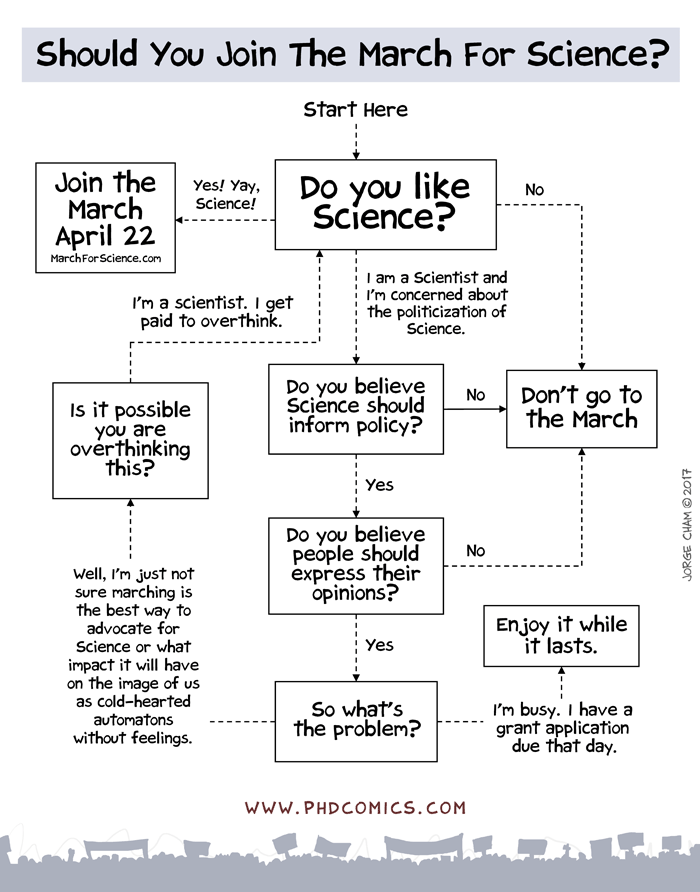
“Piled Higher and Deeper” by Jorge Cham. Credit: www.phdcomics.com
In my opinion, the skepticism expressed about the march is healthy, and will only work to improve the march and enhance its impact. It’s distinctly scientific really: the organizers of the march suggested a new approach; their scientist peers offered constructive criticism; and the march organizers adjusted their strategy based on peer review. The organizers did not have to engage traditionally risk-averse, non-partisan professional societies — many of which expressed skepticism about the march — but they did and the march is better off for it.
I have no doubt that I’ll see a protest sign or hear a chant that I disagree with at the march on Saturday. Instead of criticizing messages I disagree with from the sidelines, I will be marching to represent my own views. I’m marching because I think science and innovation are the foundation of the American economy, and that we’ve chipped away at that foundation for too long. I’m marching because too many of our elected officials have taken a dangerous turn away from evidence-based thinking. I’m marching because I think it is better to accept the tough truths science provides than it is to reject science because its challenges seem insurmountable. I’m marching because I believe in the potential for an enduring movement of scientists that will make our politics more honest and pragmatic. But we can’t do it without you, so I hope you’ll join us.
Find information on your local March for Science here: https://www.marchforscience.com/.