
This article was published in Scientific American’s former blog network and reflects the views of the author, not necessarily those of Scientific American
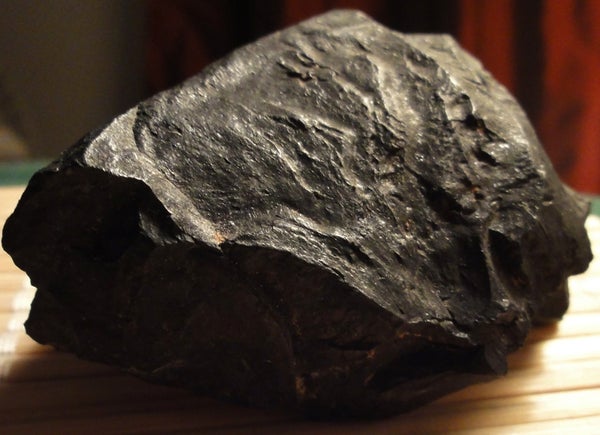
I never understood why getting a lump of coal instead of presents should be considered a threat. I'm a coal miner's daughter (yes, really. Okay, so he was an engineer at a coal mine, but it counts). The best thing my dad ever gave me, aside from the pony and the playhouse and the Breyer Horse stable that I adored for nearly a decade, was a lump of coal. I'd been after him about it for a long time. "Daddy, please bring me a lump of coal from the mine! Pleasepleaseplease I'll be good!"
If I'd had a better grasp on reverse psychology, or my dad a somewhat better-developed sense of irony, I might have ended up with one earlier. Regardless, one day, he arrived home with an enormous black chunk of ancient swamp, and I cherished it until we lost it in a move.
I'll never forget visiting Black Mesa once. I was very young, probably no older than 7 or 8, and we drove through a black canyon gashed by machines in the thick seams of coal that made up the mesa. I don't know what I'd expected, maybe a tunnel, like I'd seen in various pictures of mining operations. I stared, slack-jawed and thrilled beyond containment, at those shiny black walls towering above me. And then there was the fire, and the truck with a mounted hose spraying an enormous rooster tail of water on it. Fires sometimes started in the seams, my dad told my astonished young self. They'd burn for years. You couldn't really fight them so much as contain their spread. They sometimes could manage it with water; sometimes, they'd have to bury the blaze and hope it would burn itself out safely under the soil.
On supporting science journalism
If you're enjoying this article, consider supporting our award-winning journalism by subscribing. By purchasing a subscription you are helping to ensure the future of impactful stories about the discoveries and ideas shaping our world today.
I'd never considered that there might be any such thing as a fire that burned year after year, that no number of fire trucks and firefighters could defeat. And when I got my hands on that hard lump of coal, and realized this tough shiny stuff was what did the burning, I was amazed. It didn't really sink in then, but it did later. These were rocks. Rocks that burn.
What fool decided this was a disincentive to naughtiness?
But kids seemed to take that threat seriously. They'd rather have the shiny toys than a shiny lump of coal. I don't think they were future geologists, or there would have been a considerable uptick in the naughty quotient whenever that threat was made.
Angry parent: "If you don't stop doing X bad thing, all Santa's giving you this Christmas is a lump of coal!"
Future geologist: "Awesome! Two, please!"
My original lump has been replaced by a smaller but no less cherished chunk purchased from a wonderful little rock shop down in Cottonwood, AZ. And that wee delight has been joined by several bits picked up during rambles along Coal Creek (aptly named), which was my first opportunity to pick up coal in the wild. I love this stuff.
-

Caption: Coal in streambank at Coal Creek near Seattle, Washington. Credit: Dana Hunter - And why am I babbling about coal just now? Partly because I've been extremely lax in posting on geological topics lately. Mostly because one of my Twitter friends posted a link to this perfect gift for geologists: coal candy! Which you can make, at home, and use your rock hammer to break, and just seems like the perfect thing for geologists to make and/or receive. I saw that, and thought of Coal Creek and Black Mesa and Evelyn's geophoto meme, and thus inspiration did strike.

But I've saved the best for last. It hasn't much to do with coal, except it's on Coal Creek, and it's just the most awesome orange waterfall I've ever had the pleasure of getting up-close and personal with:
-

Caption: Orange Waterfall on Coal Creek. Credit: Dana Hunter - That lovely orange hue is probably courtesy of chemotrophic bacteria, according to a commenter on the original adventure report. It certainly adds a little verve to the scene. And what's even nicer is that you can get to it by following a stream bed filled with chunks of petrified wood and lots and lots of coal.

And if you're very naughty, I may venture back out there and collect a lump or two just for you.
A version of this post originally appeared on Rosetta Stones in 2013.