
This article was published in Scientific American’s former blog network and reflects the views of the author, not necessarily those of Scientific American
Several days ago, my Facebook feed exploded with the news that a swarm of small, shallow earthquakes has been ongoing beneath Mount St. Helens since mid-March. Was I excited? You betcha! I've been living in hope that she'll give us just a small eruption since I moved up here and saw her steaming. Alas, I arrived in Washington at the tail end of her 2004-2008 dome building escapades, so I didn't get to see anything super neato like an ash plume. She's been sleeping ever since. But I keep an eye on her seismic activity, waiting for the inevitable day when she'll wake up.

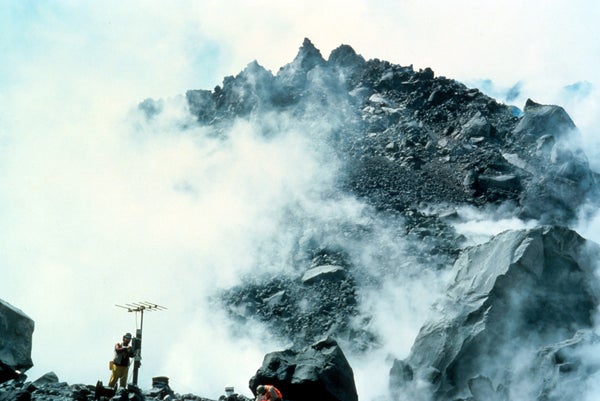
C'mon, sweetie! Just a little eruption for your Aunty Dana. Please?! Image courtesy Suzanne B., used with permission.
On supporting science journalism
If you're enjoying this article, consider supporting our award-winning journalism by subscribing. By purchasing a subscription you are helping to ensure the future of impactful stories about the discoveries and ideas shaping our world today.
We'll know that's happening by the pattern of shallow earthquakes caused by ascending magma. So this swarm definitely caught my attention. And part of it's good news for those of us waiting for further activity!
The pattern of these current earthquakes suggests that her magma chamber is recharging. Fresh magma is moving up into the depleted magma chamber under the volcano. This hot, buoyant rock causes strain on the cold rock around it in several ways: its own bulk causes pressure and fractures, and, by releasing gasses and heating groundwater to steam, it causes gas pressure that puts further pressure on the surrounding rock. The resulting quakes are too small for us to feel. But we've riddled the volcano with a comprehensive seismic network so sensitive it can detect an elk walking over the surface. It's more than capable of sensing the tiny quakes caused by magma on the move.
The bad news is that this process generally takes years, and there's no guarantee it'll even result in an eruption. Mount St. Helens has done this before, as recently as 2013 and 2014. She had swarms in the late 1990s, but it was five years before she started her dome building activity afterward – and the current swarm is a lot less energetic than those known recharge events from the 90s. Drat. Looks like we're in for quite a wait.
This is fantastic news for the folks living downstream of the volcano, who can be mightily inconvenienced by lahars and increased sedimentation from even small eruptions. Though they never happened during the 2004-2008 sequence, they were a concern. I'm sure the folks living east of the volcano, in the path of the prevailing winds, are glad they won't be getting coated in ash anytime soon. And aviation won't be disrupted by eruption columns. All of those are good things.
Still. I can't help selfishly wishing she'd put on a wee little show for us. We'll keep our eyes on her!