
This article was published in Scientific American’s former blog network and reflects the views of the author, not necessarily those of Scientific American
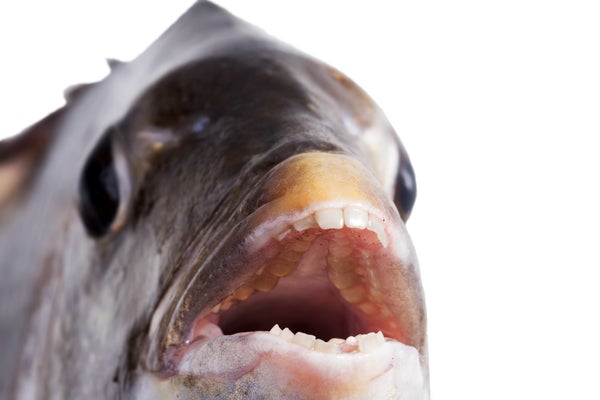
Despite the way it looks, the sheepshead fish (Archosargus probatocephalus) has at least one thing going for it. While other members of the Sparidae family are trying out various forms of hermaphroditism, including changing from female to male (protogyny), doing the opposite (protandry), or being unisexual (gonochorists), the sheepshead is just sitting at home watching cartoons and leaving its genitals where they are. So that’s something.
Another good thing about this huge creep is that, unlike one of its relatives, the Salema porgy (Sarpa salpa), you won't risk having a terrible trip when you eat one. Apparently they taste great! The Salema porgy, also of the Sparidae family and nicknamed the dreamfish, was reportedly used for recreational hallucinogenic purposes in the Mediterranean during the Roman Empire and has played a role in traditional Polynesian ceremonies. Along with a handful of other fish, the flesh of the Salema porgy can sometimes inflict ichthyosarcotoxism on those who eat it, which is a very rare form of poisoning caused by the toxins of a tiny species of marine plankton called Gambierdiscus toxicus. This poisoning from contaminated fish flesh prompts intense hallucinations and terrifying nightmares that can last for several days.
As reported by Luc de Haro and Philip Pommier from the Centre Antipoison of the Hôpital Salvator in Marseille, France, in a 2006 issue of Clinical Toxicology, a 90-year-old man ate a Salema porgy in Saint Tropez in 2002 and two hours later was hallucinating and having nightmares about people and birds screaming, which lasted a further two nights. He literally thought he was losing his mind. "Fearing that these symptoms might signal the beginning of a major mental illness, he did not tell his friends or attending physician. The manifestations abated three days after he had eaten the fish," de Haro and Pommier report.
On supporting science journalism
If you're enjoying this article, consider supporting our award-winning journalism by subscribing. By purchasing a subscription you are helping to ensure the future of impactful stories about the discoveries and ideas shaping our world today.
Prior to that, a 40-year-old man also fell victim to ichthyosarcotoxism while holidaying in the French Riviera and had hallucinations of screaming animals and giant, menacing spiders surrounding his car. In 2009, a fisherman named Andy Giles caught one in the English Channel, which is unusual because they usually keep to warm waters of the Mediterranean and African west coast, and told the Daily Telegraph, "Now I realise what it was and the effects it can have, perhaps I should have taken it into town to sell to some clubbers!" Andy lol.
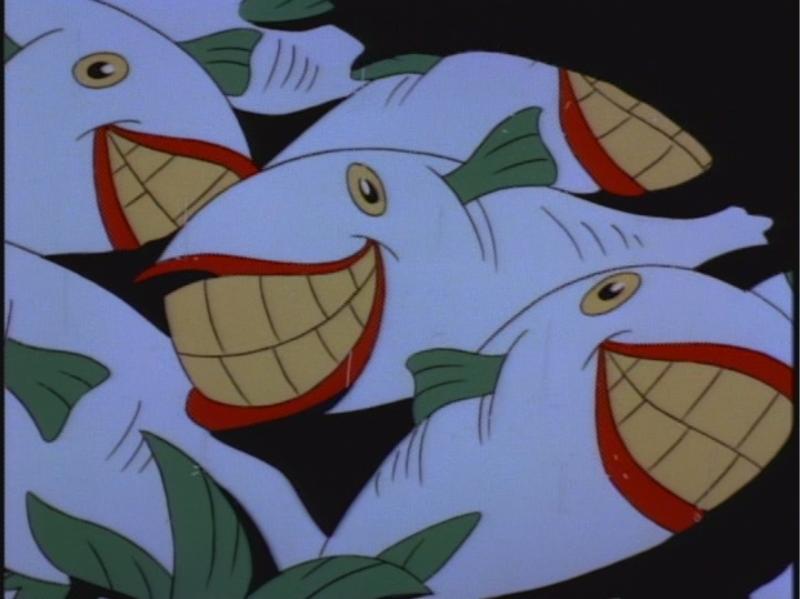
So the sheepshead fish doesn't do any of that stuff. But it does have human teeth. Sheepshead fish are a common North American marine species that span from Cape Cod and Massachusetts through to Florida and the Gulf of Mexico to Brazil. Preferring coastal habitats around rock pilings, jetties, mangroves, reefs and piers, they can grow up to around 91 cm in length and weigh up to 9.6 kg. They have five to seven distinctive black, vertical bars running down their silvery bodies, which is why the sheepshead is also called the convict fish. And true to their name, sheepshead fish are notorious for stealing bait and somehow being in cahoots with the Joker.
A fully-grown adult sheepshead will have well-defined incisors sitting at the front of the jaw, and molars set in three rows in the upper jaw and two rows in the lower jaw. It has strong, heavy grinders set in the rear of the jaw too, which are particularly important for crushing the shells of its prey. As with humans, this unique combination of teeth helps the sheepshead process a wide-ranging, omnivorous diet consisting of a variety of vertebrates, invertebrates and some plant material.
When they’re young, sheepshead fish will eat marine worms, bryozoan ‘moss animals’ and pretty much anything soft-bodied they can catch in the seagrasses. Although thick, sharp teeth begin to appear when a sheepshead is just 4.5 mm long, it will have to wait until it's about 15 mm long before all the incisors have come in and the back teeth begin to develop into adult molars. Once they reach around 50 mm in length, the sheepshead will advance to eating more robust, armoured prey such as echinoderms, barnacles, clams, crabs and oysters, using their highly specialised teeth.
During this stage, its jaw musculature is also developing, and this keeps improving right through to old age. So an old fish living around a good supply of hard-shelled prey will end up having much greater jaw crushing power than a younger fish in a less rich environment. “Evidence strongly suggested that oral jaw crushing force was an important determinant of diet in these fishes,” said L. P. Hernandez from the Museum of Comparative Zoology at Harvard University and P. J. Motta from the Department of Biology at the University of South Florida in a 1997 issue of the Journal of Zoology. Hernandez and Motta had been observing the oral crushing performance of sheepshead fish from birth through to adulthood. “There was a significant correlation between increased force production and increased durophagous [shell-crushing] habit. Studies such as this one speak directly to the relationship between maximum functional potential and actual patterns of resource use.”
It’s not clear why the sheepshead is called the sheepshead, but it’s been suggested that it refers to how its teeth look like sheep’s teeth. A quick Google and cursory glance over some disgusting farm teeth, and I don’t really see the comparison, but another suggestion is that the name relates to their silhouette. And there’s something to be said for a sheepshead fish that has managed to keep its silhouette looking as non-offensive as it does, because look what happened to the Asian sheepshead of the Labridae family.

Here's a video of some very American men with a live sheepshead:
****
My book, Zombie tits, astronaut fish and other weird animals, will be released in the US next month, and is available for pre-order from Amazon now.