
This article was published in Scientific American’s former blog network and reflects the views of the author, not necessarily those of Scientific American
Aside from staying up way too late catching up on our favorite tv shows, most of us don’t mess too radically with the 24-hour day cycle. True, night shift workers invert it and newborns and insomnia mess with it, but we are so profoundly ruled by Earth’s 24-hour rotation that very few of us ponder how this fact makes us uniquely unsuited for life beyond our home planet.
There are huge differences in the lengths of days on the planets in our solar system. The shortest day is on Jupiter - just 10 breezy hours - and the longest is a punishing 5,832 hours (crazy Venus!). Mars has the most similar day to ours, with each Martian day approximately 41 minutes longer than a day on Earth. That seems like a trivial enough difference that it wouldn’t be too disorienting, right? Artist Sara Morawetz is challenging herself to find out.

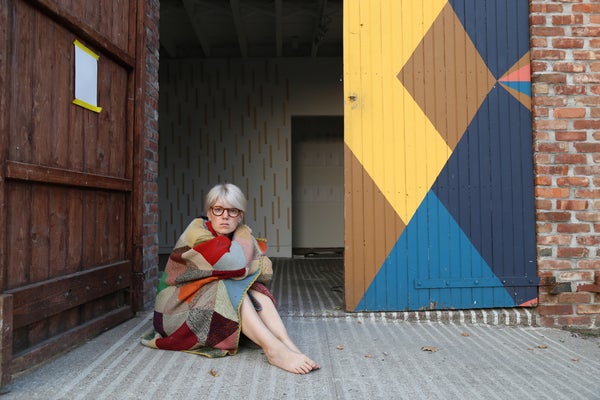
Living on Martian time; Image ©Sara Morawetz
On supporting science journalism
If you're enjoying this article, consider supporting our award-winning journalism by subscribing. By purchasing a subscription you are helping to ensure the future of impactful stories about the discoveries and ideas shaping our world today.
Through August 22nd, Morawetz is living on Martian time as a performance art piece titled How the Stars Stand at Open Source Gallery in Brooklyn, NY. Her stunt will last 37 days - long enough for her days to completely invert and then slowly return to normal, not unlike a full waxing and waning cycle of the moon. By sheer coincidence, this month’s Scientific American Mind has a fascinating article on what exactly Morawetz is submitting her body to (spoiler: every organ in her body is likely in distress), but we’ll let her read that article after her experiment is over, shall we? In the meantime, you can see the effects for yourself: there is a live cam focused on her room in the gallery for your viewing enjoyment.

Artist Sara Morawetz living on Martian time at Open Source Gallery in Brooklyn, NY; Image ©Sara Morawetz
How the Stars Stand (project website) is on view at Open Source Gallery, 306 17th street, Brooklyn, NY 11215, through August 22, 2015. Check out the livestream of the performance and drop by the gallery at 6pm August 22 for a lecture by Dr. Michael Allison of the NASA Goddard Institute for Space Studies.