
This article was published in Scientific American’s former blog network and reflects the views of the author, not necessarily those of Scientific American
About a week after the U.S. election, I was looking over my tweets, and a lot of them were sharing words of warning and frightening events from smart journalists like Sarah Kendzior, Daniel Dale, and Jared Yates Sexton. This isn't business as usual, I thought, this is scary. And I'm off my beat, I thought next.

How can we make #SciArt right now? After everything that's been said about Trump's plans? How can we illustrate botanically accurate wildflowers? How can we make webcomics about chemistry? How can we develop VR experiences for museums? How can I paint another trilobite and stick some wings on it? The rise of fake news, climate-change deniers, neo-Nazis, xenophobes, and white supremacists to power via Trump is a danger not only to America, but the world. As a Canadian I'm worried about my American friends, colleagues, and their nation down south as a whole.
On supporting science journalism
If you're enjoying this article, consider supporting our award-winning journalism by subscribing. By purchasing a subscription you are helping to ensure the future of impactful stories about the discoveries and ideas shaping our world today.
I've been thinking about this a lot, and here is where my thinking is right now (conclusion perpetually in progress).
If it was important before the election, it's important now.
If illustrating botanically accurate wildflowers was important to our historical record of plant variation before the election, it's going to continue to be important as we go through unprecedented climate change.
If drawing a webcomic about chemistry helps give a lab worker a chuckle, they probably need one right now.
If developing a VR experience for a museum helps someone focus while learning, it may spark in them to learn more.
If I paint another absurd fossil with wings on it, it may prompt an artist to learn more about science, or a scientist to consider more about the nature of art.
If it was important before the election, it's important now.
And yet.
Too many artists and illustrators refrain from opining on issues of the day - even the old version of what "issues of the day" were. There's a fear of losing out on potential jobs by airing too many opinions in the public sphere. If you're illustrating the process of fracking, you can do so in a clear and visually informative way without weighing in on the politics of it all. (Y'know, if you're trying to be all neutral about fracking for some reason.) Too often artists want to close the door to their studio, and not self-sabotage potential jobs by weighing in on politics.

Don't just close the door to your studio and ignore the world. Credit: Glendon Mellow
Early on in my online life, almost 10 years ago, I made a decision to talk about myself as an atheist on my Flying Trilobite blog. Did this lock me out of illustration opportunities? Possibly. But I was busy illustrating blog banners for a conservationist, a scientist, and a humanist writer. Did I end up working with these clients because of my views? I 'm certain it played a part. If I'd been silent about my views and interests, I'm not sure we would have crossed paths.
When authoritarian governments take control step by step, one of the steps is to silence artists, or to discredit them as degenerates. Trump is already trying to chill and intimidate outlets such as the New York Times and Washington Post, and comedians like the cast of Saturday Night Live. If any fine art criticizing his government work emerges with any popularity, you can bet he'll turn his gaze on the arts.

My response to Joyce Carol Oates suggestion that artists will thrive under Trump. Apparently we're all reactionaries. Original tweet here.

Don't be silent about issues in the USA right now. There's every reason to be concerned after the statements the President-Elect made throughout the campaign, and his staffing shows every indication Trump was earnest about his vision.
So: it's time to devote more energy in your schedule for reaching out to neighbours and representatives, to sharing articles from credible sources, to joining, subscribing, and volunteering to make the world a better place. Be ready to intervene when someone is targeted by hate. Have a plan. Lift up and promote other artists who need a voice. Use your visually creative brain and mad technical skillz to share your thoughts and provoke others to conversation, the first step toward action.
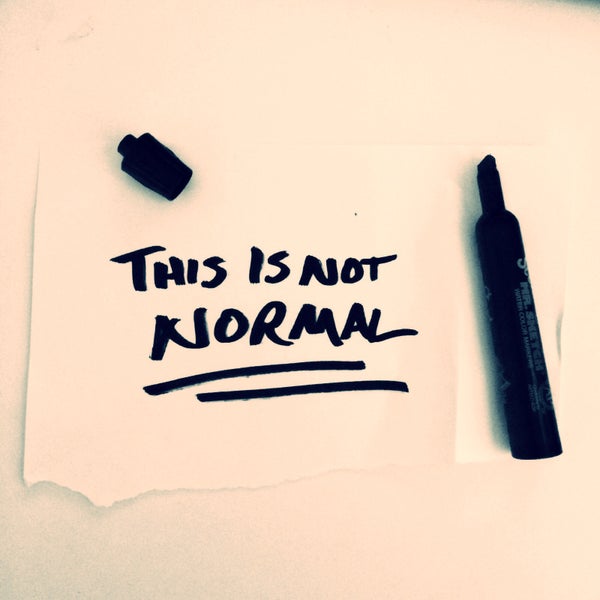
You are a visual artist. Use that power and be a catalyst. Leave your studio door open and let the world in. It's easier to shout out of an open door anyway. If we are going to resist media attempts to normalize Trump, we need artists to riddle, question, ridicule, and underscore how
not normal all of this is. This is part of our job now, artists: ask riddles, question authority, ridicule power, and underscore the weirdness while using a big fat licorice-scented marker.
Go and make SciArt. And while you're doing it, keep finding new ways to say this:

Credit: Glendon Mellow

All images by the author.