
This article was published in Scientific American’s former blog network and reflects the views of the author, not necessarily those of Scientific American
Sigmund Freud never uttered the word neuroscience. Neither did Santiago Ramón y Cajal. It was biophysicist Francis Schmitt who grafted “neuro” with “science” in 1962 when he established the Neurosciences Research Program at MIT. The new moniker was intended to encompass a merging of relevant neuro disciplines, ranging as far afield as physiology, psychology, immunology, physics and chemistry.
Brains and behaviors have been scrutinized for millennia. But as psychology blogger Vaughn Bell has pointed out, the 1960s marked a shift in perspective. Neuroscience was the formal name given by Schmitt. But the period represented the beginnings of a “neuroculture,” that put brain science on a pedestal —even leading to the familiar meme proclaiming “my brain made me do it.” One example was rooted in pharmaceutical companies’ development of psychiatric drugs that resulted in their investing “millions both into divining the neurochemistry of experience and into massive marketing campaigns that linked brain functions to the psyche,” Bell notes.
The field received an adrenaline boost precisely 50 years ago with the founding of the Society for Neuroscience, allowing Schmitt’s collaborative vision to be globally shared. SFN’s first annual meeting in 1971 drew 1,395 attendees to Washington, D.C. This year’s wrapped up on October 23, bringing more than 27,500 to Chicago—and the annual numbers have occasionally topped 30,000. SFN now boasts 37,000 members from more than 95 countries.
On supporting science journalism
If you're enjoying this article, consider supporting our award-winning journalism by subscribing. By purchasing a subscription you are helping to ensure the future of impactful stories about the discoveries and ideas shaping our world today.
Anything to do with the topic “brain” found a place among the more than 14,500 abstracts of unpublished work presented in 2019 on themes ranging from the mechanisms of sleep to cocaine craving. But the society has had to adapt its U.S.-based get-together this year to respond to a world of closing national borders.
Some members were unable to get visas to enter the U.S., in part because of the U.S. travel ban, which includes broad restrictions on visits from Iran, Libya, Syria, Yemen, Somalia, North Korea and Venezuela. In response, SFN initiated a program called Science Knows No Borders in which would-be attendees had a PDF printed out and posted or else PowerPoints and a recorded talk were proferred in their absence. An Iranian doctoral student, Shahrzad Ghazisaedi, from University of Toronto, a neuropathic pain researcher, was one among about a dozen people who took advantage of the program (not all of them necessarily subject to the travel ban). Her poster entitled “Sex specific DNA methylation pattern in spinal cord and periaqueductal gray (PAG) before and after peripheral injury” could be seen Monday afternoon by attendees during a session entitled Central Nervous System Mechanisms in Pain.
For those who actually were able to make it, a range of topics caught the eye: research on nervous system immune cells implicated in a range of disorders, a gene therapy for converting the brain’s support cells to neurons for treating Alzheimer’s, a prosthetic forearm that provides a sense of touch and synchronization of brain waves between two people holding hands. Also, a group of scientists got together to start planning a test in humans to determine which of two theories of consciousness is more likely to be correct.
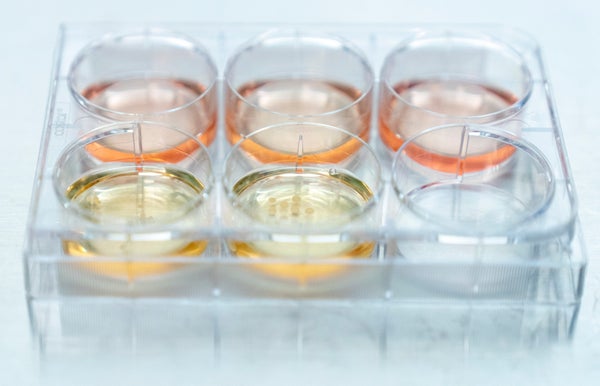
Another theme that stood out was the challenge of working with miniaturized brain facsimiles, called organoids, that show promise of more faithfully replicating what goes on in the human organ than a mouse brain can. Organoids, though, are too close to a Mary Shelley creation for some people. At the conference, members of the Green Neuroscience Laboratory in San Diego called for a research moratorium on organoid tissue implanted into mice or other animals, a technique already in use. In an abstract for their talk, they ventured that the technology is “perilously close to crossing an ‘ethical Rubicon’” in which organoids may experience “sentient activity and behavior.” The group advocates that methods should be developed to ascertain whether any given organoid has the ability to sense and react to its surroundings.
At a press conference of scientists who grow the five-millimeter-diameter mini brains, ethical debate was welcomed, but the researchers also tried to place their work in context. Paola Arlotta from Harvard showed a video of organoids, at most the size of small peas—nothing resembled an imagined brain-in-a-dish. The brain bits are also difficult to work with—challenging to grow reproducibly and their cells do not mature to become an exact replica of human cells, but instead end up with a “confused identity.” Researchers think the kinks can be worked out, but, even then, that may not pave the way for growing full-sized organs.
“Most scientists are not interested in figuring out how to grow a human brain in a dish,” says Arnold Kriegstein, of the University of California, San Francisco. “They are more interested in a particular disease mechanism or a certain process they want to study. And that really requires a reductionist system. It's too complicated to study an intact human brain. What you really want are the important elements, which you can dissect and delve into in great detail in the laboratory.”
Everyone agreed that discussion about mini-brain ethics is warranted. But as far as existential threats, tiny tissue nuggets run amok may not be at the top of a list that includes antibiotic resistance, climate change and self-driving cars engineered with internals that produce a loss of control that resembles a wayward 737 MAX.