
This article was published in Scientific American’s former blog network and reflects the views of the author, not necessarily those of Scientific American
I got a Facebook notice alerting me that today was Astronomy Day. I had no idea -- about the day for the commemoration. And then in an instant, my childhood memories of sky watching rushed over me.
I was in 6th grade and I had Halley's Comet Fever.
On supporting science journalism
If you're enjoying this article, consider supporting our award-winning journalism by subscribing. By purchasing a subscription you are helping to ensure the future of impactful stories about the discoveries and ideas shaping our world today.
I poured over encyclopedias (it was before google) and lived in the Space Science section of my school library and neighborhood library. I visited the Planetarium and did the sky show. I had a separate folder I kept and carried to school all about stars, constellations, asteroids, and comets. I was so geeked about this once in a lifetime event. I didn't want to miss it.
I made very serious plans to camp out on the plastic chaise lounge snuggled beneath my pink bedspread overnight in the courtyard of my apartment building. I was ready. I was amped.

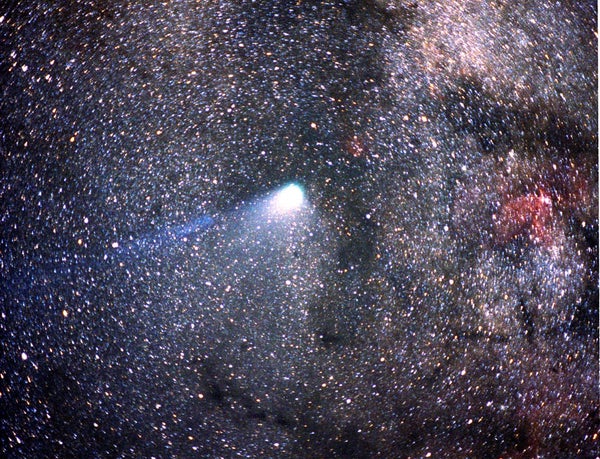
Halley's Comet 1986
Source: NASA
Alas, I didn't catch Haley's Comet. The forecast for the passing were off and I lived in the inner-city and I couldn't see the comet anyway. Too much light pollution. *sigh*
But never ever underestimate how powerfully inspiring these childhood experiences of science exploration and curiosity in shaping individuals. My friend, Dr. JedidahIsler, Observational Astrophysicist and National Science Foundation Astronomy and Astrophysics postdoctoral fellow at Vanderbilt University path to become the first African-American woman to receive a Ph.D. in astrophysics from Yale was set when she was little girl. Just yesterday, she was named as a National Geographic Emerging Explorer for 2016.
So, I ask you to go outside this evening and stare up at the sky. Spend time with your family and neighbors learning more about the sky and our universe. And the fun doesn't have to end this weekend. Make plans this summer to sky watch and inspire the next generation of Sky Scientists in your family.