
This article was published in Scientific American’s former blog network and reflects the views of the author, not necessarily those of Scientific American
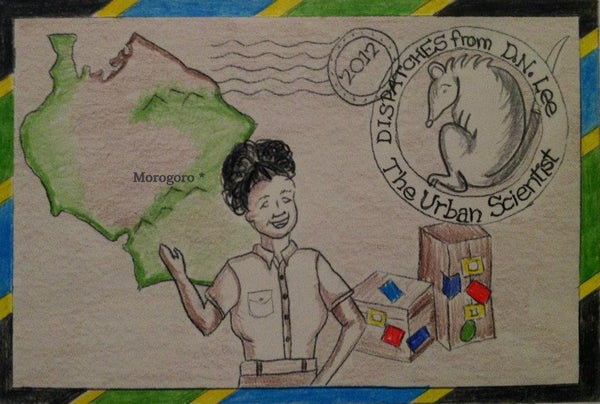
I have returned to my beloved Tanzania and the research adventures have been steadily streaming.
I've been here a month and I've been very busy. I've started behavior experiments, experienced multiple power failures, attended a wedding send off party, purchased ALL of the fabrics, endured low water pressure and communications struggles from my shamefully rusty Swahili. Whew!! It's been a fantastic trip.
I'm here in Morogoro for a total of 5 months and I'll be collecting data to hammer out details about this species biology via these three main research aims:
On supporting science journalism
If you're enjoying this article, consider supporting our award-winning journalism by subscribing. By purchasing a subscription you are helping to ensure the future of impactful stories about the discoveries and ideas shaping our world today.
1. Ecological Habitat selection: the capture-mark-recapture study I've been doing since 2012.
2. Individual Variation of Behavior Assessment: battery of behavior tests to profile individuals responses to novel situations and stimuli.
3. Reproductive Biology of females: quantity the estrus cycle and sexual maturity of female Cricetomys ansorgei.

Despite the amazing abilities of this animal, we really don't know very basic details about this species' biology. I'll be here for the next few months observing animals and collecting samples to figure out what makes this species tick - or rather survive and thrive in its natural environment. As we learn more about this species biology, it should shed light on how local populations interact with it (as a pest) and how it could be used to save lives (as a biodetector). Either way, we have to start at square one - natural history.
Follow me on Twitter (@DNLee5 and #DispatchesDNLee) for instant updates or can catch up on all of the pouched rat shenangigans via Weekly Storify Recaps or my personal and research adventures via my new podcast on audioboom!