#DispatchesDNLee 2015: Week 4 Recap

Recaps from the field #DispatchesDNLee 2015. I share my week in tweets and pictures from Tanzania, researching giant pouched rats and living far from home.

Join Our Community of Science Lovers!

This article was published in Scientific American’s former blog network and reflects the views of the author, not necessarily those of Scientific American


Four weeks in and what is the thing that really impacts me? POWER, or lack there of.  Access to reliable stable electricity is important and we take it for granted in the west. (I've lost count how many times I've been shocked when un/plugging any device. Things aren't grounded here!).
 

As a result, it makes doing science hard. No video recording (or at least until your batteries expire). No cell phone. No iPad - both of the which I use for GPS recordings, audio/video back up recording of observations, and other experimental metrics. No freezer/refrigeration - at least not reliably so I don't work with sensitive biological samples and no access to money. Tanzania is a cash economy. No cash means I can't buy supplies, fuel, bait, or pay my team.


On supporting science journalism

If you're enjoying this article, consider supporting our award-winning journalism by subscribing. By purchasing a subscription you are helping to ensure the future of impactful stories about the discoveries and ideas shaping our world today.


Even when the electricity (LUKU in Ki-Swahili) is on, it is still hard to access cash. I swear, I see this notice on the ATM screen at least once a week!


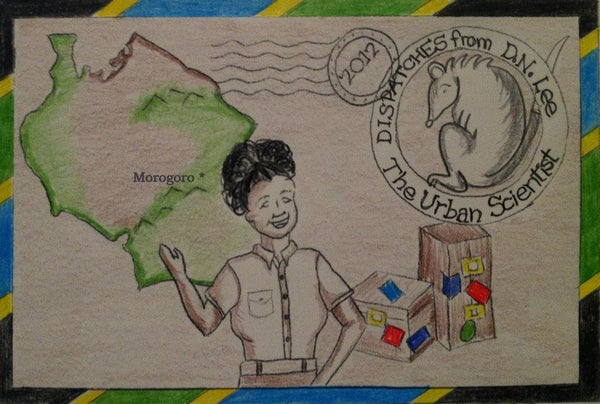
Here's how the rest of my 4th week in Morogoro, Tanzania went. (And be sure to follow me on audioboom: DNLee5, and get ALL of my podcasts as I share them!

DNLee is a biologist and she studies animal behavior, mammalogy, and ecology . She uses social media, informal experiential science experiences, and draws from hip hop culture to share science with general audiences, particularly under-served groups.

More by DNLee

It’s Time to Stand Up for Science

If you enjoyed this article, I’d like to ask for your support. Scientific American has served as an advocate for science and industry for 180 years, and right now may be the most critical moment in that two-century history.

I’ve been a Scientific American subscriber since I was 12 years old, and it helped shape the way I look at the world. SciAm always educates and delights me, and inspires a sense of awe for our vast, beautiful universe. I hope it does that for you, too.

If you subscribe to Scientific American, you help ensure that our coverage is centered on meaningful research and discovery; that we have the resources to report on the decisions that threaten labs across the U.S.; and that we support both budding and working scientists at a time when the value of science itself too often goes unrecognized.

In return, you get essential news, captivating podcasts, brilliant infographics, can't-miss newsletters, must-watch videos, challenging games, and the science world's best writing and reporting. You can even gift someone a subscription.

There has never been a more important time for us to stand up and show why science matters. I hope you’ll support us in that mission.

Thank you,

David M. Ewalt, Editor in Chief, Scientific American

Subscribe