
The SciencesOctober 13, 2008
How We All Learned to Make The Bomb
Doctor Atomic, a new opera about to open at the Met, brings nuclear proliferation, "rogue states" and the terrorists' dream of a dirty bomb back to the first "ground zero"
How We All Learned to Make The Bomb
Doctor Atomic, a new opera about to open at the Met, brings nuclear proliferation, "rogue states" and the terrorists' dream of a dirty bomb back to the first "ground zero"
Tone Deafness and Bad Singing May Not Go Hand in Hand
When the singer is just awful, the problem may be more than faulty perception.

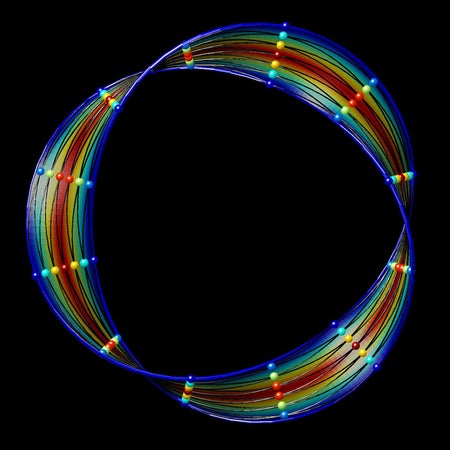
The Geometry of Western Music
A new way of visualizing Western music theory could inspire innovations in everything from musical instrument design to music composition techniques—even to new kinds of toys.
Computer Takes Clarinet Lessons
Detailed analysis of how a clarinetist plays the instrument is a first step toward incredibly natural sounding synthesizer music. Christopher Intagliata reports.
This Is Your Brain On Arts
A three-year, multi-institutional study finds that early training in performing arts is really good for the brain. Steve Mirsky reports. For more info, go to www.dana.org
The Key to Great Sax
Pro saxophonists contort their vocal tracts to climb the upper registers
The Encyclopedia of Life; and the End of John Horgan's Pessimism
In this episode, Pulitzer Prize-winning scientist and writer E.O. Wilson talks to award-winning journalist John Horgan about the Encyclopedia of Life project and finding common ground between science and religion. And Horgan, the Director of the Center for Science Writings at the Stevens Institute of Technology in Hoboken, NJ, talks about his research into whether war might someday become a thing of the past. Plus we'll test your knowedge of some recent science in the news. Websites mentioned on this episode include www.eol.org; bloggingheads.tv; www.cfa.harvard.edu/~tcox/localgroup; arxiv.org/abs/0705.1170
Does temperature affect the sound of a musical instrument?
Chemical Treatment May Explain the Sweet Music from Stradivarius Violins
The renowned 17th-century violin maker used oxidizing and hydrolyzing agents on the wood.
Perception of Musical Pitch Uses Separate Parts of Brain
Secrets of the Stradivarius: An Interview with Joseph Nagyvary
Speaking In Tones